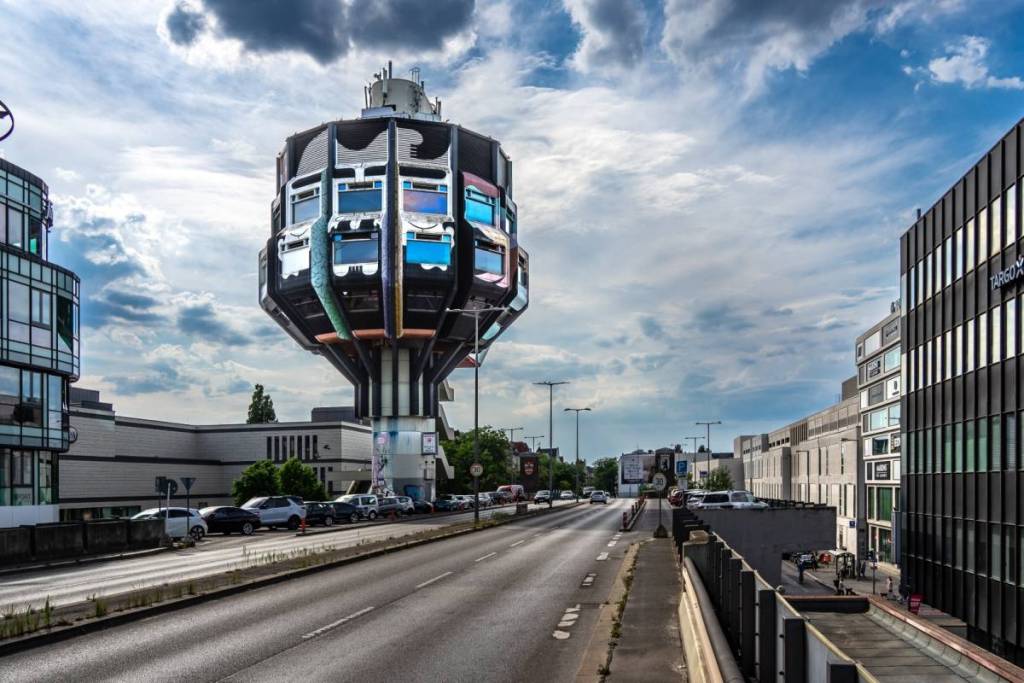

Unusual buildings shape Berlin’s cityscape in far more places than one might initially suspect. The capital’s architecture also tells the story of its eventful past: from a neoclassical palace once built for one of Europe’s most powerful men—where law is now studied—to Europe’s largest department store. Yet one building stands out even among these architectural gems: the Bierpinsel in Berlin-Steglitz. This extraordinary structure is one of the capital’s most whimsical landmarks. What opened in 1976 as a futuristic tower restaurant overlooking Schloßstraße is now surrounded by barriers.
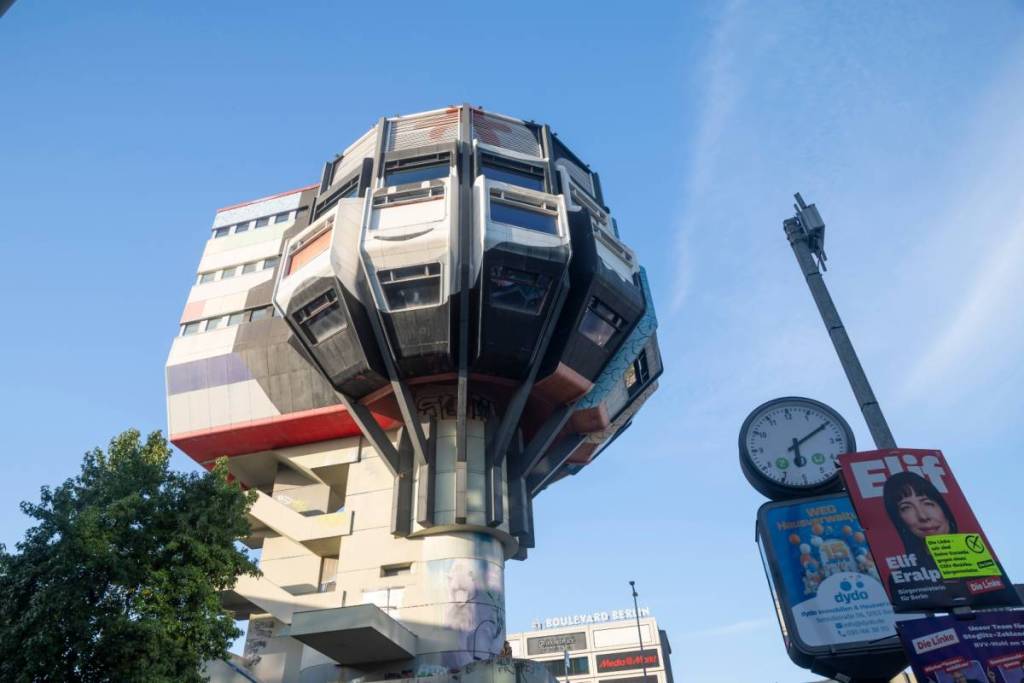
The reason for this is the danger that additional sections of the facade could come loose and fall from a great height. Some 50 years after its opening, the former landmark of Berlin’s restaurant scene no longer offers culinary experiences but instead causes significant traffic disruptions. After parts of the facade had already come loose in September 2026, the Steglitz-Zehlendorf district tightened safety measures around the historic building. On October 21, the cordoned-off area was expanded to a radius of approximately twelve meters around the tower. This decision was based on experts’ assessment that additional facade elements could fall, posing a danger to passersby.
The measures are having a significant impact on traffic in Steglitz. Schloßstraße is closed in the direction of Steglitz City Hall between Schildhornstraße and Ahornstraße. The Joachim-Tiburtius Bridge is also affected by the closures on both sides. In addition, access to the Schloßstraße subway station at Franz-Amrehn-Platz remains closed. Several bus routes must be rerouted, so passengers and drivers should expect longer travel times. It is not yet known how long the restrictions will remain in place. A specific date for lifting the closures has not yet been announced. As a result, the condition of the Bierpinsel is now affecting not only the immediate vicinity of the building but also one of the most important shopping and thoroughfares in southwest Berlin.
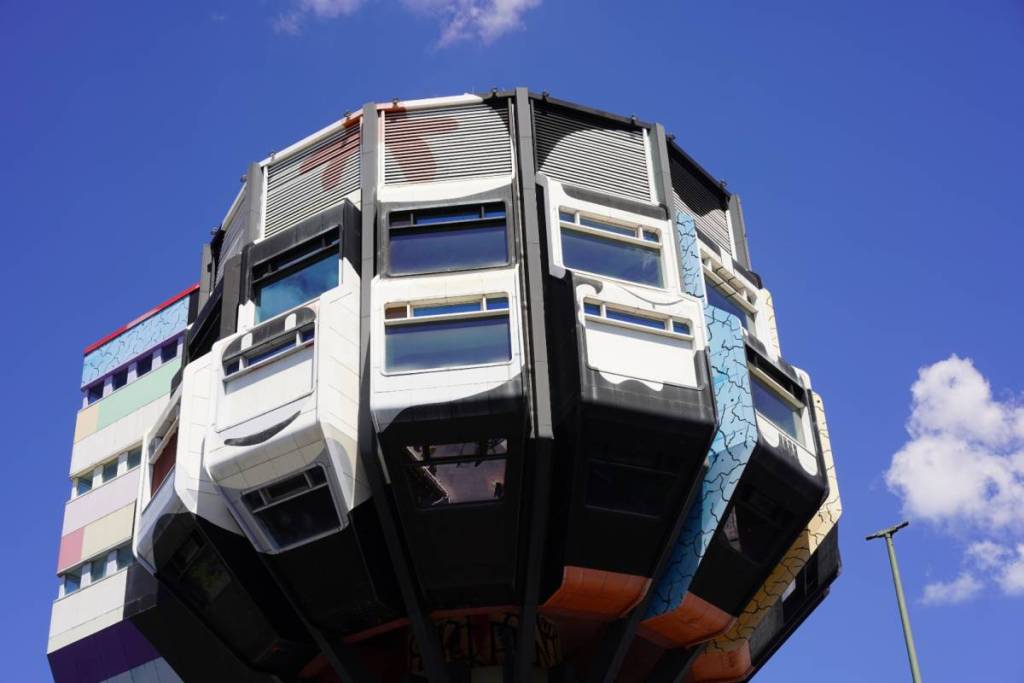
The history of the Bierpinsel dates back to the 1970s. The 47-meter-tall building opened in 1976 and is still considered one of the most striking examples of Berlin’s postwar modernism. It was designed by architects Ralf Schüler and Ursulina Schüler-Witte, who were also responsible for the famous International Congress Center (ICC) Berlin. With its unusual shape and striking design, the tower was intended to create a deliberate contrast to the surrounding buildings. Its silhouette resembles an oversized shaving brush. Since the building was originally used as a restaurant, it was nicknamed the “Bierpinsel,” a name by which it is still known today.
When it opened in 1976, the Bierpinsel was a futuristic tower restaurant that spanned several floors. Visitors could eat, drink, and enjoy the view of Steglitz from high above Schloßstraße. It’s even said that free beer was served at the opening. In the years that followed, the building became a popular gathering place that, in addition to various dining establishments, also housed a nightclub at times.
But the initial success did not last. Over the decades, the building’s intended uses changed several times until it eventually stood largely empty. Despite various plans for revitalization, efforts to permanently reopen the Bierpinsel to the public have so far been unsuccessful. The tower has been a listed historic monument since 2017. This makes it not only a striking landmark of Steglitz but also a protected testament to the architectural history of West Berlin.