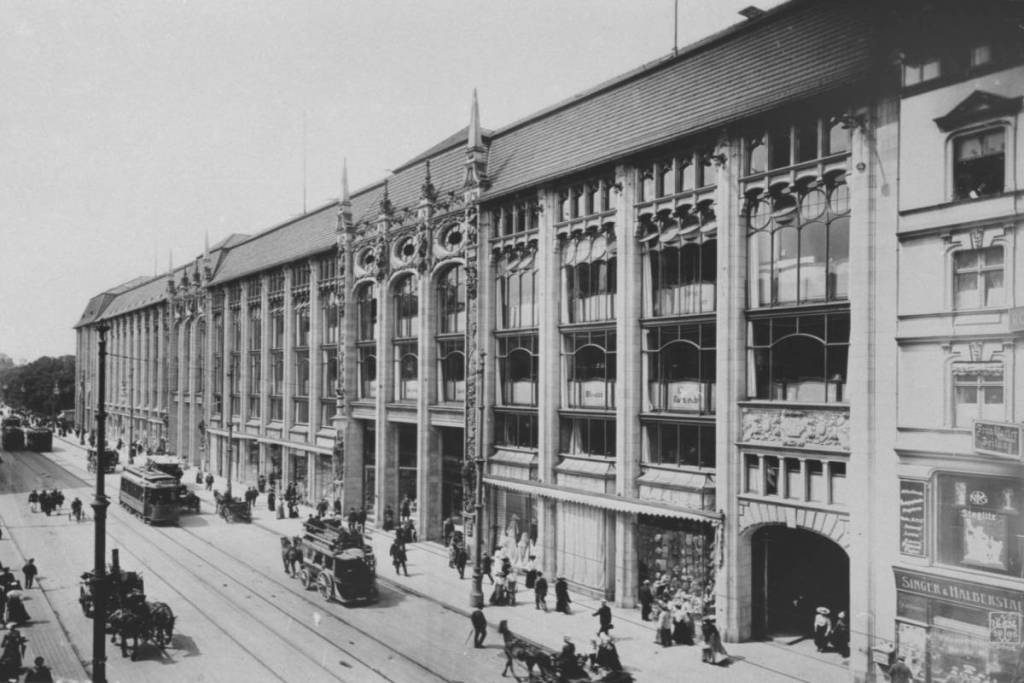

When you stroll through Berlin, you sometimes get the feeling that, amid all the modern buildings, you can still hear the whispers of the past . Impressive architecture greets us at almost every corner, and behind many facades lie stories that might surprise even die-hard Berliners. From a long-forgotten neighborhood between Mitte and Kreuzberg to what was once the largest train station in continental Europe—of which only the entrance portal remains today —the capital is full of fascinating reminders of times gone by. Today, we’re taking you on a journey through time to Leipziger Platz, where Europe’s largest department store once stood . 120 years later, the Mall of Berlin stands here—and in between lies a history filled with luxury, destruction, legendary techno nights, and spectacular transformations.
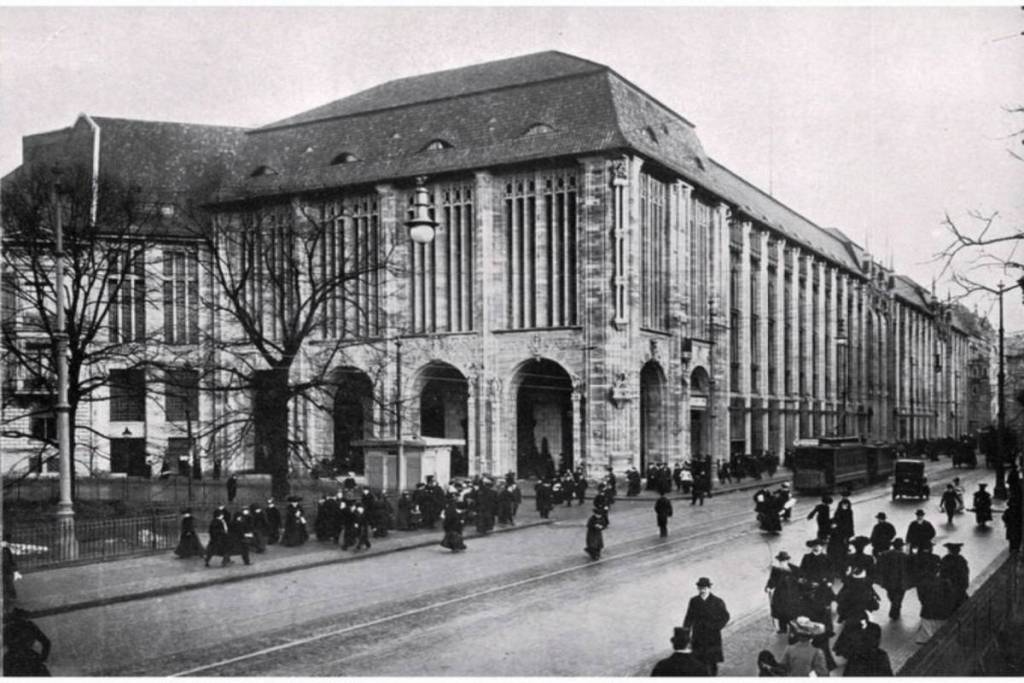
The former Wertheim department store on Leipziger Platz was once among the most impressive shopping destinations in Europe. Between 1896 and 1906, a monumental building complex was constructed based on designs by architect Alfred Messel; at the time, it was described as “Germany’s most beautiful department store.” With a usable area of approximately 112,000 square meters, a sales area of about 70,000 square meters, and a 240-meter-long main facade, the department store surpassed the dimensions of any previous German department store. But the history of the site extends far beyond retail. Following the expropriation of the Jewish-owned company by the Nazis, the destruction during World War II, and its subsequent demolition, the site evolved decades later into a major hub of Berlin’s techno culture. In 1991, the legendary techno club Tresor opened in the former vault rooms. Since 2014, the Mall of Berlin has been located on a portion of the historic site.
When the Wertheim department store was built on Leipziger Platz at the end of the 19th century, Berlin was increasingly developing into one of Europe’s most important commercial hubs. The Wertheim family, Jewish entrepreneurs, had succeeded in turning a trading company into one of Germany’s best-known department store chains. On November 15, 1897, the department store on Leipziger Straße opened its doors for the first time. In the years that followed, the building complex was continuously expanded and became an architectural landmark of the capital.
The renowned architect Alfred Messel designed a department store that was exceptionally modern for its time, setting itself apart from other shopping destinations both through its architecture and its immense size. Between 1896 and 1906, a monumental complex was built in several construction phases and was further expanded in the years that followed. The property covered approximately 27,000 square meters and extended all the way into Voßstraße. The main facade along Leipziger Straße alone was about 240 meters long. Another 90 meters were added along Leipziger Platz.
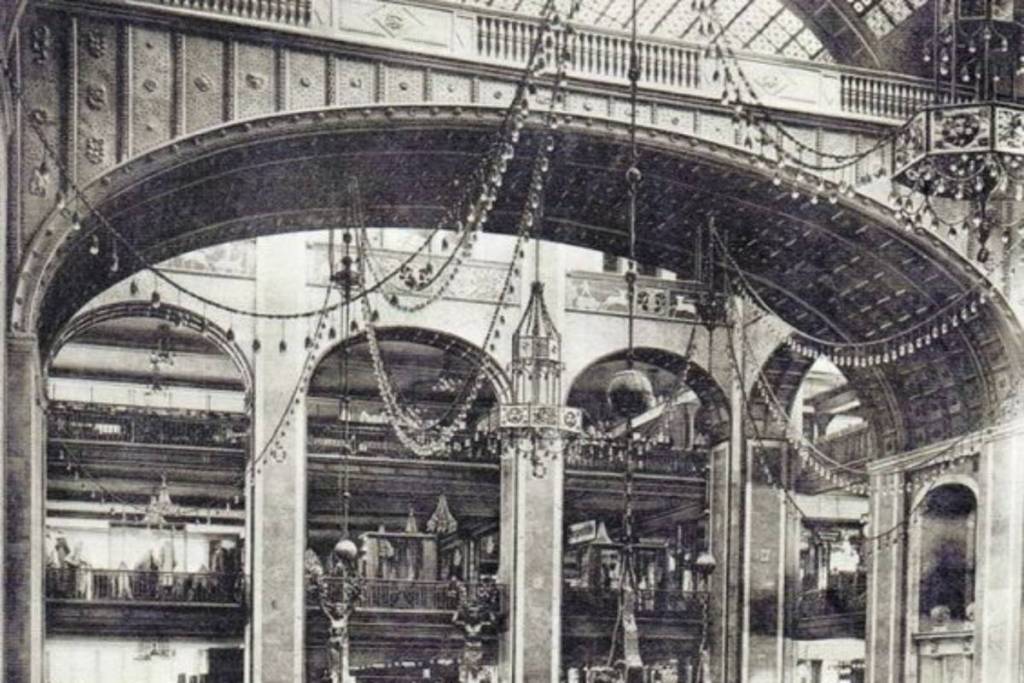
After its expansions, the department store reached a usable area of approximately 112,000 square meters and a sales area of about 70,000 square meters. As a result, the Wertheim was considered the largest department store in Europe at the time. Just how impressive these dimensions were is illustrated by a comparison with the world-famous London luxury department store Harrods, whose sales area is reported to be around 63,000 square meters. The historic Berlin department store thus even surpassed the sales area of one of the world’s most famous department stores.
It was not only its size but also its extraordinary architecture that made the Wertheim department store so unique. Alfred Messel combined a stately façade with large windows, light-filled salesrooms, and an interior design that was exceptionally modern for its time. Particularly impressive were the spacious atriums, through which natural light could penetrate deep into the building. Luxurious materials, monumental staircases, and modern technical amenities ensured that shopping became a special experience.