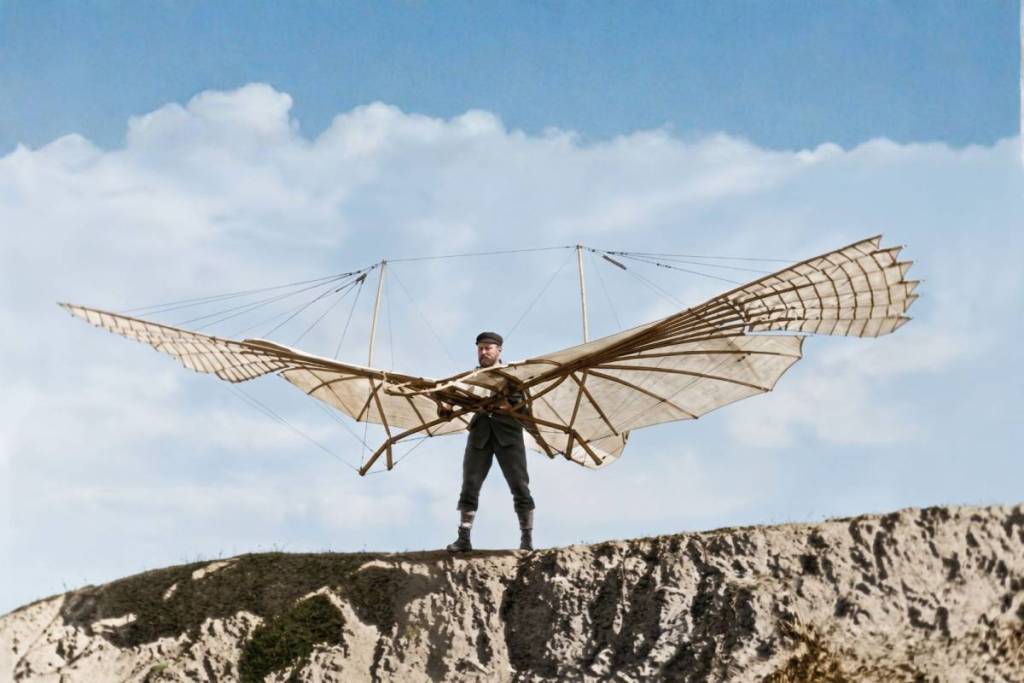

A man runs down a hill, massive wings spreading out above him. He quietly repeats his mantra: “Sacrifices must be made.” Then he loses his footing.
That flight, on a warm Sunday in August 1896, would be Otto Lilienthal’s last. Even as a gust of hot air hits his wings and he plummets toward the ground in a downward spiral, he sees his life flash before his eyes.
The Life of Otto Lilienthal: A Pacifist Dreams of Flying
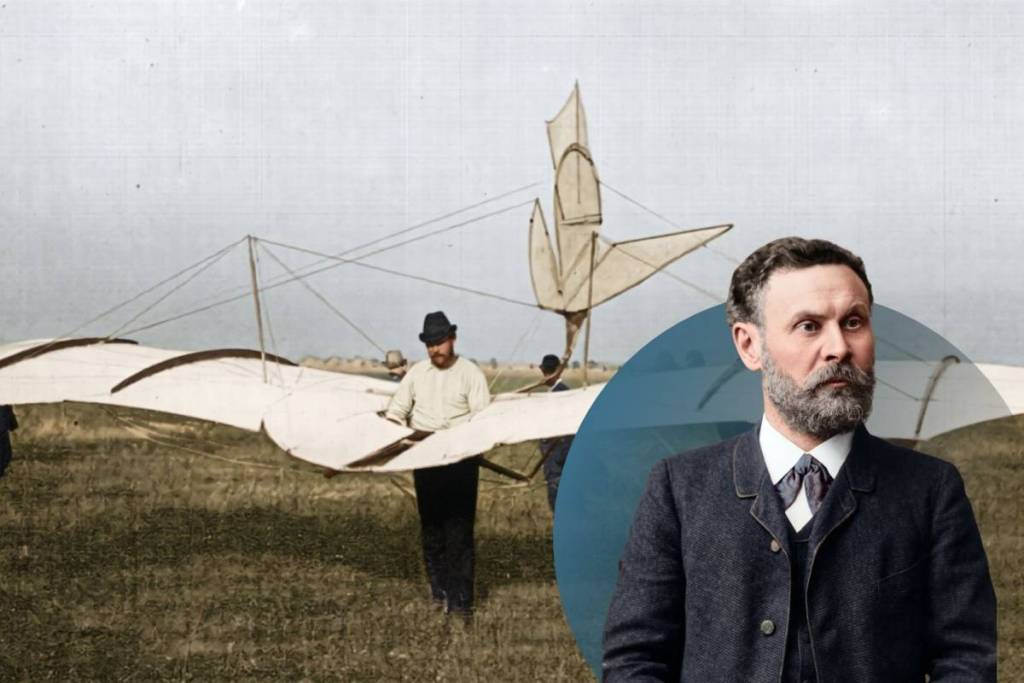
Lilienthal was born in Anklam in 1848. After an internship at the Schwartzkopff Machine Factory, he began studying at the Berlin Academy of Applied Arts in 1867. Later, he founded a machine factory. (One of the first companies to offer profit-sharing for its employees!)
In 1878, he married Agnes Fischer. The couple had four children and shared a love of art and music. But another hobby held Otto’s fascination. Together with his brother Gustav, he observed birds, especially storks. They studied how wings generate lift.
He came to realize that curved surfaces possess favorable aerodynamic properties. Otto Lilienthal published his research in 1889 in the book *Bird Flight as the Basis of the Art of Flying*.
Studying Is No Longer Enough: Lilienthal Throws Himself Off the Mountain
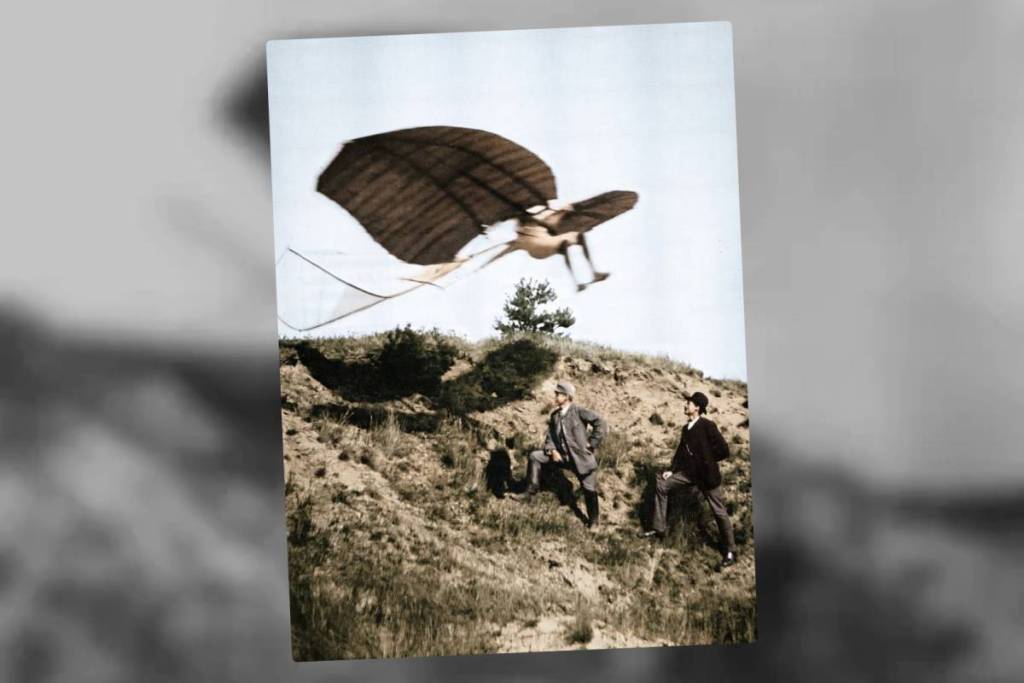
In Lichterfelde—which was still outside Berlin at the time—he had a flying hill about 15 meters high built in 1894. The hill allowed for takeoffs in various wind directions and was located near his home. The hill, now part of Lilienthal Park, still exists today.
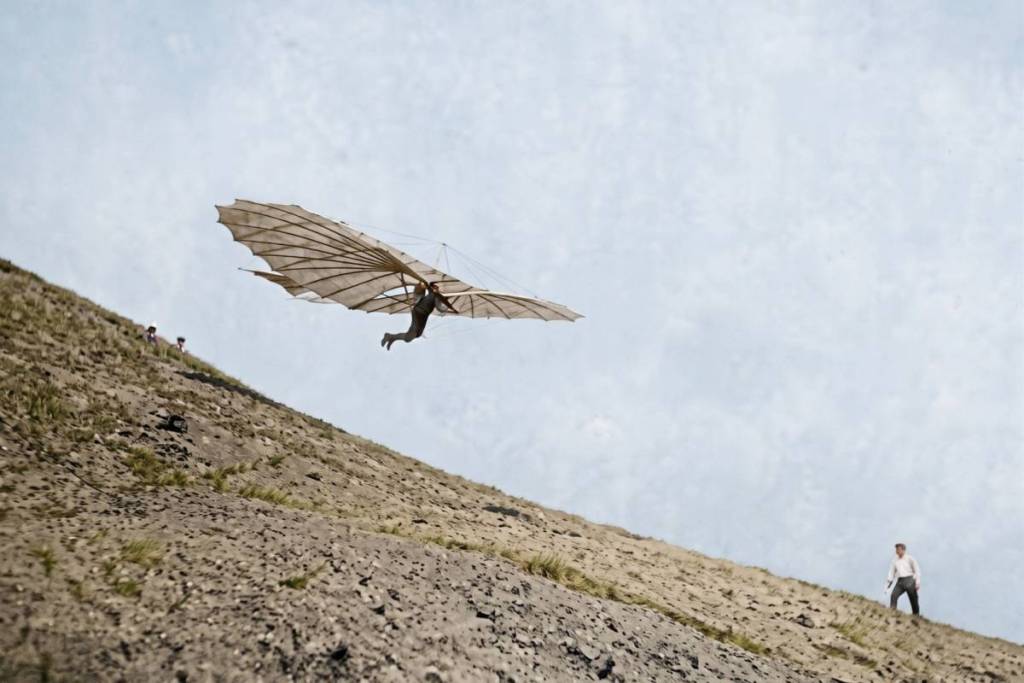
Initially, he made jumps; starting in 1891, he conducted gliding flights near Derwitz, close to Potsdam, and later conducted experiments in Steglitz and the Rhinow Mountains. His longest flights reached approximately 250 meters. Lilienthal steered by shifting his body weight.
Between 1891 and 1896, he completed more than 2,000 gliding flights. It was a cycle of measurements, reconstruction, and tireless testing. Lilienthal proved that humans could repeatedly glide through the air using a flying machine.
The dream becomes a philosophy
In a letter to the social ethicist Moritz von Egidy—which the Lilienthal Museum dates to January 1894—he describes a future in which flying connects countries and reconciles peoples. Borders would lose their significance; people could meet one another more easily.
His hopes extended as far as “eternal peace.” For Otto Lilienthal, invention and social improvement went hand in hand. Soon, in addition to steam engines, his factory was also producing flying machines, which he sold to interested buyers both at home and abroad.
Otto Lilienthal’s Last Flight and His Legacy
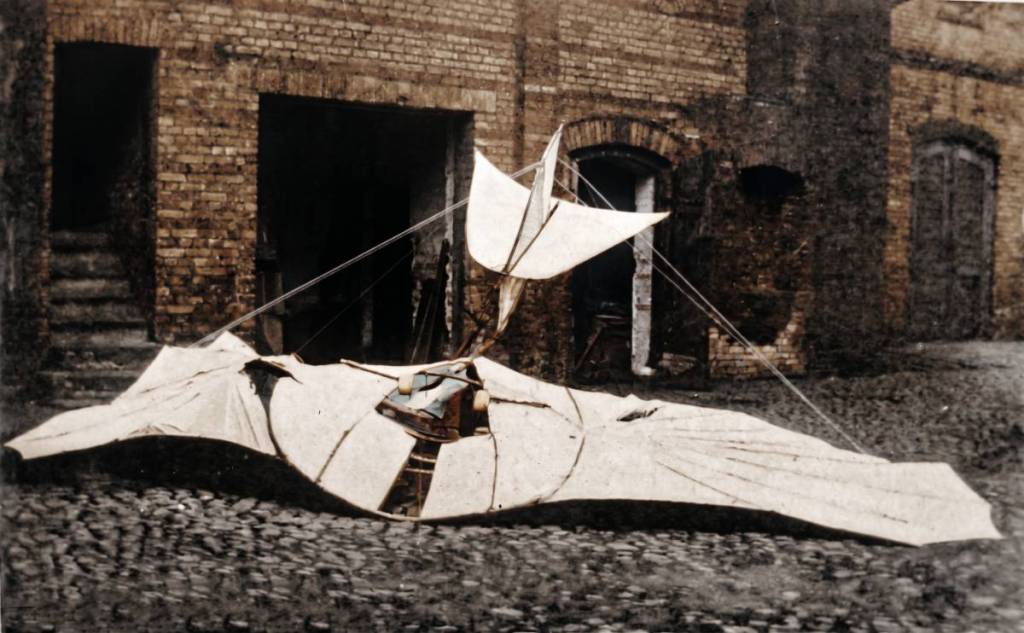
Lilienthal did not have to witness the fruits of his labor being converted into killing machines during World War I. On August 9, 1896, Lilienthal crashed from a height of about 17 meters on the Gollenberg near Stölln. He died the following day in Berlin at the age of 48. Agnes lost her husband; the children lost their father. The inscription “Sacrifices must be made” adorns the memorial at the site of the crash.
His death prompted Wilbur Wright to delve more deeply into the question of flight. Seven years later, the Wright brothers succeeded in achieving controlled powered flight. In 1909, Orville Wright demonstrated his flying skills at Tempelhofer Feld in Berlin.
In 1988, Berlin’s main airport, Tegel, was named “Otto Lilienthal.” His name thus remained in the collective memory for decades. Tegel ceased flight operations in 2020. 130 years after Lilienthal’s death, the capital region has a central commercial airport in the form of BER.