Theodor Fontane, one of Germany’s most famous poets, was inspired by Brandenburg to create art and literature like no other. He already showed his enthusiasm for the Moorish style of the Gentzrode estate in Neuruppin in drawings and texts. But Ribbeck Castle in the Havelland region also played a central role in his poem “Herr von Ribbeck auf Ribbeck im Havelland.” This inspiration is also evident in other natural and architectural gems in Brandenburg, such as Lake Stechlin, which is located in the Ruppiner Seenland nature reserve and belongs to the Stechlin-Ruppiner Land Nature Park.
 Photo: @gitte_eib / Instagram
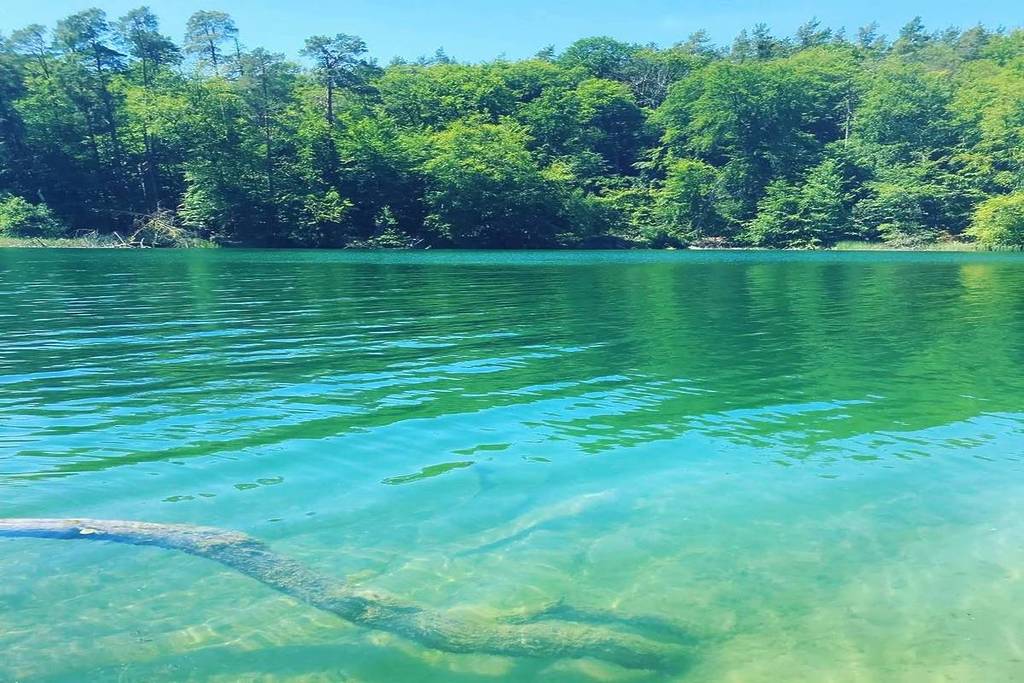
Lake Stechlin is considered one of the clearest lakes in Germany. The water is exceptionally clean and low in nutrients, which is why you can see several meters deep into the lake in many places. It is precisely because of this special water quality that the lake is well known to both nature lovers and scientists. The lake was formed at the end of the last ice age about 15,000 to 20,000 years ago. During this period, glaciers shaped large parts of the northern German landscape. When the ice melted, deep depressions were formed, which later filled with water – this is how Stechlinsee came into being. With a maximum depth of around 69 meters, it is one of the deepest lakes in Brandenburg. It covers an area of around 4.3 square kilometers.
The lake is almost completely surrounded by dense forests. Pine and mixed forests dominate the landscape around the lake. The shores have remained largely natural and have only been developed in a few places, giving the area a particularly peaceful and unspoiled feel. The lake attracts many visitors, especially in summer, who come here to swim, dive, or take a boat trip across the clear water.
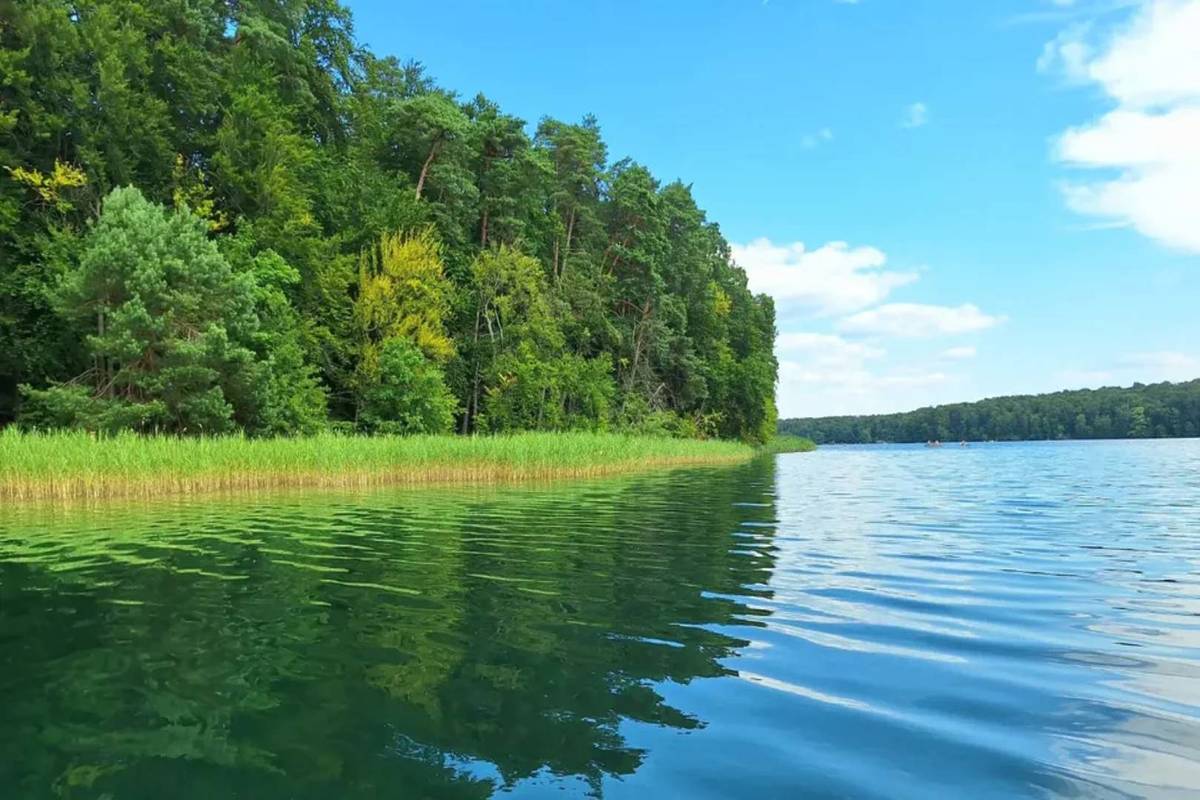 Photo: @e.eckthaler / Instagram
Lake Stechlin is also well known from a literary perspective. The writer Theodor Fontane made the lake famous with his novel “Der Stechlin.” In this work, he describes the landscape and the lives of the people in the region. The exceptionally clear water quality also makes the lake an important research location. The Leibniz Institute of Freshwater Ecology and Inland Fisheries is located nearby and has been conducting ecological studies here for many years. Among other things, scientists are researching how climate change, nutrients, and environmental changes affect lakes.
A special feature of Lake Stechlin is that it has no major inflow. It is mainly fed by groundwater. This keeps the water particularly clean and clear. At the same time, the lake is sensitive to changes in the environment, which is why it is under strict nature conservation. Today, Lake Stechlin is an important destination for nature tourism in Brandenburg. Visitors can swim, hike, cycle, or simply enjoy the tranquility of the landscape. Despite its popularity, the nature around the lake has been largely preserved.