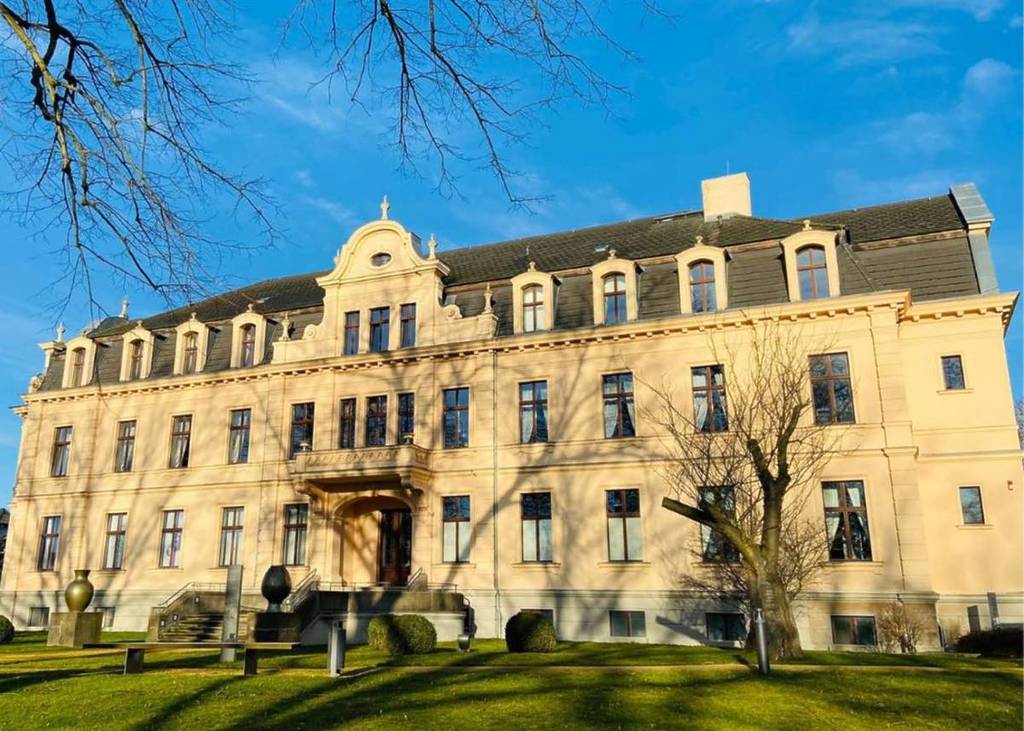
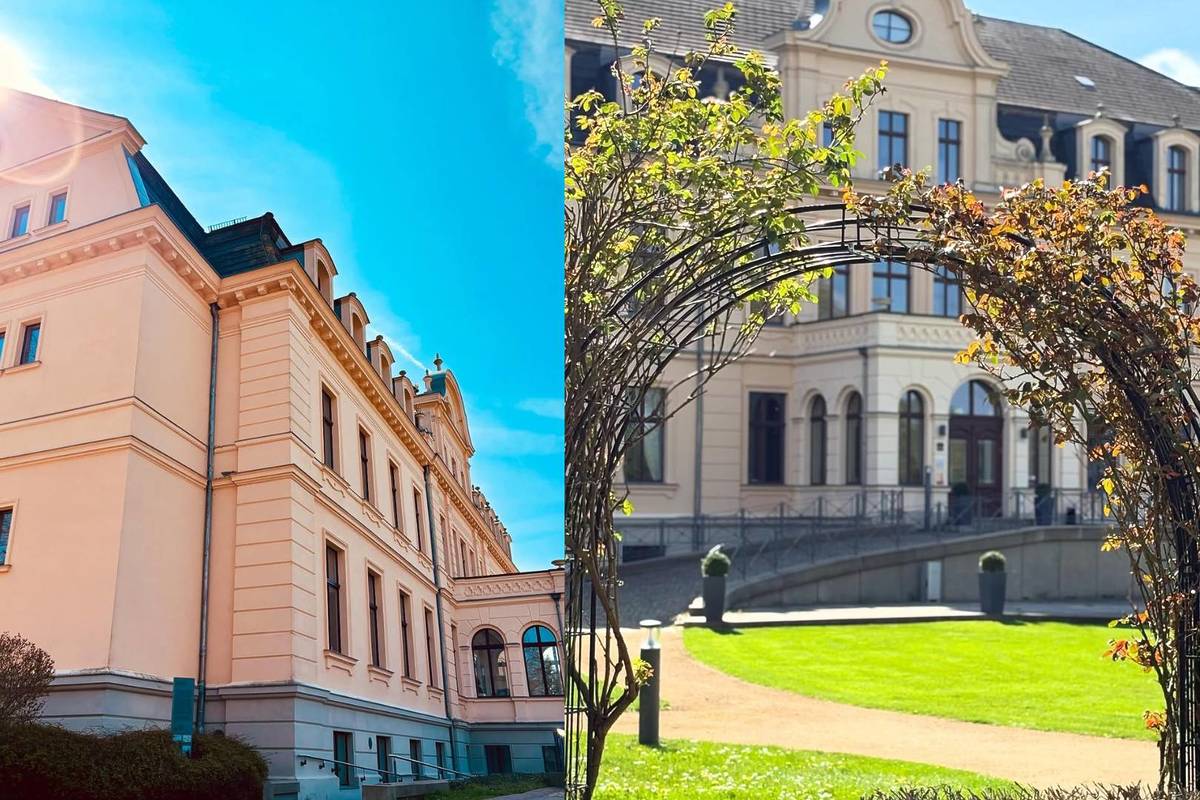
Ribbeck Castle was built in 1735 by Hans Georg von Ribbeck. Theodor Fontane’s ballad first appeared in 1889 in the anthology “Balladen” and became widely known at the end of the 19th century, especially in school lessons. By the beginning of the 20th century, the poem was firmly established in the German educational canon.
It was Fontane’s work that made the place famous in literary circles, and the historic pear tree became a symbolic landmark in the course of the 20th century. After German reunification, Ribbeck increasingly positioned itself as a literary and tourist destination. In the 2000s, this led to the creation of an exclusive permanent exhibition on Theodor Fontane.
The fact that pears still play such a special role at the castle complex is also thanks to the poem: in “Herr von Ribbeck auf Ribbeck im Havelland,” the old Lord von Ribbeck gives pears to the children of the village. He even thinks beyond his death and has a pear placed in his grave, from which a new tree grows. It is precisely this pear tree— the Ribbeck pear tree —that forms the heart of the complex today. Hardly any other tree in Germany has greater literary significance.
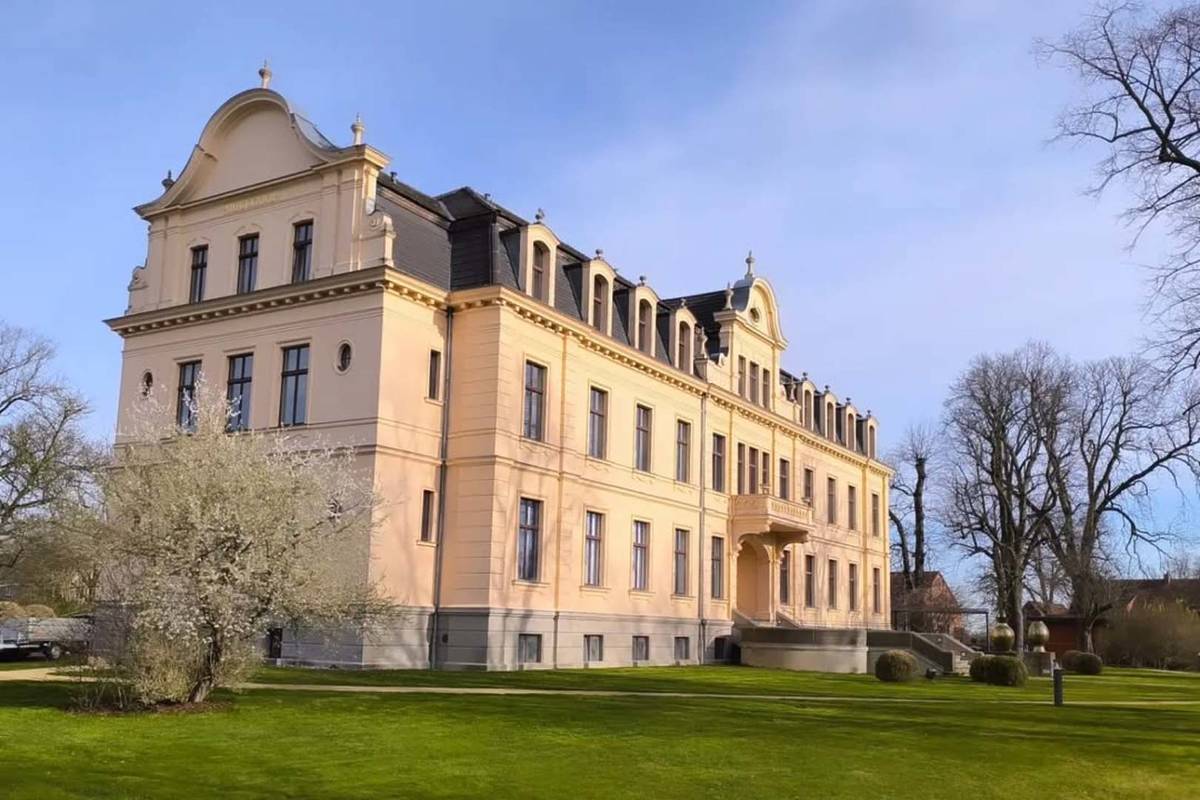
The castle is built in neo-Gothic style with English influences: red bricks, turrets, pointed arches, and a spacious landscape park give it a fairytale charm. It is not a ostentatious palace, but a place of quiet elegance, poetic charisma, and historical depth. Ribbeck Castle is considered one of Brandenburg’s most important literary cultural monuments – a symbol of Prussian rural culture and a set of values that places social responsibility above wealth.
Today, the castle houses a museum dedicated to the von Ribbeck family and a permanent Fontane exhibition. It also hosts readings and concerts, as well as weddings, events, and seasonal festivals, including the popular Pear Festival. A café in the castle invites visitors to linger.