
Oh Berlin, you have so many wonderful places, from idyllic urban gardening projects to magnificent orangeries to a waterfall right in the middle of the city. And then there are our regular haunts, where we spend our free time week after week, whether at a club or doing other activities. Places like these should stay forever, shouldn’t they? But unfortunately, some of our favorites are hanging in the balance. First, Club Cassiopeia on the RAW grounds was threatened with eviction —and that’s not all. Now, part of the popular Gleisdreieck is also affected—a green oasis that serves as an indispensable retreat for many Berliners.
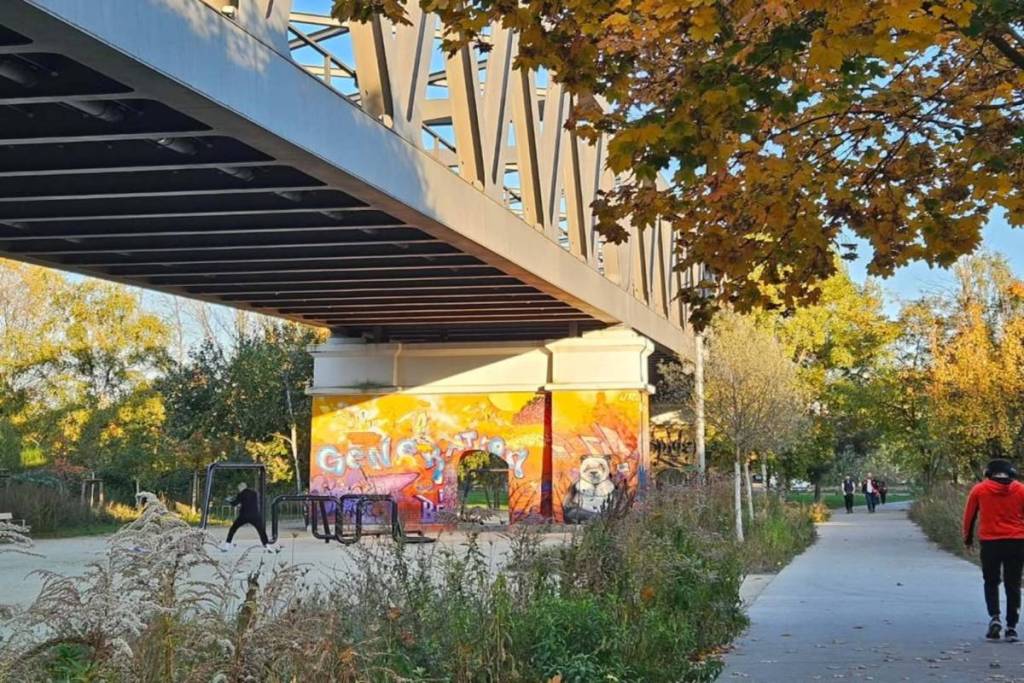
The Gleisdreieck is one of the capital’s most popular green spaces, attracting thousands of Berliners every year with its expansive lawns, sports fields, and urban nature. But this very popular open space could now be changing: planned high-rise projects in the immediate vicinity are currently sparking debate and criticism. The Gleisdreieck Park is located between Kreuzberg, Schöneberg, and Tiergarten on the site of former railway facilities. Covering an area of approximately 31.5 hectares, it is one of Berlin’s largest inner-city parks.
The site has a long history. Where people now spread out picnic blankets and children play, the freight yards of Potsdamer and Anhalter stations once stood. After decades of neglect, a unique urban wilderness developed on the former railway wasteland. It was only after years of dedication by citizens’ initiatives that the site was gradually opened as a park between 2011 and 2014.
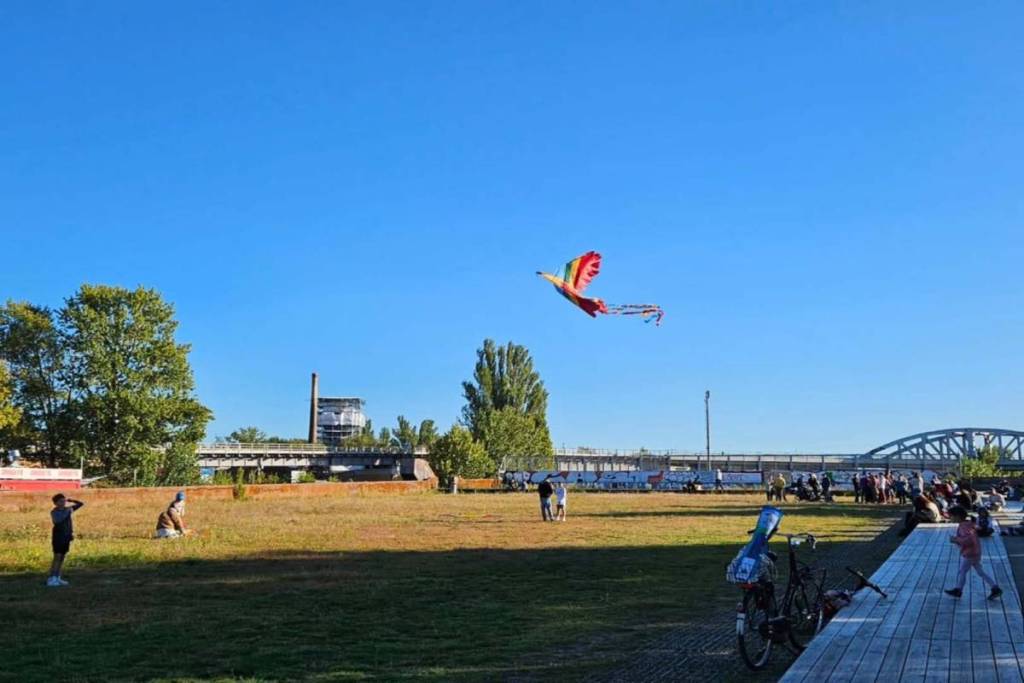
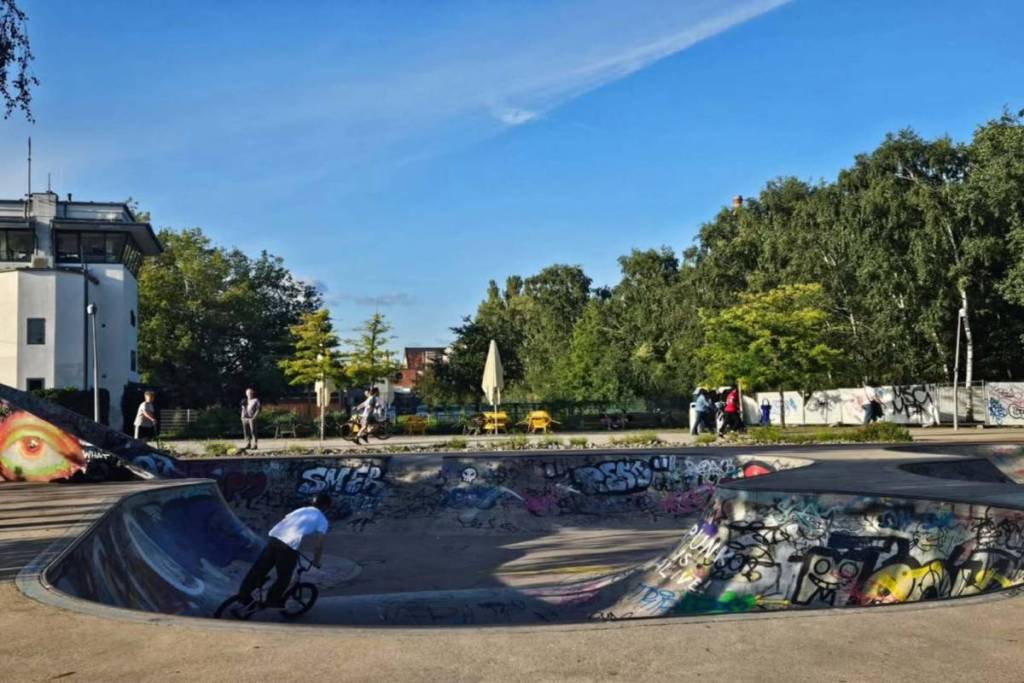
Today, the park at Gleisdreieck is one of Berlin’s most versatile green spaces. Here you’ll find large lawns for sunbathing, walking and biking paths, one of the city’s largest skateparks, basketball and beach volleyball courts, playgrounds, and numerous quiet spots to relax. Particularly popular are the wooden bleachers and meadows, from which you can watch the passing subway trains and the Potsdamer Platz skyline.
But the park is once again at the center of an urban planning debate. Critics fear that the buildings could alter the landscape, obstruct important sightlines, and lead to additional shading as well as increased pressure on the green spaces. Proponents, on the other hand, argue that Berlin urgently needs new housing and that development should take place on land that is already paved.
For many Berliners, however, the discussion is about far more than just two new buildings. The park at the Gleisdreieck is considered one of the most successful examples of how a former industrial wasteland can be transformed into a vibrant yet nature-oriented open space— a place that combines sports, recreation, culture, and nature right in the heart of the city.