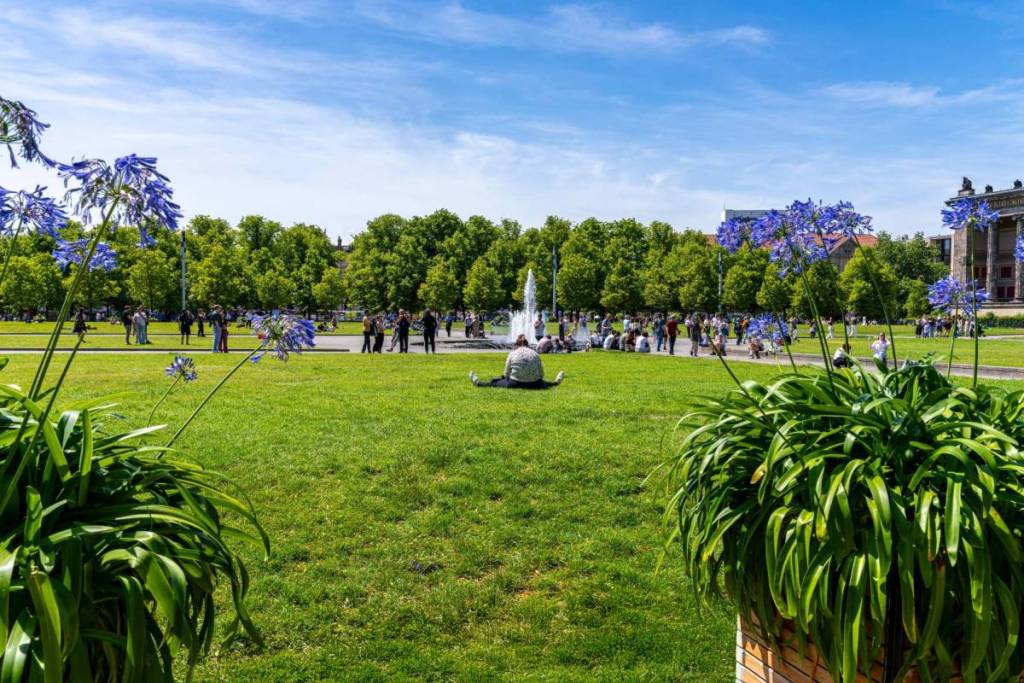

From a square with a wine fountain to hidden courtyards with small cafés to ferries that cruise across Berlin’s most beautiful bodies of water —it’s hard to argue that the capital is short on ideas for summer activities. And because the possibilities are virtually endless, we’d like to introduce you to even more places to enjoy during the warmer months. Among them is the beautiful Lustgarten, one of Berlin’s most famous and historically significant parks.
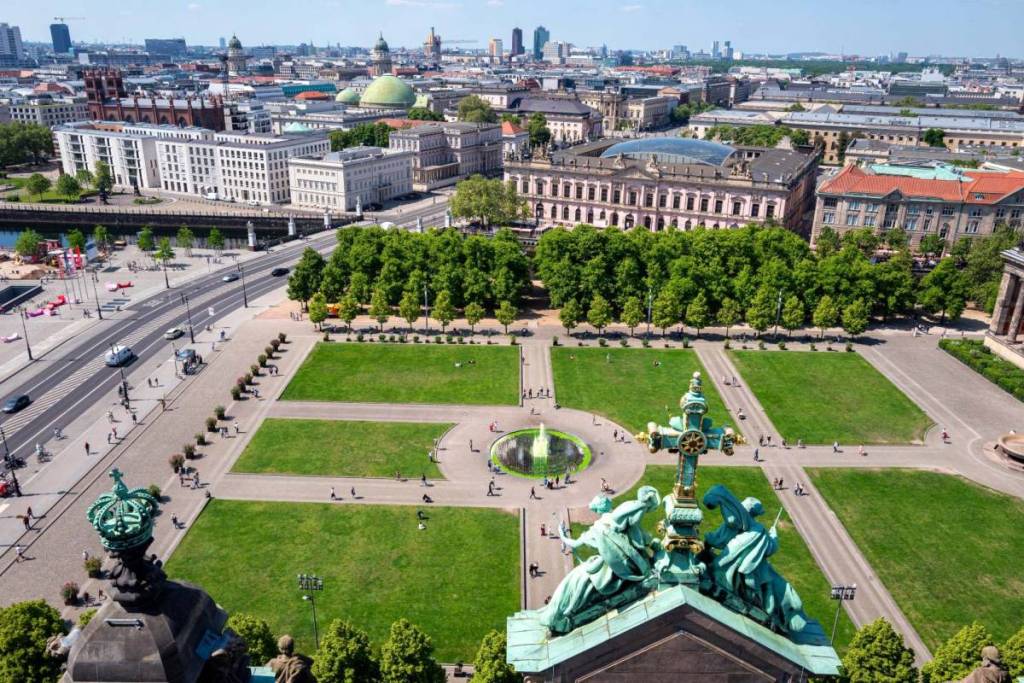
This large green space is located on Museum Island in Berlin-Mitte, right between Berlin Cathedral, the Altes Museum, and the Humboldt Forum, and is one of the capital’s most popular gathering spots. Today, the Lustgarten is a place to relax, sunbathe, and linger, but it looks back on a history spanning over 450 years.
The history of the Lustgarten dates back to the 16th century. Originally, the area served as the kitchen and herb garden for the Berlin City Palace. In 1646, Electress Luise Henriette of Nassau had the garden redesigned into a stately Baroque park with fountains and geometric paths and gave it its current name, “Lustgarten,” meaning “Garden of Joy.”
In the 20th century, the Lustgarten played a significant political role. During the Weimar Republic, large demonstrations took place here. Under the Nazi dictatorship, the square was used for mass marches and was completely paved over. It wasn’t until after Germany’s reunification that the process of transforming it back into a green space began. After extensive renovations, the Lustgarten reopened as a park in 1999.
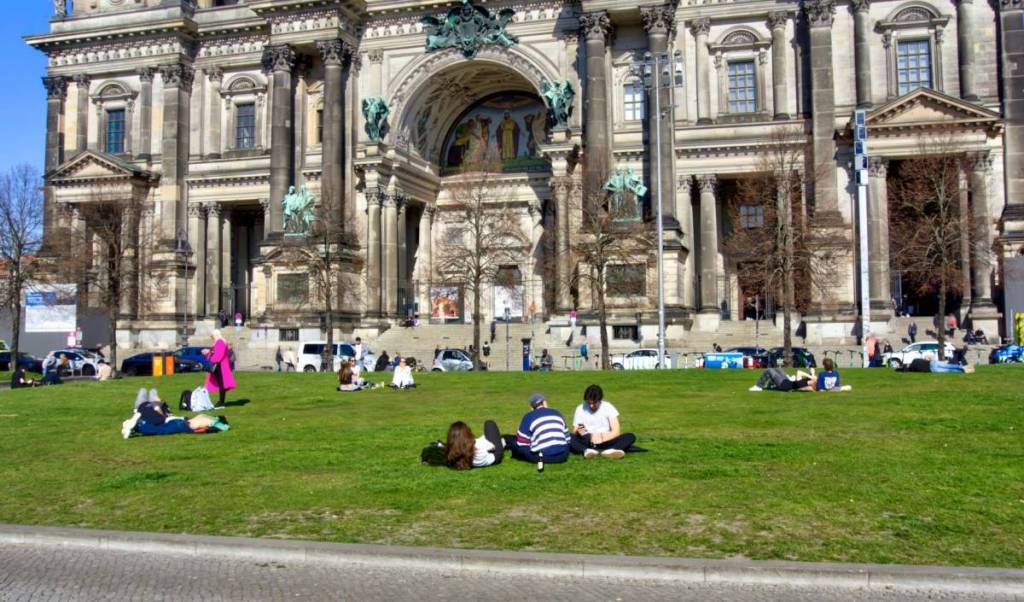
Today, the park spans approximately 2.4 hectares and forms the green heart of Museum Island. From here, some of Berlin’s most beautiful views unfold: of Berlin Cathedral with its imposing dome, the neoclassical Altes Museum, and the reconstructed Humboldt Forum. Especially on warm days, hundreds of people sit here on the lawns and enjoy the special atmosphere in the heart of the city’s historic center.
The Lustgarten regularly serves as a venue for cultural events, festivals, demonstrations, and open-air activities. Thanks to its location on Museum Island, a UNESCO World Heritage Site, it is one of the capital’s most visited places and attracts millions of Berliners and tourists every year.