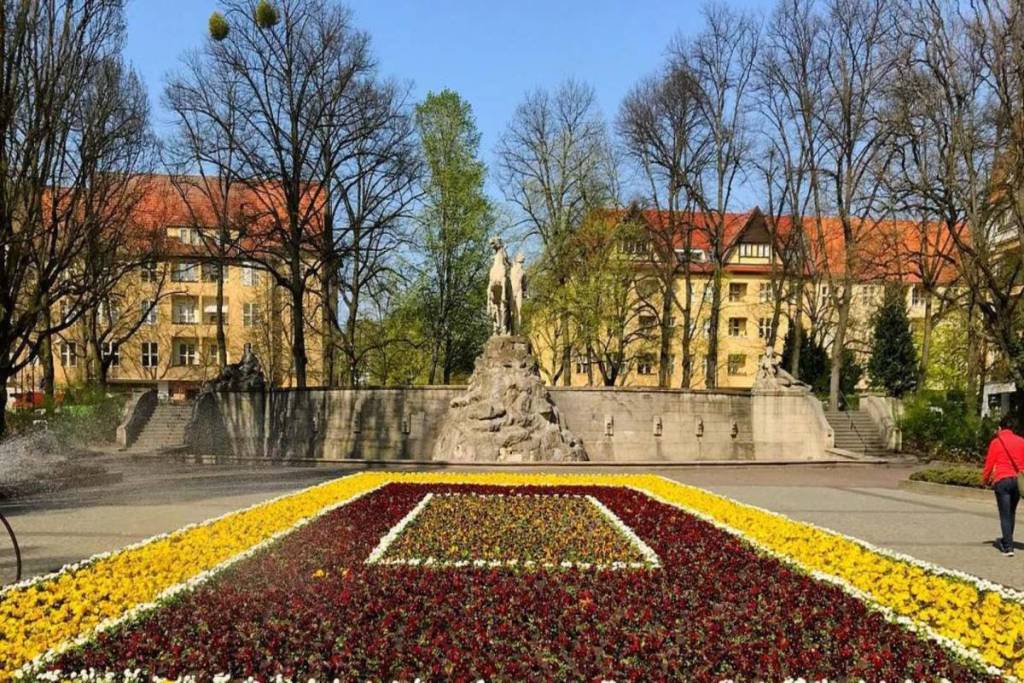

What could be better in the summer than sitting in a quiet spot and enjoying nature, architecture, and the beautiful weather? Berlin offers countless opportunities for this—from green backyards to magnificent palace parks to hidden waterfalls. The capital’s green idyll seems endless, and we have another tip for you: Rüdesheimer Platz is one of Berlin’s most beautiful and idyllic squares and forms the heart of the so-called Rheingau district in Wilmersdorf.
Rüdesheimer Platz was created in the early 20th century as part of Berlin’s westward urban expansion and was named in 1909 after the Hessian wine town of Rüdesheim am Rhein. The surrounding streets also bear the names of places in the Rheingau, reflecting the neighborhood’s close connection to the famous wine region.
Rüdesheimer Platz forms the centerpiece of the historic “Gartenterrassenstadt” (Garden Terrace City) in the Rheingauviertel. The residential complex was planned starting in 1905 by entrepreneur Georg Haberland and was modeled after the English garden city movement. Wide streets, plenty of greenery, small front yards, and elegant residential buildings with ornate facades and gables continue to characterize the neighborhood to this day. Large parts of the complex are now listed as historic landmarks.
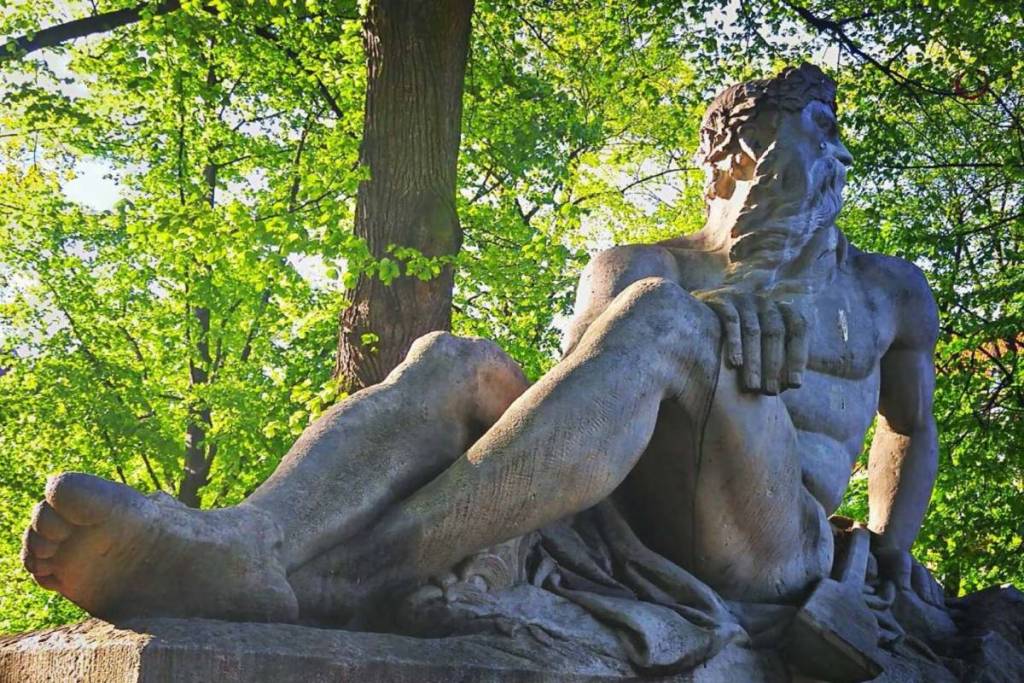
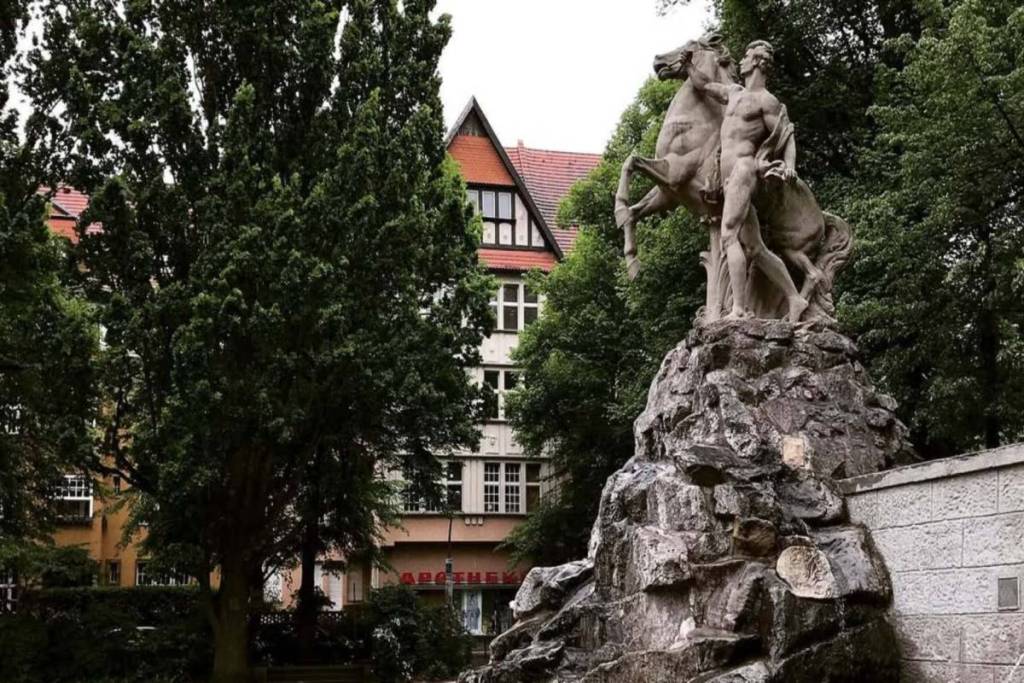
In the center of the square stands the famous Siegfried Fountain, designed in 1911 by sculptor Emil Cauer . The fountain depicts the legendary hero Siegfried as well as the allegorical figures Father Rhine and a wine queen, or Mother Moselle. The fountain is one of Berlin’s most beautiful historic fountains and is considered a landmark of the square.
Arguably the most famous highlight of Rüdesheimer Platz is the Rheingau Wine Fountain. Since 1967, winemakers from the Rheingau have been serving their wines here every year from May through September. Many visitors bring their own snacks or picnic baskets and enjoy the special atmosphere under the open sky. The Wine Fountain is one of Berlin’s most traditional summer events and attracts numerous guests every year. Due to noise protection regulations, the number of visitors is now limited, and wine service ends at fixed times in the evening.
The Rüdesheimer Platz subway station is also a small attraction in its own right. It opened in 1913 and is considered one of the capital’s most beautiful historic subway stations. Architect Wilhelm Leitgebel designed the station with numerous motifs related to wine and viticulture. Mosaics, grapes, leaves, and small depictions of animals adorn the walls and entrances of the station. The station has been fully accessible since 2019.