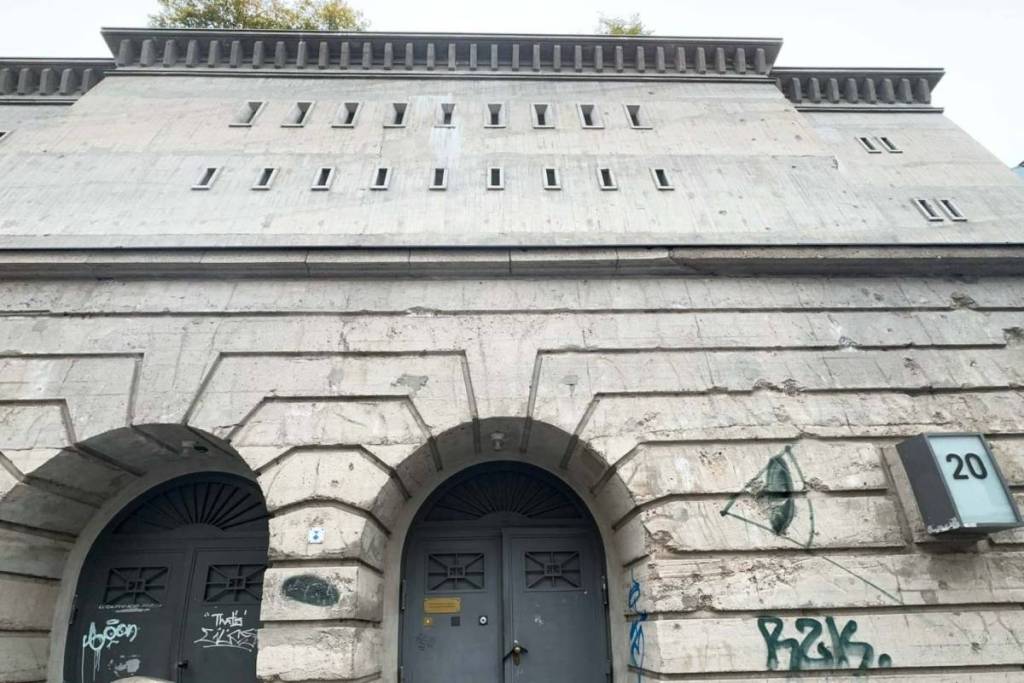

Exploring Berlin’s history is anything but boring. Almost every building in the city tells its own story. In recent years, many former industrial and functional buildings have been repurposed as modern food hubs, nightclubs, or restaurants. Others remain vacant to this day, and their future is uncertain. However, we find places that are open to the public and offer a fascinating glimpse into the past particularly exciting. These include several bunkers that now serve entirely new purposes. One of them is the Boros Bunker, which is now officially called the Boros Collection and ranks among Berlin’s most extraordinary art venues.
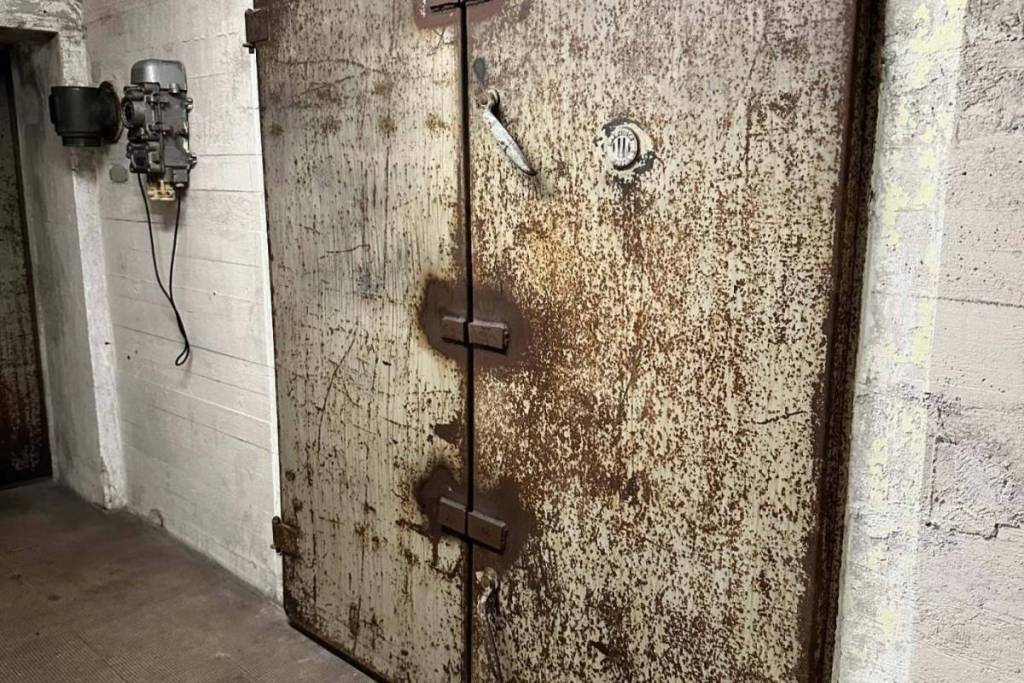
In a former air-raid shelter from the Nazi era, raw concrete architecture meets international contemporary art. The venue uniquely combines history, architecture, and art and is now one of Germany’s best-known private art collections. The bunker was built between 1941 and 1942 as the so-called Reichsbahn Bunker Friedrichstraße . The architect was Karl Bonatz. The building was intended to provide shelter for travelers and employees of the Reichsbahn during Allied air raids. The bunker was constructed by forced laborers.
Its dimensions remain impressive to this day: the exterior walls are up to 1.80 meters thick, and the ceilings reach a thickness of up to 3.50 meters. The bunker has approximately 3,000 square meters of exhibition space and could accommodate up to 3,000 people during World War II. The Boros Bunker has an extraordinary history. Between 1942 and 1945, it served as an air-raid shelter. After the war ended, the Red Army used it as a prisoner-of-war camp. Starting in 1949, the building was used as a textile warehouse. In 1957, it became a warehouse for imported tropical fruits from Cuba, which is how it earned the nickname “Banana Bunker.”
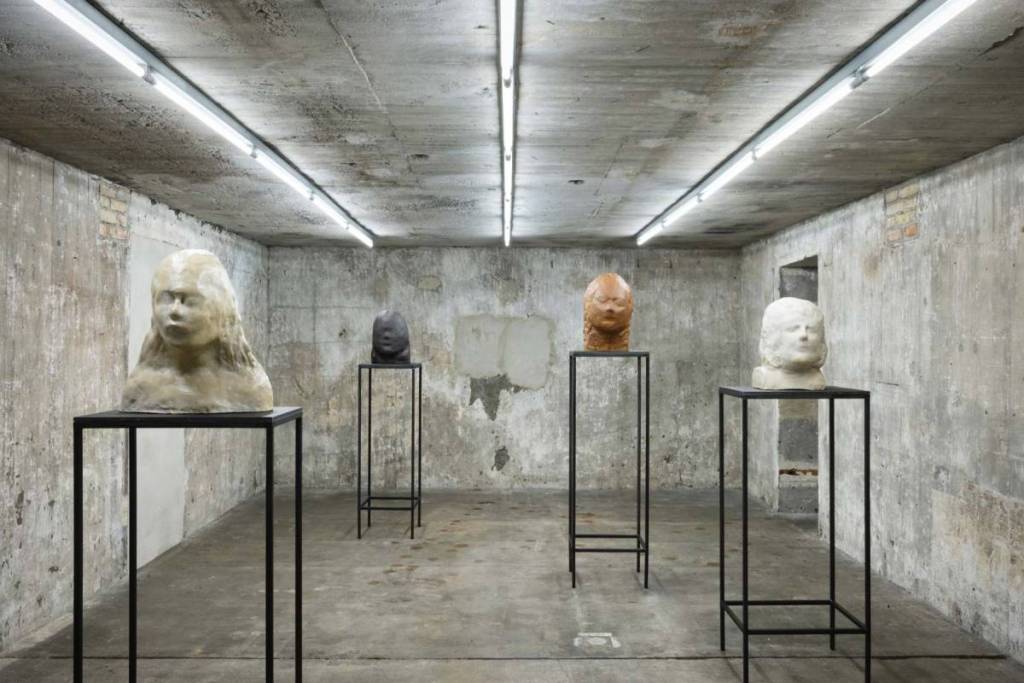
From 1992 to 1995, the building housed the legendary techno club Bunker, which was internationally renowned for its uncompromising underground, techno, and fetish scene . Art exhibitions were held there for the first time in 1996. In 2003, Karen and Christian Boros purchased the building and had it extensively renovated. Since 2008, the Bunker has been open to visitors as the Boros Collection.
The private collection belongs to the collector couple Karen and Christian Boros. Today, it comprises around 500 works of international contemporary art. However, only about 120 works are on display at any given time. The entire exhibition is completely re-curated every four to five years. Artists represented include Anne Imhof, Olafur Eliasson, Julian Charrière, Alicja Kwade, and Wolfgang Tillmans, among others. The current fourth presentation of the collection has been on view since 2022.