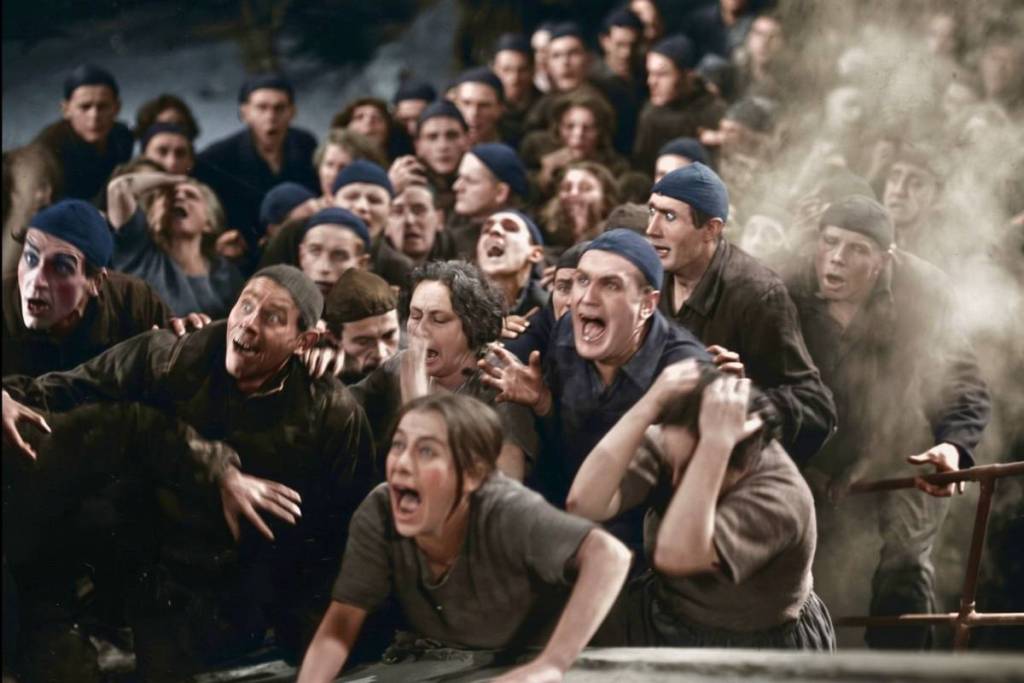

One hundred years ago, hundreds of extras raised their trembling hands toward a fictional savior. These were to be the very same people who, seven years later, would reach out their hands toward a new, terrible savior and usher in the darkest chapter of German history.
And so “Metropolis” was destined to be interpreted in the context of its Weimar origins—a country on the brink of collapse. But Fritz Lang’s masterpiece still has much to say to us today: After all, the film, shot in 1926, is set in the year 2026.
So let’stake a closer look atFritz Lang’s “Metropolis” and see what the film has to say to us today—both intentionally and unintentionally. (Also, be sure to stop by the Babylon Kino in Berlin, where the film is being screened with a live orchestra!)
Fritz Lang’s Vision of the Future: Metropolis (1927)
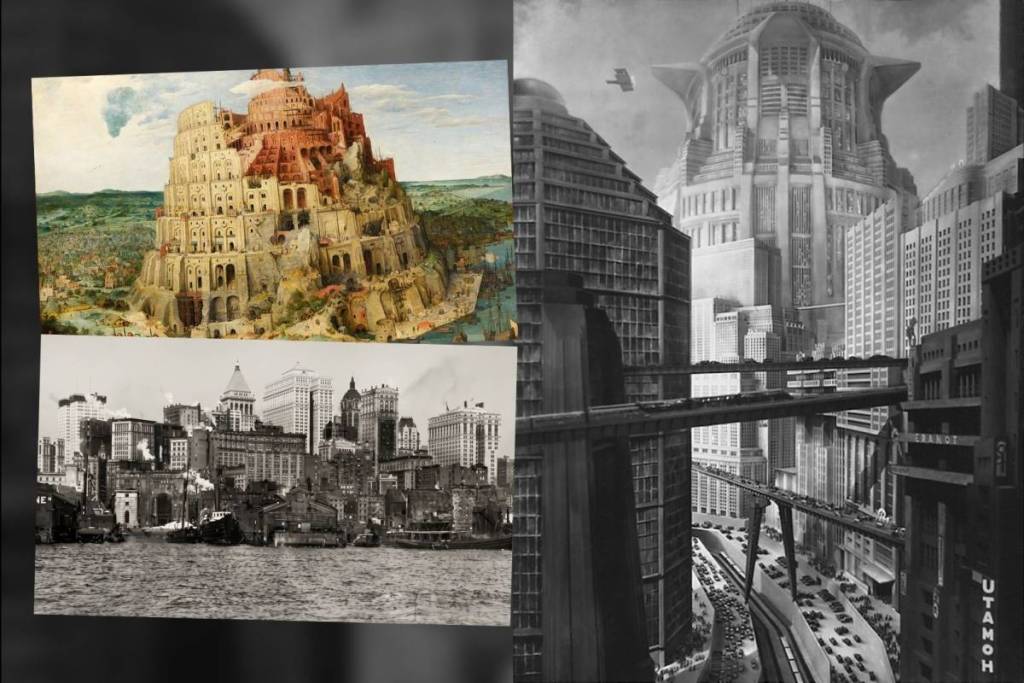
Ever since he first laid eyeson the New York skyline in 1924, director Fritz Lang had been obsessed with the image of a vertically divided society. Above, the elite in their skyscrapers; below the surface, the masses of workers. He combined this with the biblical vision depicted in Bruegel’s painting “The Tower of Babel” ( see image above).
Just like New York and Berlin, the city of Metropolis swallows up its inhabitants. The workers are lonely, alienated, and reduced to mere functions. An unhappy situation that must end in an inevitable clash .
How can one manage an inevitable conflict?
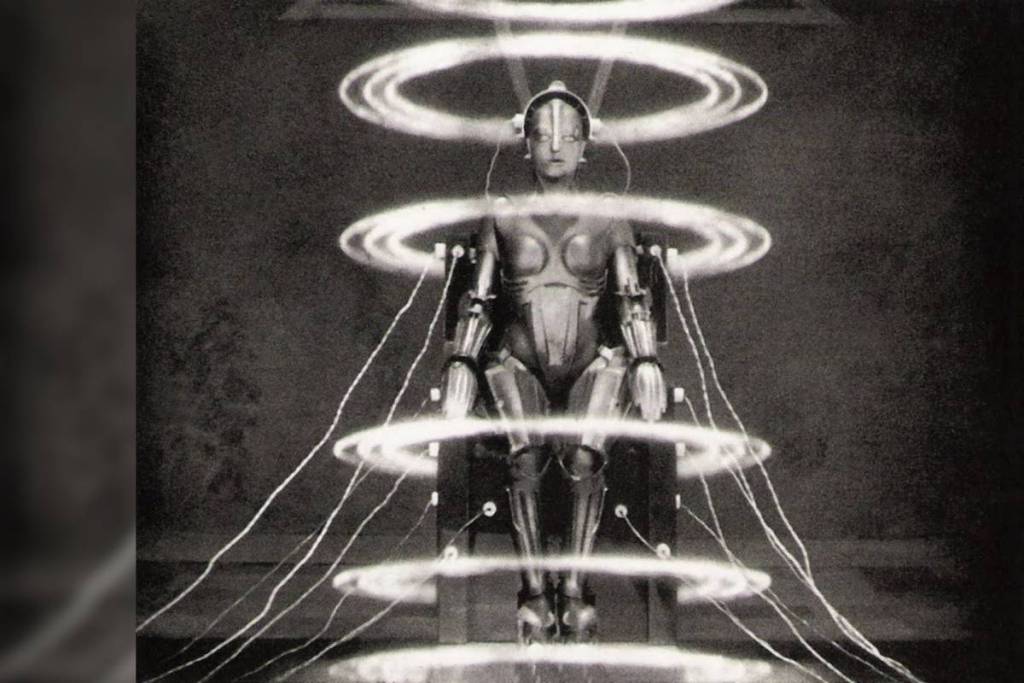
To suppress the smoldering uprising, the ruler of Metropolis orders the creation of a machine man. This being is created (not by a sorcerer using magic) but by an inventor using technology. Screenwriter Thea von Harbou reworked common literary motifs to craft a modern story in the style of an epic folk tale.
The danger of this robot lies not in its physical strength, but in the fact that it is a perfect copy of the workers’ leader, Maria. It is an AI deepfake that simulates her human nature, deliberately spreads disinformation, drives the masses into a hysterical echo chamber, and steers them toward collective, blind self-destruction.
Lang’s gigantic 5-million-mark production
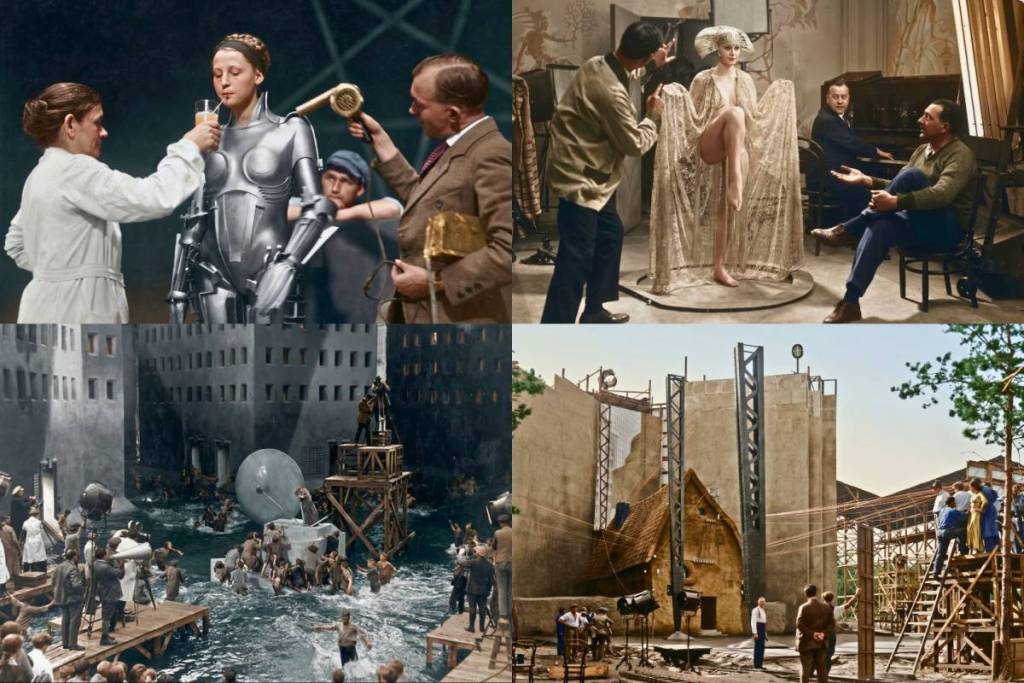
Filming tooka full 17 months—much longer than planned. Around 36,000 extras were used. Due to the massive sets and special effects, dedicated studios had to be built. This required vast amounts of film stock: over 600,000 meters of negative film.
When the film flopped at the box office after its 1927 premiere, the UfA ran into financial trouble and nearly went bankrupt. It was considered too long, too melodramatic, and its kitschy moral at the end was criticized:“The heart must be the mediator between the brain and the hands”—a line the film used to describe the relationship between factory owners and workers.
In the 1920s, some people believed (in the spirit of Nietzsche) that the old world had to perish so that a “New Man” could emerge. This “New Man” was to be guided by empathy, love, spirit, and humanity.
This Is Metropolis 2026
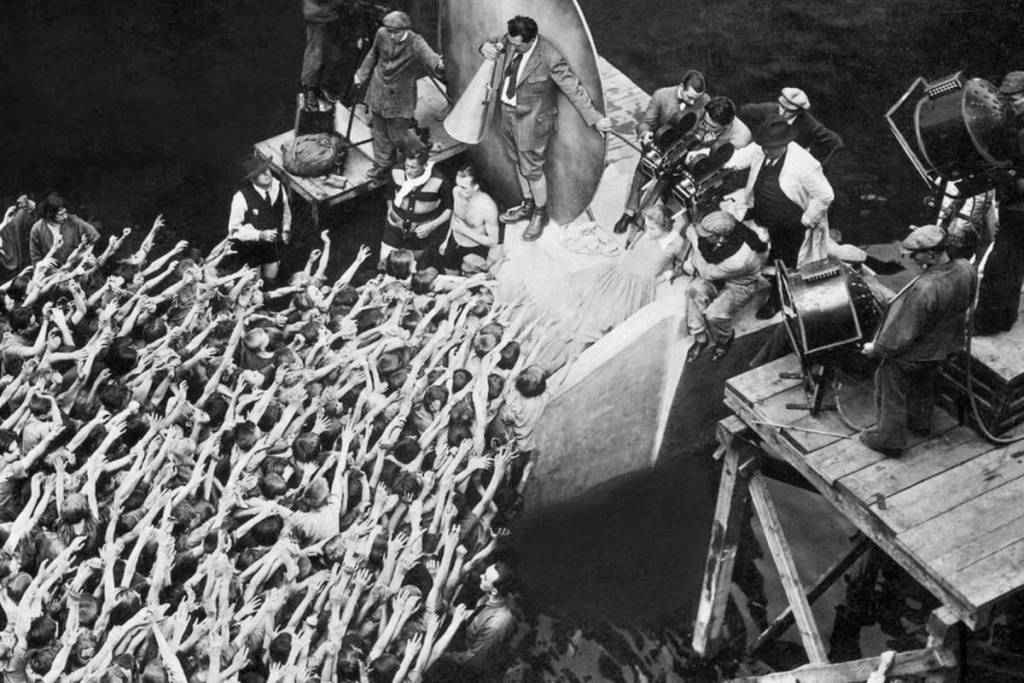
In the film, the “New Man” is not the robot, but—surprise, surprise—a human being. Not the radical worker Maria, however, but the ruler’s son, who emerges as a mediator between the working class and the upper class . The anti-democratic representative is elevated to the role of a new oppressor in sheep’s clothing.
Today, in the form of superhero movies, the salvation of humanity is sold to us by anti-democratic figures . In this vein, the clueless sons of capital willingly offer to solve all our problems with technology.
Thea von Harbou and Fritz Lang were right: AI systems are infiltrating our collective consciousness, and synthetic media are shaping our reality. And billionaires are casting themselves as mediators between the people and the ruling system. Only this is no happy ending!