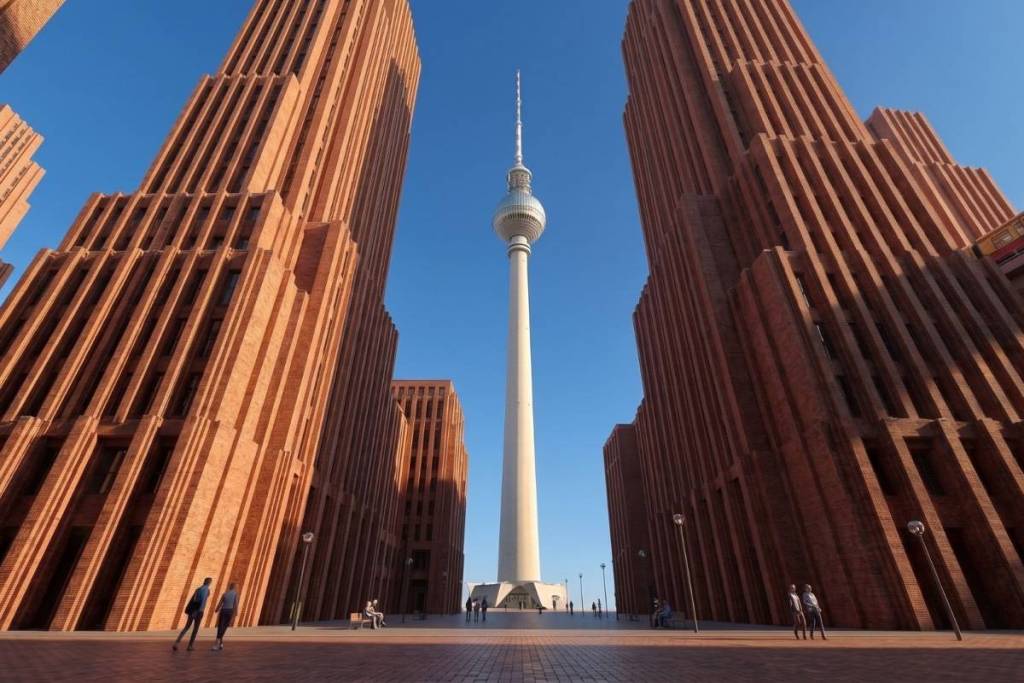

In 1993, renowned architect Hans Kollhoff won the urban planning ideas competition for Alexanderplatz in Berlin-Mitte: He wanted to transform the heart of the reunified capital into a “mini-Manhattan.”
The ambitious master plan called for 13 skyscrapers that were to rise up to 150 meters into the Berlin sky. The vision was to create an urban center visually inspired by the American Art Deco style of the 1920s .
Hans Kollhoff’s Master Plan: A Touch of New York in Berlin
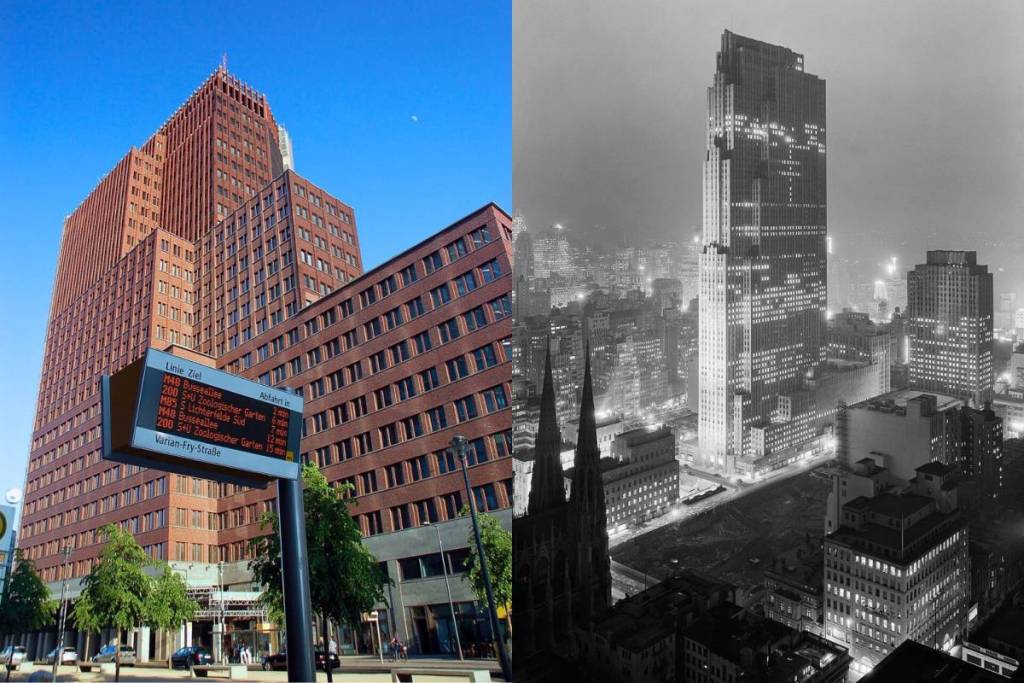
Kollhoff’s design was a radical alternative to the socialist aesthetic and the urban scars of division. It was inspired by the iconic skyscrapers of North America, such as the Rockefeller Center.
With austere, classically proportioned stone facades, stepped spires, and an extremely high-density development, the Alexanderplatz was intended to exude metropolitan flair. Beyond simply creating office space, Kollhoff sought to instill a new, proud sense of vitality in Berlin—one that would architecturally hark back to the myth of the Golden Twenties.
While Kollhoff’s architecture is indeed beautiful, it seems out of place in Berlin. For all its beauty, soil sealing, emptiness, and a lack of identity characterize the surroundings of Kollhoff’s architecture, as can be seen at the Leibniz Colonnades and Potsdamer Platz (Kollhoff Tower).
Why the Skyscraper Vision Stalled
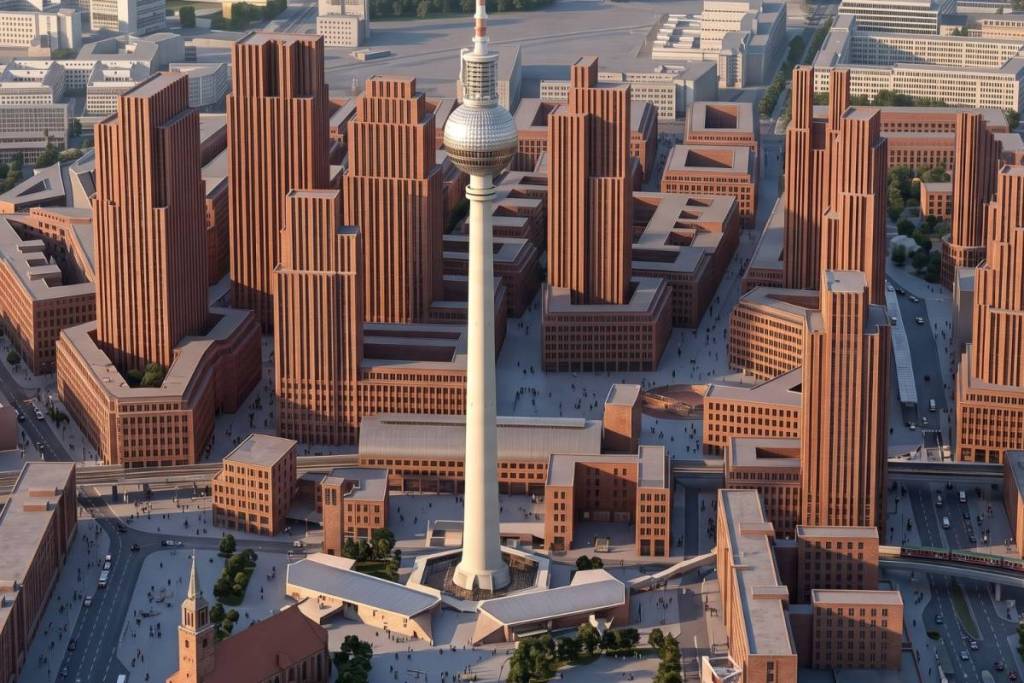
Despite initial euphoria following the fall of the Wall, economic reality quickly caught up with the capital. A lack of investors, an oversupply of office space in the 1990s, and Berlin’s notorious financial problems caused the master plan to be shelved for the time being.
Furthermore, Berlin’s civic society resisted such a skyline development in the historic center. Instead, for decades, stagnation, drafty open spaces, and makeshift structures defined the landscape around Alexanderplatz. Yay!
Investors’ Dreams Instead of the Will of the People: The Current Reality at Alexanderplatz
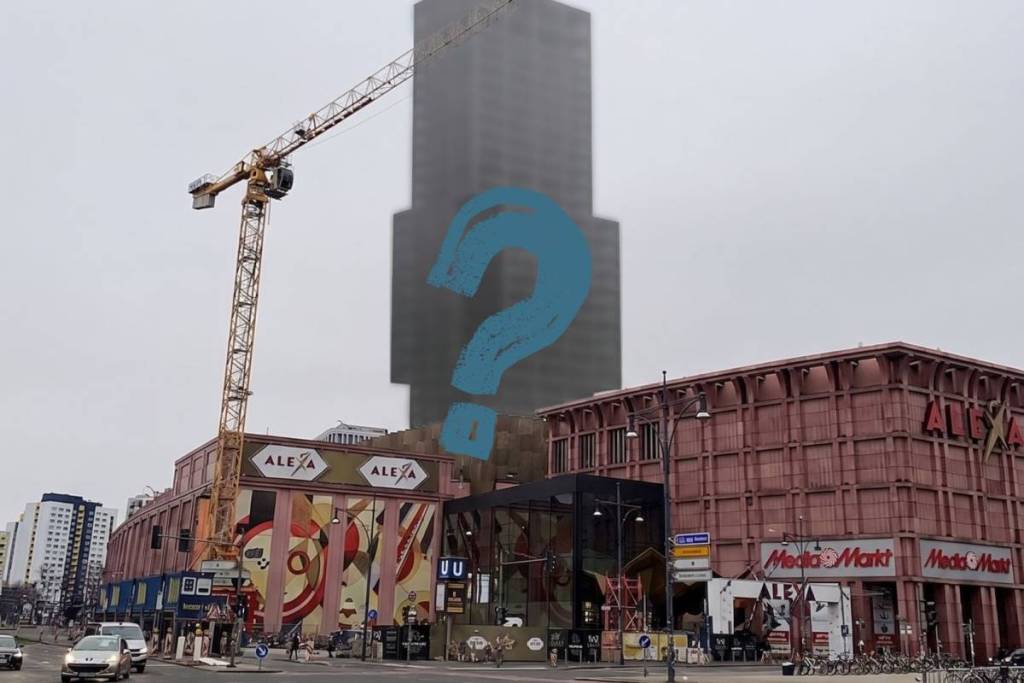
Today, skyscrapers are finally set to rise on Alexanderplatz—including the Alexander Tower (Monarch) and the Covivio high-rise . These buildings have nothing in common—at least aesthetically—with Kollhoff’s elegant vision.
In the ’90s, there was at least one aesthetically coherent plan. Today, meaningless buildings made of glass and concrete are being erected. Instead of affordable housing , hotels, luxury apartments, and office spaces are being built.
Admittedly, one must note that Kollhoff’s architecture was a hundred times better than the alternative. But even his project would not have provided relief for the general public. Because that is exactly what “Mini-Manhattan” would have been: a Mini-Manhattan.