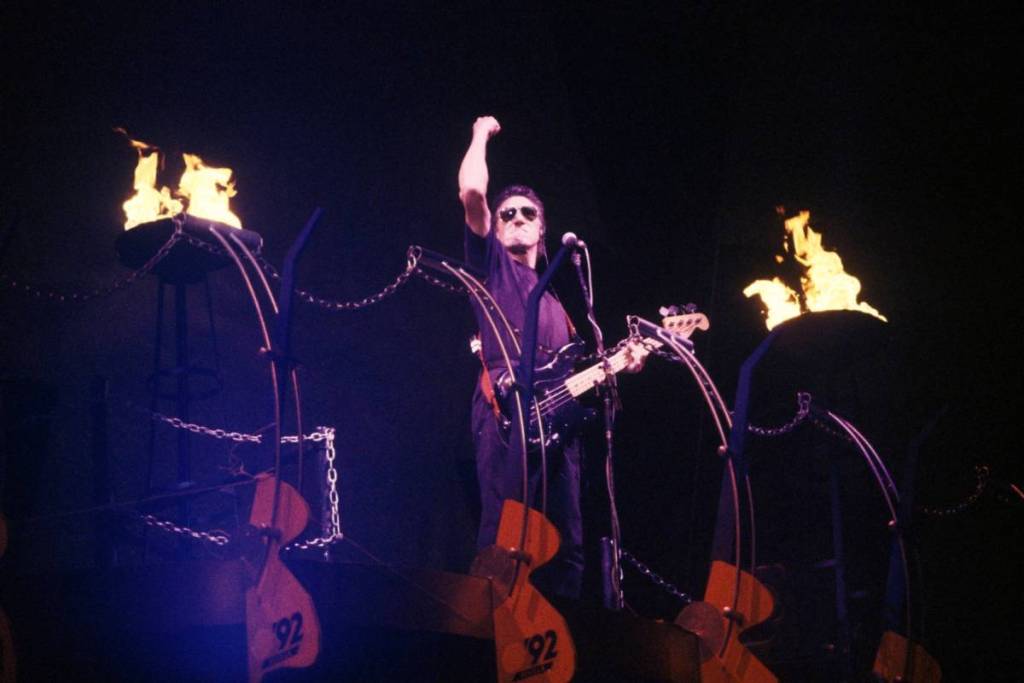

Music played a very special role in divided Berlin. While Udo Lindenberg provoked the GDR leadership in 1983 with his song “Sonderzug nach Pankow” and Bruce Springsteen spoke of a world without walls in front of hundreds of thousands of people in East Berlin in 1988, Roger Waters created a spectacular musical monument to the division of Germany in 1990. Just a few months after the fall of the Wall, the Pink Floyd co-founder transformed Potsdamer Platz into a gigantic concert stage. At the center stood a 170-meter-long wall made of about 2,500 Styrofoam blocks, which was erected during the show and finally brought down to the cheers of hundreds of thousands of spectators.
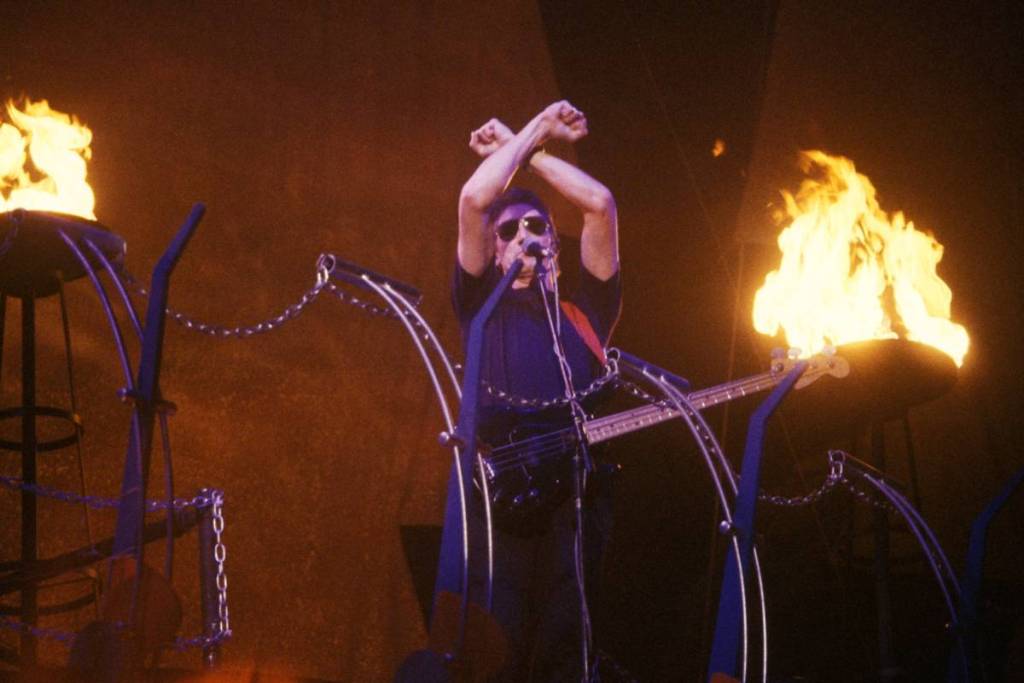
On July 21, 1990, just eight months after the fall of the Berlin Wall, Roger Waters transformed Potsdamer Platz into the setting for one of the most spectacular rock concerts in music history. On the former border strip between East and West Berlin, the former Pink Floyd bassist staged his famous rock opera “The Wall” in front of hundreds of thousands of spectators. At the center of it all was a gigantic stage wall, approximately 170 meters long and made up of about 2,500 Styrofoam blocks. During the performance, it was built up piece by piece until it finally collapsed amid a tremendous roar, marking the dramatic climax.
The symbolism could hardly have been more striking. For decades, the real Berlin Wall had separated families, friends, and an entire city from one another. Now, at nearly the same spot, an artificial wall—symbolizing isolation, oppression, and social barriers—came crashing down. Yet the original Pink Floyd album *The Wall* had been released as early as 1979 and was by no means written specifically for Berlin. Waters had originally developed the story as an exploration of personal fears, alienation, war, and authoritarian structures. It was only through the historical setting that the work took on additional political significance.
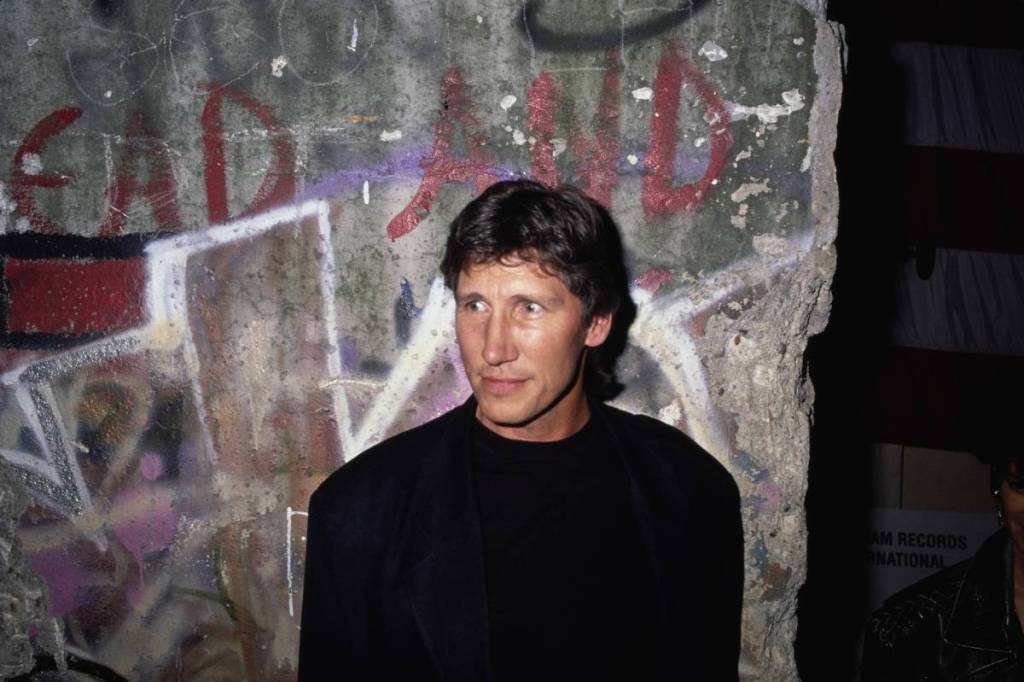
Waters brought together numerous international music stars for the monumental performance. Bryan Adams, Cyndi Lauper, Sinéad O’Connor, Joni Mitchell, Van Morrison, and the Scorpions were among the prominent guests. The participation of Soviet military musicians was also particularly noteworthy. Together, they turned the concert into an international event that was broadcast on television worldwide.
According to estimates, around 250,000 to 300,000 people watched the performance in person. The concert took place at a time when German reunification was still on the horizon: East and West Germany were not officially reunified until October 3, 1990. Potsdamer Platz itself was still a largely undeveloped area at the time, marked by the remnants of decades of division. Today, modern high-rises, hotels, and shopping centers stand there. Where a gigantic stage wall once collapsed, one of Berlin’s most famous urban districts now stretches out.