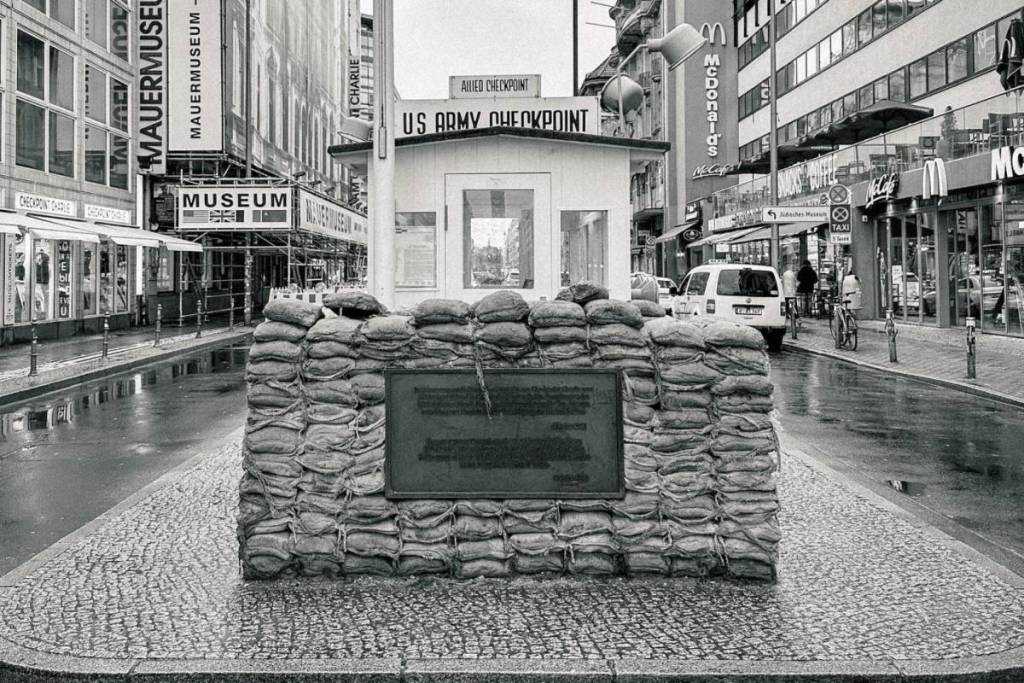

On nearly every corner in Berlin, you can discover a piece of history. As modern as our capital may be today, its past cannot be erased—and that is exactly what makes it so special. To this day, we encounter fascinating contrasts between the past and the present. Whether it’s what was once Europe’s largest department store or a long-forgotten Berlin neighborhood —they’ve all left their mark on the cityscape. But there is another historic site where one of the most spectacular escapes from the GDR took place: Checkpoint Charlie. It is one of Berlin’s most historic sites. Where today, every day, numerous tourists have their photos taken in front of a replica checkpoint booth, people risked their lives during the Cold War in daring escape attempts.
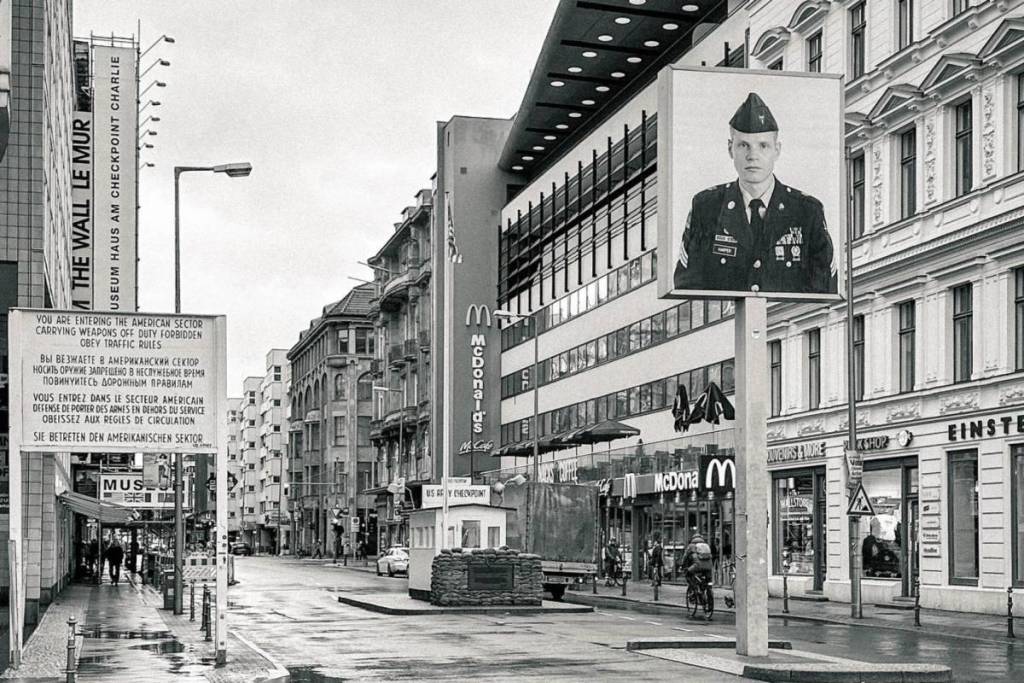
In May 1963, a young Austrian named Heinz Meixner managed to bring his fiancée and his future mother-in-law from East Berlin to West Berlin in a modified sports car. What made this particularly remarkable was that he did not break through the border barrier but instead raced at high speed directly under the closed gate at Checkpoint Charlie . Even more astonishing is that, just a few weeks later, another man is said to have attempted a similar escape using the same vehicle. This story powerfully illustrates the ingenuity and life-threatening conditions under which people tried to leave the GDR during the division of Germany.
Heinz Meixner was an Austrian man in his early 20s who had fallen in love with Margarete Thurau, a woman from East Berlin . While he, as an Austrian citizen, could cross the border between East and West Berlin, his fiancée was not allowed to leave the GDR without further ado. An application to leave for Austria was denied, so Meixner sought another way to bring his fiancée and her mother to the West. Eventually, he devised an extraordinary escape plan in which a small British sports car would play a crucial role.
As part of his preparations, Meixner examined the Checkpoint Charlie border crossing and measured the height of the closed barrier. He discovered that there was only about 95 centimeters of space between the ground and the barrier. This discovery gave him the idea of driving a particularly low vehicle directly under the barrier.
For his plan, he rented a British sports car, an Austin-Healey Sprite. To ensure the vehicle was low enough, he removed the windshield and let some air out of the tires. Thanks to these modifications, the car reached a height of about 90 centimeters. This left only about five centimeters of clearance between the vehicle and the border barrier. Even a slight miscalculation would have been enough to cause the escape attempt to fail.
In addition to the vehicle’s low height, the limited space also posed a major challenge. Meixner ultimately had to smuggle two more people across the border unnoticed. His fiancée, Margarete, therefore hid behind the seats of the sports car, while her mother was stowed in the cramped trunk.
To protect his future mother-in-law from possible gunfire by GDR border guards, Meixner is said to have placed about 30 bricks in the trunk. These were intended to serve as improvised protection in case the border guards opened fire on the fleeing vehicle.
In the early morning hours of May 5, 1963, Heinz Meixner finally put his plan into action. Around 3:15 a.m., he approached the Checkpoint Charlie border crossing in his modified sports car. When the border guards ordered him to stop for a customs inspection, he accelerated instead. Meixner drove around the barriers and headed straight for the closed border gate. At the decisive moment, he ducked behind the steering wheel as the low-slung sports car shot under the barrier at high speed. The escape attempt was indeed successful. Meixner, his fiancée, and her mother reached West Berlin unharmed. The extraordinary feat caused a huge sensation at the time and became one of the most famous examples of the spectacular escape methods used during the division of Germany.
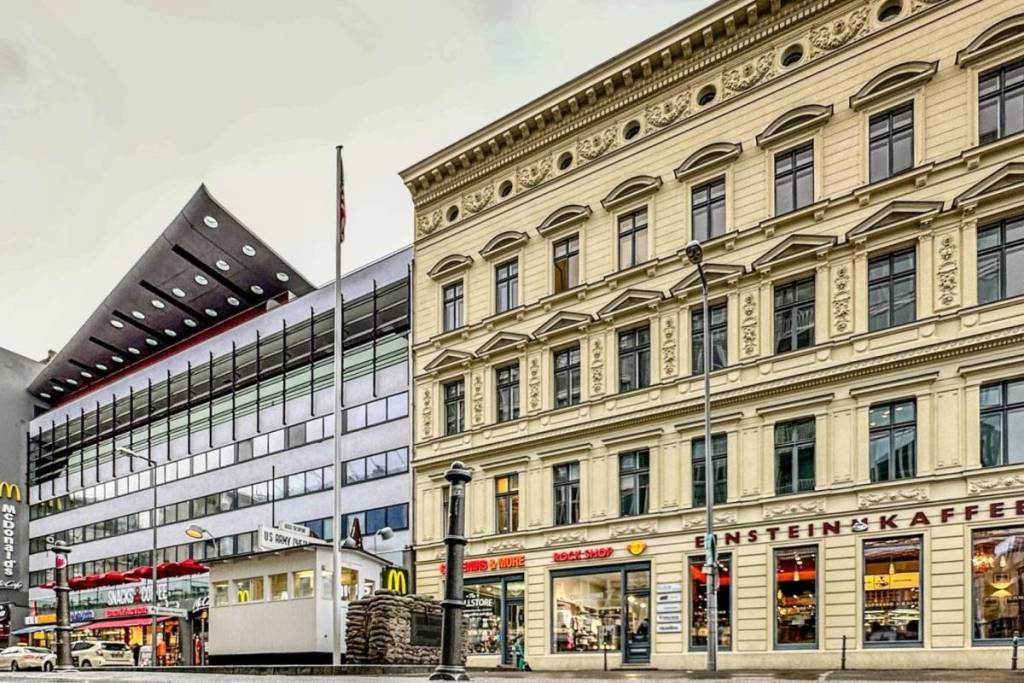
Checkpoint Charlie has evolved from a site of political tension and life-threatening escape attempts into a world-famous landmark. Where Heinz Meixner sped under a border barrier in 1963 to help two people escape to the West, visitors can now cross the street unhindered.