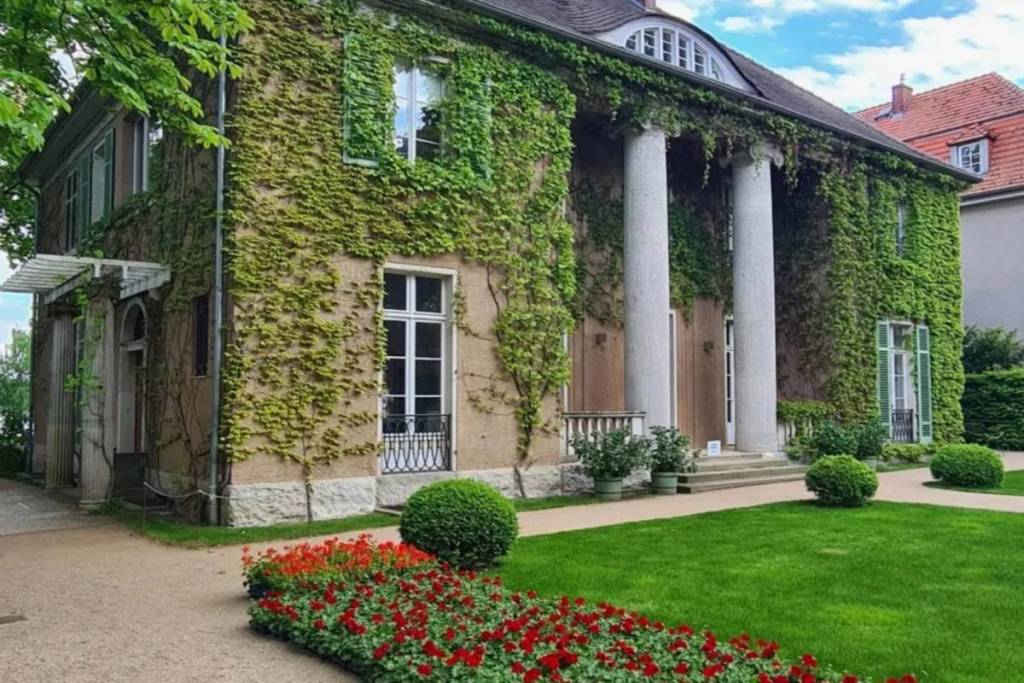

Enjoying the green idyll, marveling at blooming flower beds, and simply breathing in the warm summer air —there are countless beautiful places in Berlin for just that. Whether at the idyllic Engelbecken, the rushing waterfall in Viktoriapark, or the rose garden in Treptower Park —nature lovers will be in their element here. But if you ’re still looking for a touch of art history , we have the perfect tip for you: Villa Liebermann combines nature and culture in a unique way. Located directly on the shore of the Großer Wannsee in the Steglitz-Zehlendorf district , it’s one of Berlin’s most beautiful historic sites.
The house was built in 1909–1910 as the summer residence of the famous German Impressionist Max Liebermann and served as his retreat, far from Berlin city life, until his death. The estate encompasses a plot of land measuring approximately 7,000 square meters directly on the shores of Lake Wannsee. The villa was designed by architect Paul Otto Baumgarten and conceived by Liebermann himself in collaboration with art historian Alfred Lichtwark. The result was an elegant country house with a strictly structured “Reformgarten” (modernist garden), which would later become one of his most important subjects for his paintings.
For Liebermann, the garden was far more than just a green space. Between 1910 and 1935, he created over 200 paintings and drawings here. The famous flower beds, the birch-lined avenue, the hedge gardens, and the view across the large lawn toward the Wannsee appear time and again in his works. Art historians often compare the garden’s significance to Liebermann with the role that Giverny played for Claude Monet .
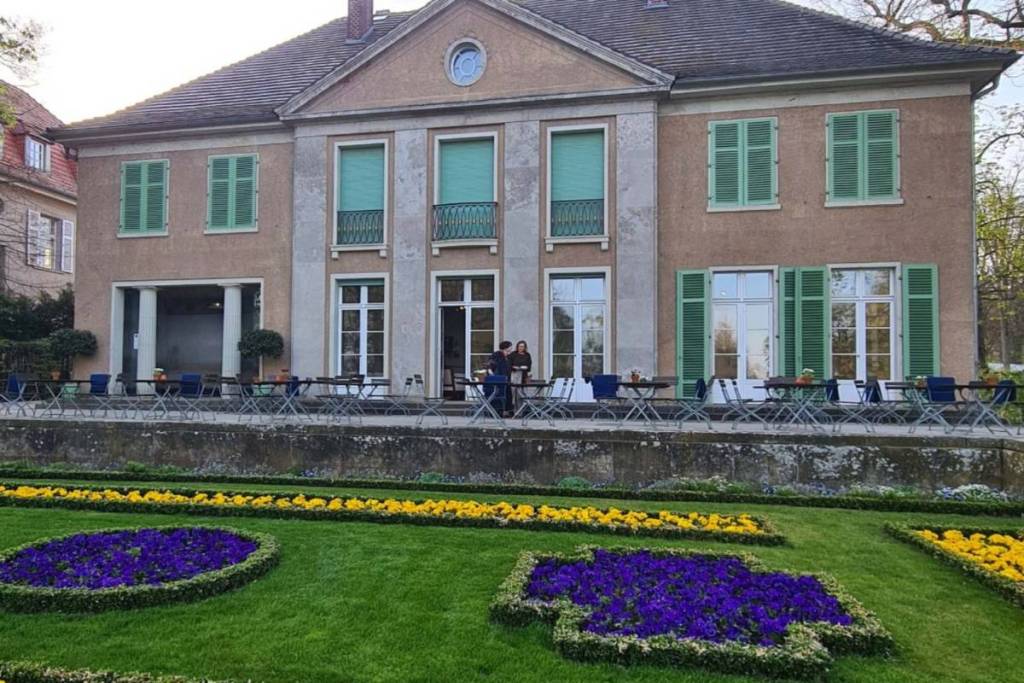
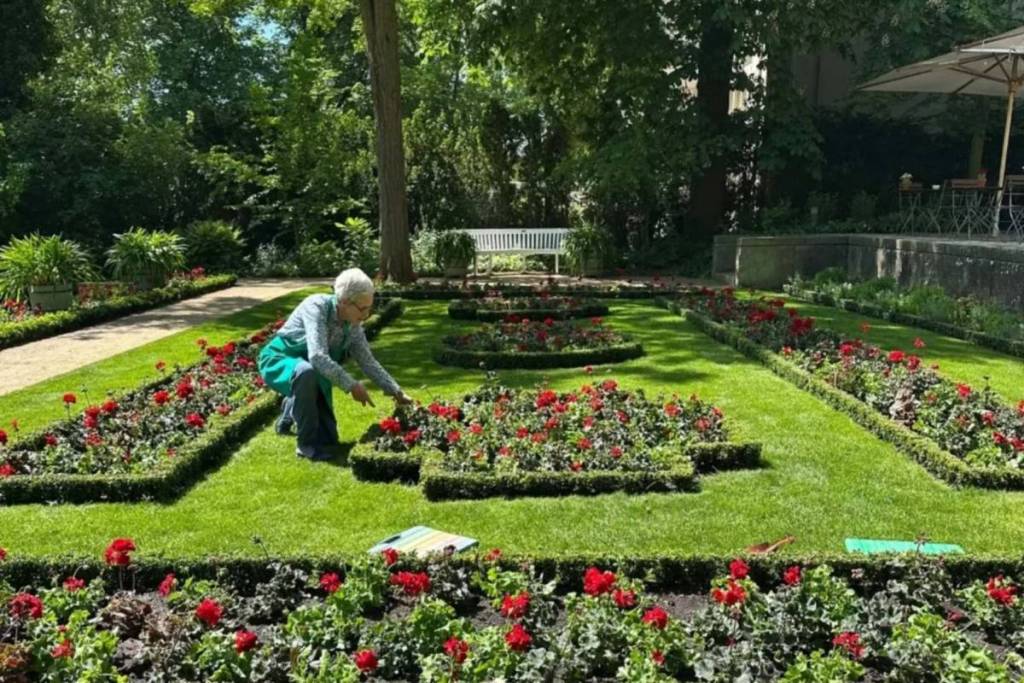
Particularly impressive are the gardens, which have been faithfully reconstructed to their original design. In front of the villa lies a large lawn with a direct view of the Wannsee. There are also flower beds, hedge gardens, perennial plantings, an avenue of birch trees, a kitchen garden, and a gardener’s cottage. The garden, which is a designated historic monument, is now considered one of the most significant examples of the European Reform Garden Movement.
After the Nazis came to power, the Jewish artist was increasingly marginalized. Following his death in 1935, his wife, Martha Liebermann, was forced to sell the villa far below market value. Shortly before she was to be deported, she took her own life in 1943. The villa was subsequently used for various purposes, including as a training center, a hospital, and later as a sports center.
It was only thanks to the efforts of the Max Liebermann Society that the estate was restored and reopened as a museum in 2006. Today, more than 70,000 people visit the villa each year, which is one of Germany’s most significant artists’ homes. Paintings are on display in the former studio, while the other rooms tell the story of the Liebermann family. In 2026, the museum will celebrate its 20th anniversary.