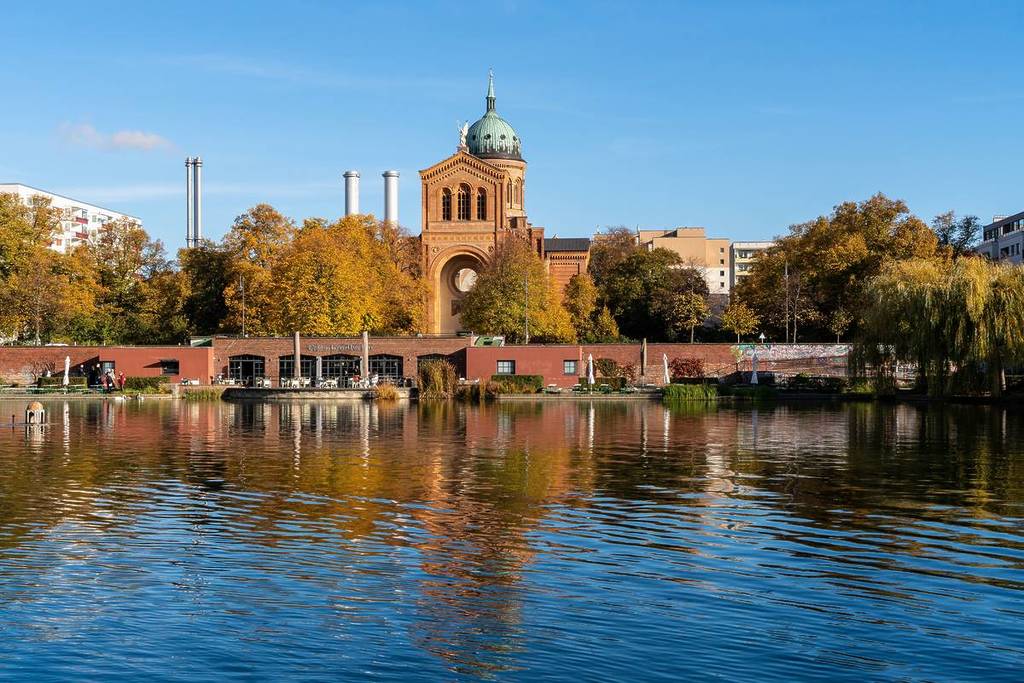

The Engelbecken in Berlin’s Kreuzberg district is far more than just an idyllic body of water—it is a living history book under the open sky. Where swans glide today and Berliners enjoy the sun, over 170 years of the city’s eventful history are reflected.
From Trade Route to Death Strip
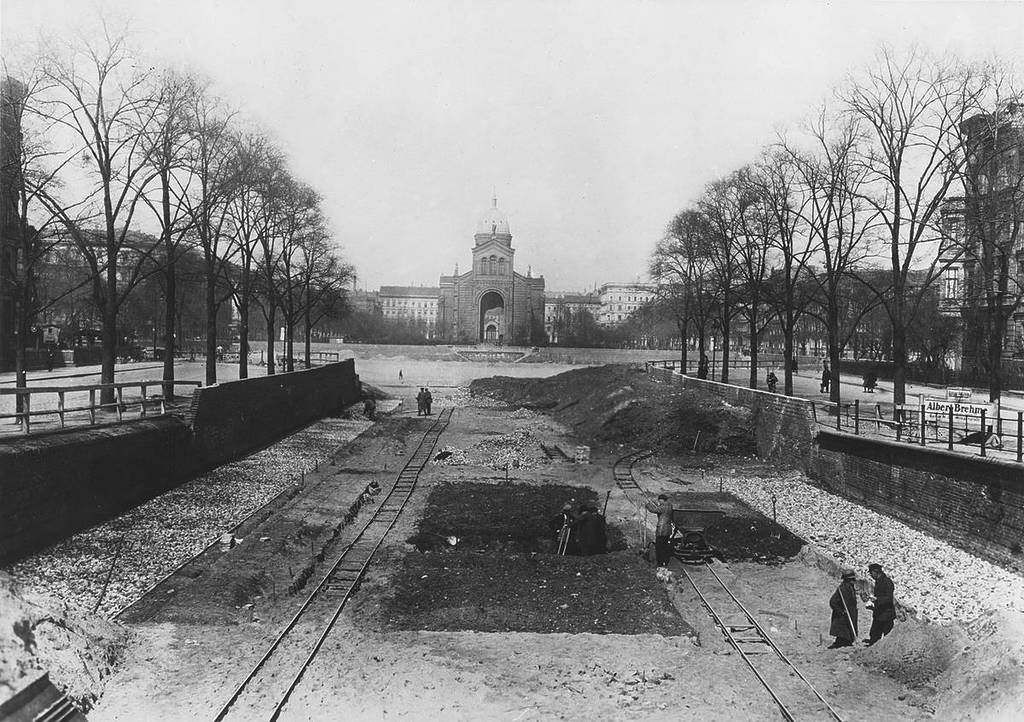
The basin dates back to 1852, when it was constructed as a turning and unloading basin for cargo ships during the building of the Luisenstadt Canal . It owes its name to the nearby St. Michael’s Church, on whose dome a statue of the Archangel Michael stands. But its industrial use did not last long. Because the stagnant water smelled strongly, the canal was filled in during the 1920s, and the Engelbecken was promptly transformed into an artistic, sunken garden with fountains and shaded walking paths.
With the construction of the Berlin Wall in 1961, the site experienced its darkest era. The basin was completely filled in and encased in concrete. Where people once strolled, there now ran the heavily guarded Death Strip, which brutally divided the city into East and West. The historic park disappeared from view for nearly three decades.
A modern-day green oasis
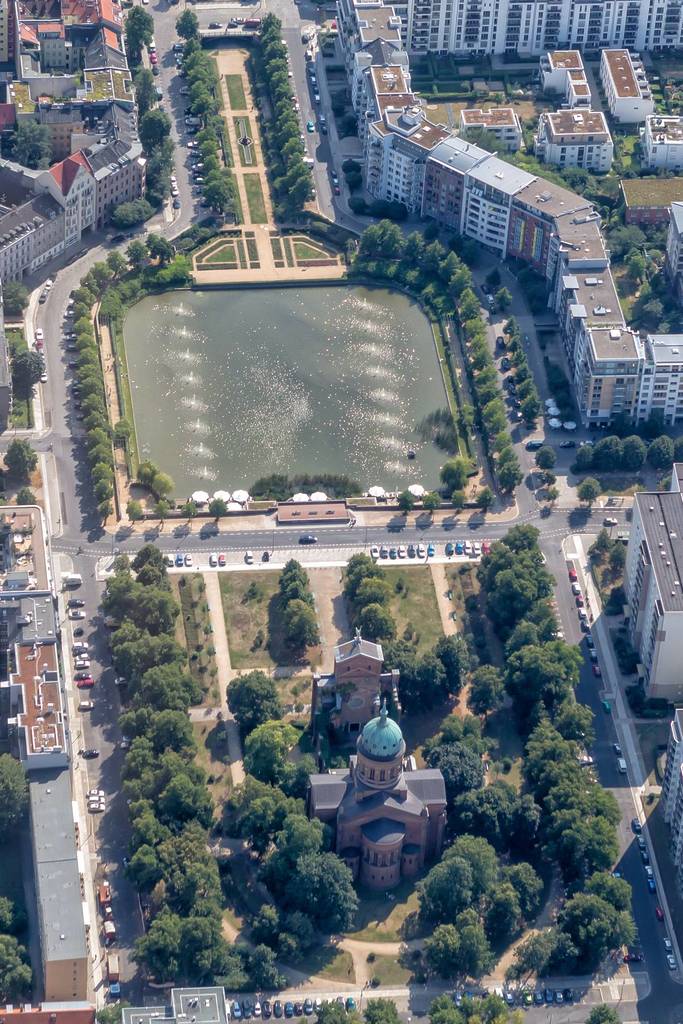
It was only after the fall of the Berlin Wall that the rebirth of this historic site began. In the 1990s and 2000s, the Engelbecken was extensively reconstructed, refilled with water, and reopened as a protected garden monument, faithfully restored to its original details. The old embankment walls were exposed to bring the historic structure to life.
Today, the area has become one of the most popular green oases in the neighborhood. The promenade, lined with magnificent rose beds, shady arbors, and large lawns for sunbathing, attracts residents and tourists alike.
In the summer, the fountains splash in the sparkling water, while thecafé located right on the shore invites visitors to linger. The Engelbecken connects the lively neighborhoods of Mitte and Kreuzberg and stands today as a symbolic site for the architectural healing and peaceful reunification of the once-divided metropolis.