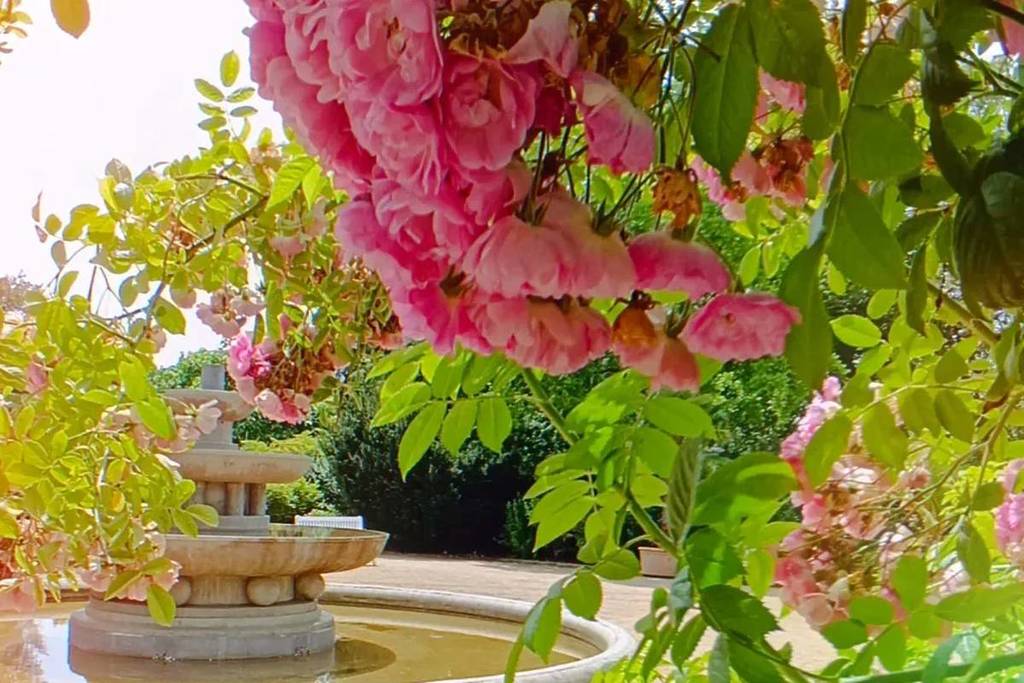

Put on your rose-colored glasses and see nothing but nature in bloom. It almost sounds like a therapy session—only under the open sky. After all, what could be more soothing than strolling through lush greenery and experiencing the season’s blooms in all their glory ? This is possible not only in the world’s largest rose collection, but also very close to Berlin: at the East German Rose Garden in Forst (Lusatia).
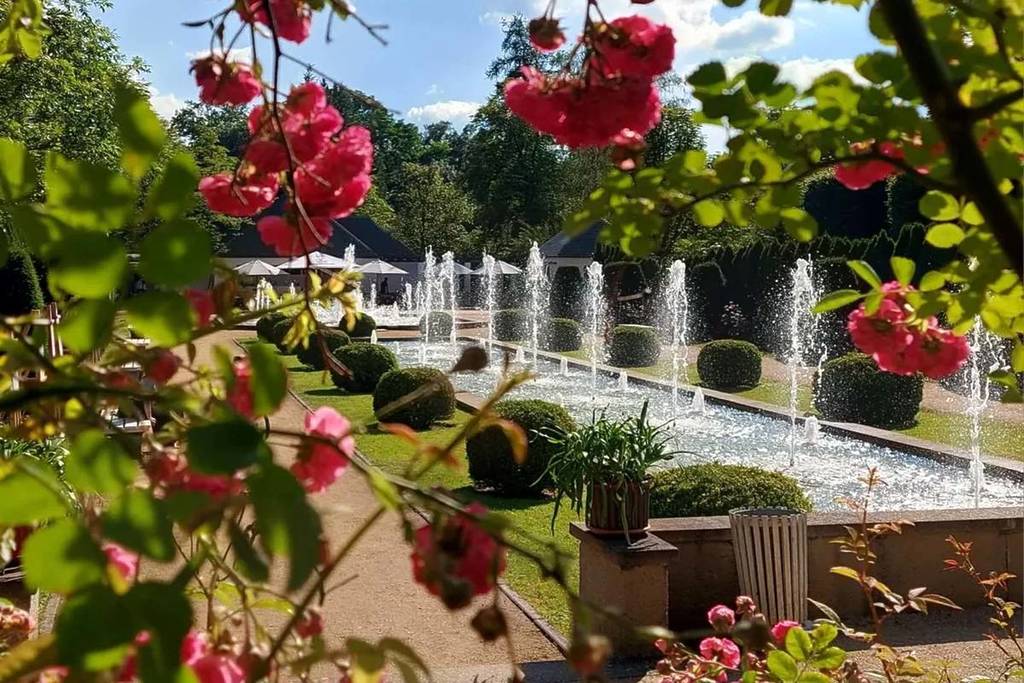
The historic park is located directly on the German-Polish border in Brandenburg and is about an hour and a half from Berlin. With its expansive gardens, historic buildings, and thousands of roses, it is one of the most impressive destinations for garden and nature lovers in the Berlin area.
The history of the rose garden began in 1913, when the German Rose Show was held in Forst. The exhibition was a huge success and attracted hundreds of thousands of visitors. This event led to the creation of a permanent park, which over the decades has developed into one of the most important rose gardens in eastern Germany.
Today, the East German Rose Garden spans approximately 17 hectares and is home to more than 40,000 rose bushes representing several hundred different varieties. During the peak blooming season between June and July, the grounds transform into a vibrant sea of flowers with countless scents and colors. Particularly impressive are the large rose beds, the historic pergolas, the water features, and the artistically designed themed gardens.
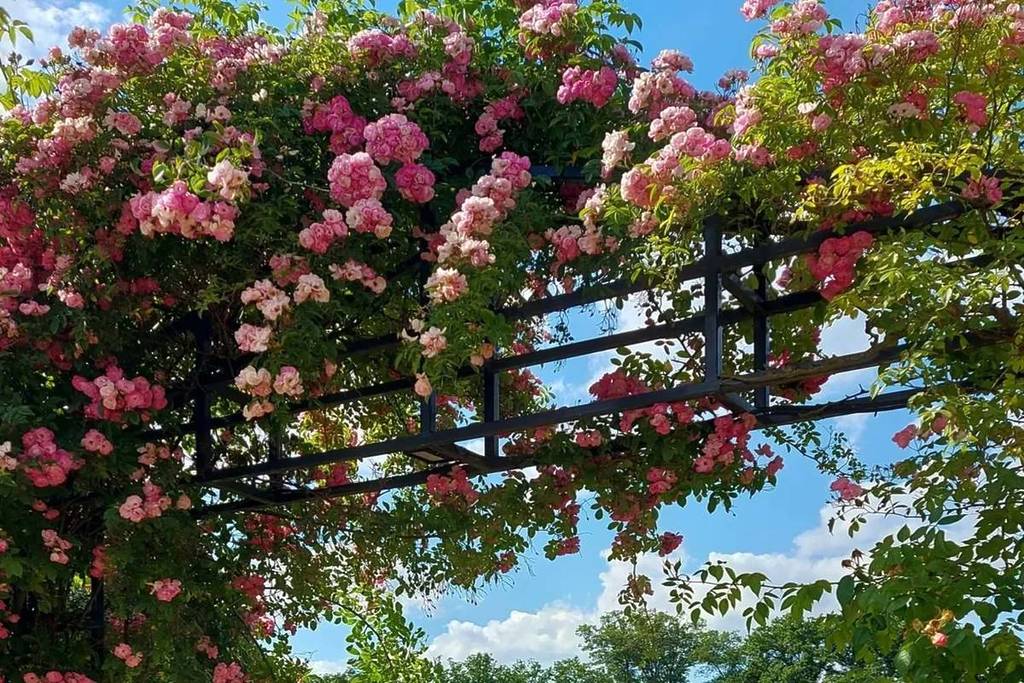
Among the most famous areas are the Anniversary Garden, the Wehrinsel Park, the Scent Garden, and numerous show gardens where old and modern rose varieties are displayed. The ensemble is complemented by historic fountains, sculptures, and listed buildings dating back to the park’s founding.
A special highlight is the annual Rose Festival, one of Brandenburg’s largest garden events. During the blooming season, guided tours, concerts, exhibitions, and cultural events take place regularly. Then the entire town of Forst is all about roses.
The rose garden has received numerous awards and is considered one of Brandenburg’s most important monuments to garden art. Due to its size, historical significance, and extraordinary variety of rose species, it ranks among Germany’s most significant rose gardens.