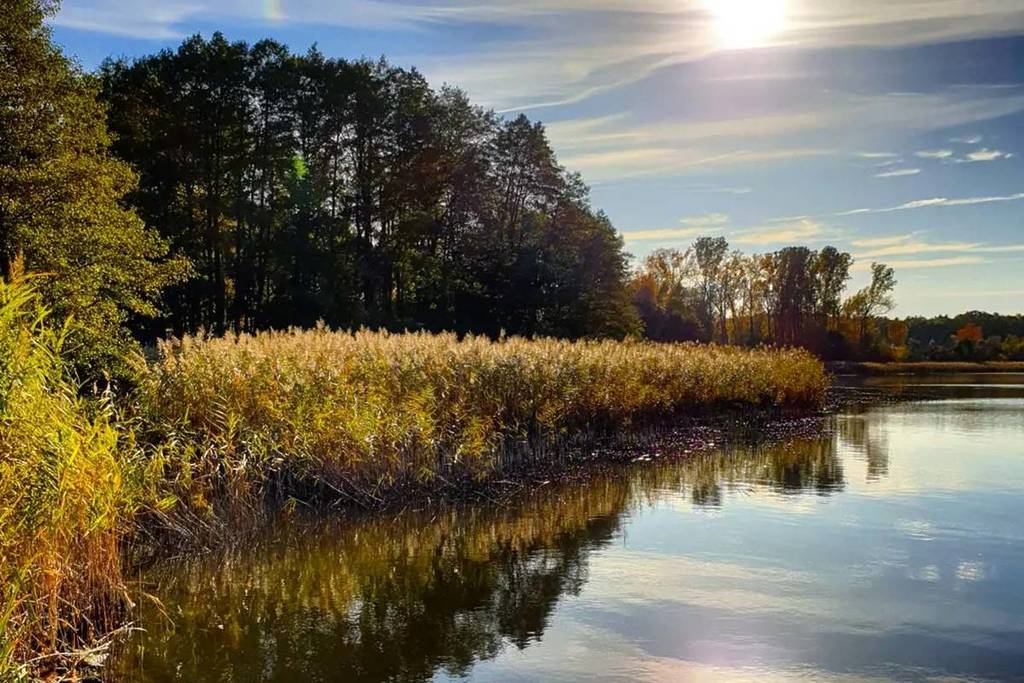

As always, there’s plenty going on in the city, from new rave experiences to Europe’s largest indoor climbing park. With so much action and pace, you’ll be out of breath just reading about it. But whether you’re an adventurer or more of a laid-back type: everyone needs a break now and then. And you don’t have to spend it at home—especially in spring, Brandenburg’s nature beckons with perfect getaways. Whether it’s seas of blossoms, an idyllic pear orchard, or one of the largest porcelain collections in Europe, we’ve got the perfect tips from A to Z. A new favorite on the list of relaxing getaways is Lübbinchen, a small, quiet village in Brandenburg that today belongs to the municipality of Schenkendöbern in Lower Lusatia , not far from the Polish border.
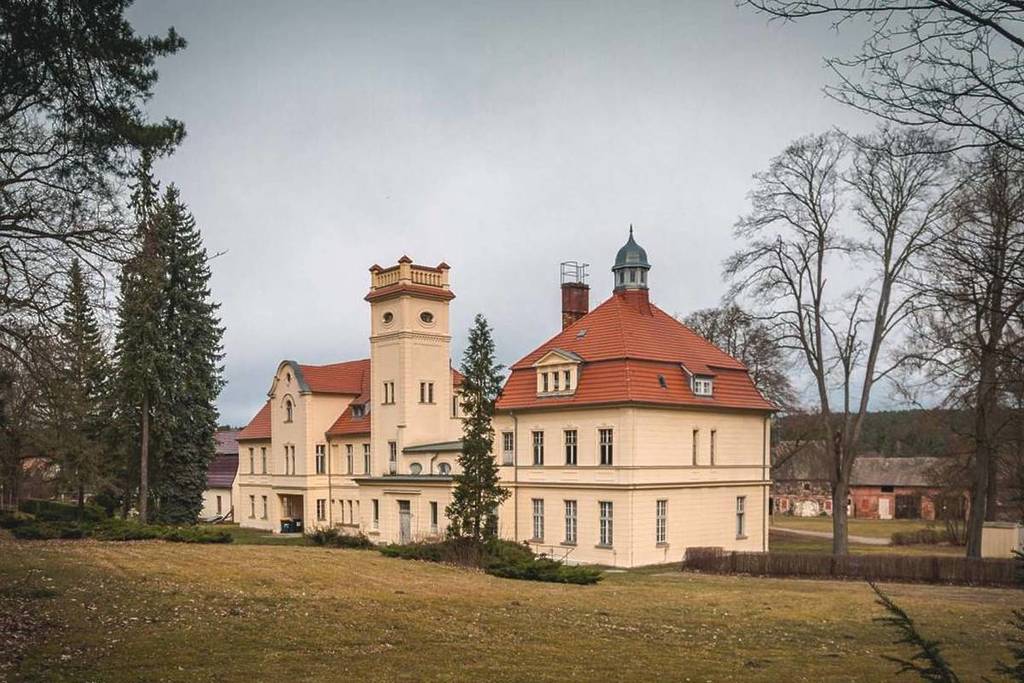
The area around Lübbinchen feels vast, unspoiled, and almost untouched. Fields and forests dominate the landscape, complemented by a surprisingly gentle rolling hillscape that gently winds through the region, constantly offering new perspectives. The town itself was first mentioned as early as the 15th century and looks back on an eventful history: it belonged , among others , to the Bohemian Crown, to Saxony, and later to Prussia. Like many places in Lusatia, Lübbinchen was long dominated by agriculture, with life organized around an estate.
At the heart of this story is Lübbinchen Castle, or manor house, which was built in the 19th century. It was once part of a larger agricultural estate that included a mill, a sheep farm, and other farm buildings. Today, as a quiet, historic building, it serves as a reminder of the era of manorial rule and blends almost unobtrusively into the tranquil landscape.
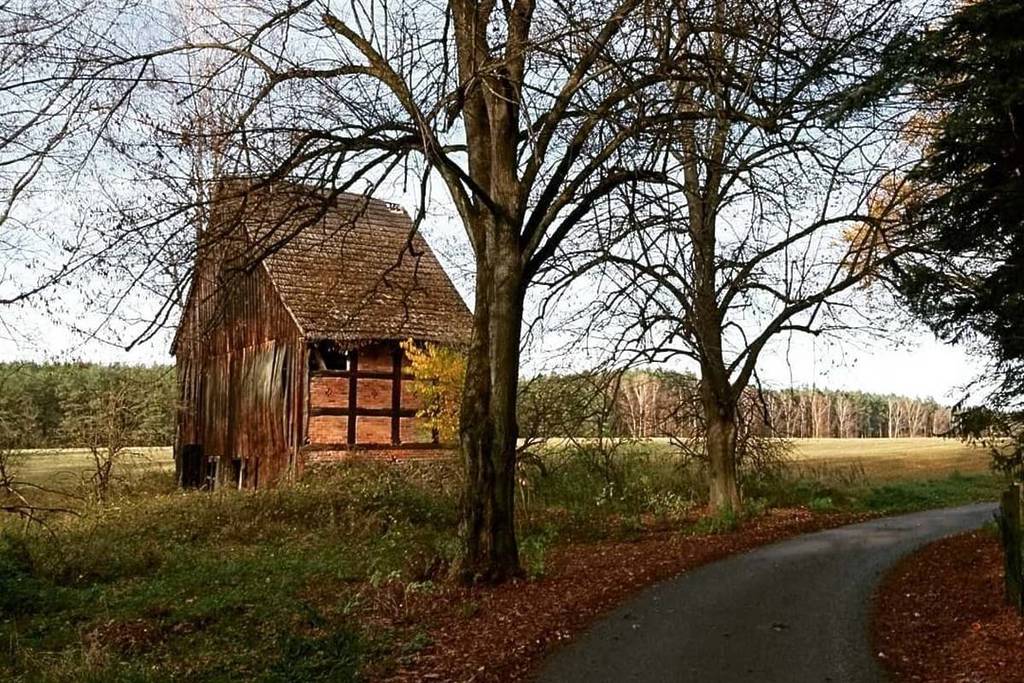
The ancient oak trees that can be found all around the village are a particularly defining feature of the area around Lübbinchen. Many of these trees are several hundred years old and date back to a time when the land was used as pasture. This allowed the oaks to grow freely, developing their characteristic, wide-spreading crowns and gnarled, massive-looking trunks. They often stand alone or in small groups in the landscape, appearing like natural monuments that lend the area an almost mystical atmosphere .
The landscape itself also plays a key role in the town’s unique character. Contrary to what one might expect from Brandenburg, the surrounding area here isn’t completely flat. Instead, gentle hills, wide fields, and sparse forests define the scenery. This gently undulating topography constantly opens up new vistas and makes the landscape feel alive, without losing its calm, unhurried atmosphere .