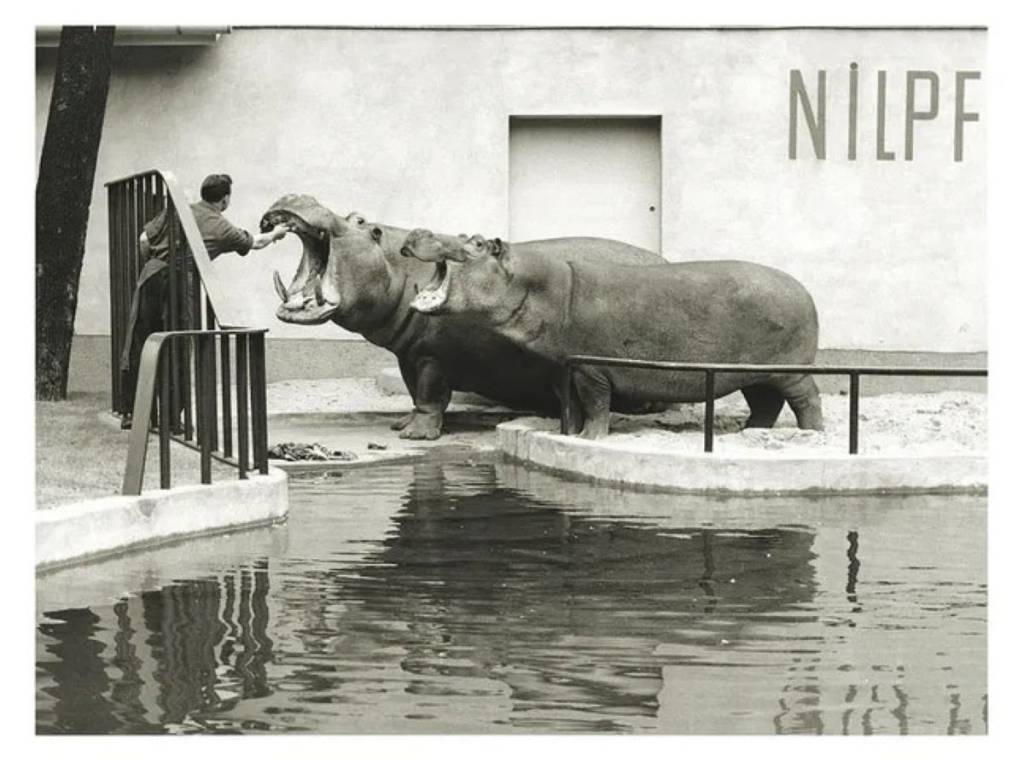

When Berlin tells the stories of its animal legends, one name cannot be left out: Knautschke. For many Berliners, the hippopotamus from the Zoologischer Garten became far more than just a zoo resident—it became a symbol of the city’s resilience, solidarity, and the unshakable will to carry on.
A Hippopotamus Survives
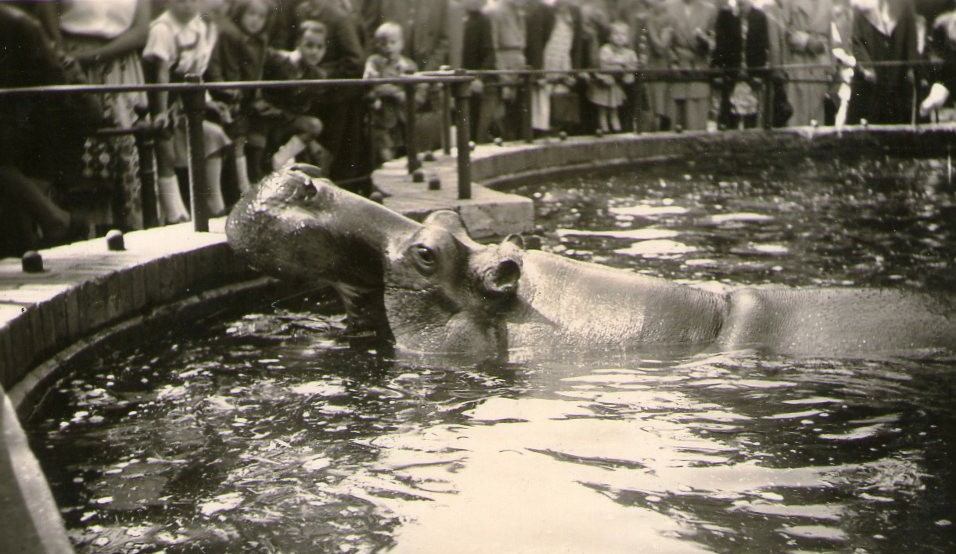
Knautschke lived through World War II as a young hippo in the midst of devastated Berlin. When bombs struck the hippo house, his mother died; the young bull survived. By the end of the war, he was one of only 91 animals that had survived the attacks and the Battle of Berlin at the zoo—out of more than 3,700 animals that had once lived there.
During the years of famine that followed, Knautschke became a cause for the entire city. Although people themselves barely had enough to eat, they brought potatoes, cabbage, fruit, and bread to the zoo. These donations helped the growing colossus survive the postwar period and, later, the Berlin Blockade.
More Than Just a Zoo Star
For the people of Berlin, Knautschke thus became a reflection of their own situation, for they, too, were hungry, trapped, and dependent on one another for help. Anyone who sent the hippo a little something was not only helping an animal—they were holding on to the belief that Berlin would live on. Historians therefore describe him as a symbol of the city’s resilience.
Knautschke became a crowd favorite, almost a superstar at the zoo. For decades, he drew visitors, and with a total of 35 offspring, he shaped hippopotamus breeding far beyond Berlin.
But his story, too, had a bitter ending. In 1988, the now-elderly bull lost a fight with his rival, his son Nante, suffered severe injuries, and had to be euthanized.
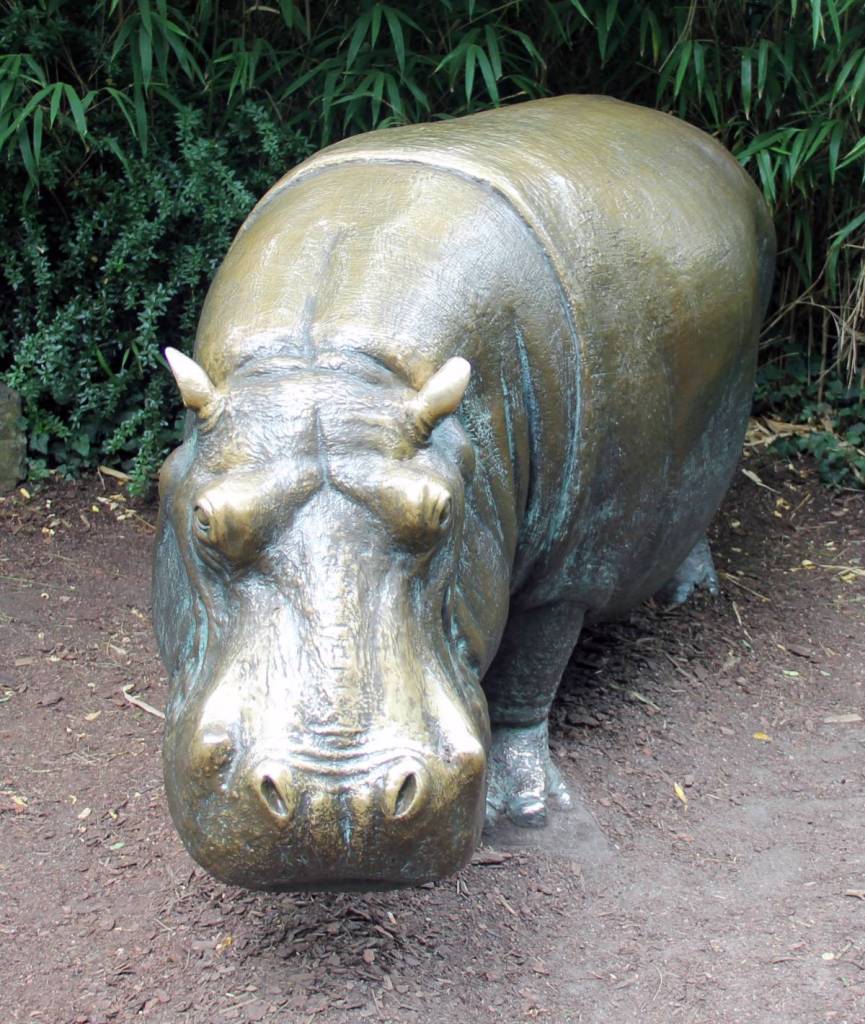
Today, a bronze statue in front of the hippo house commemorates him. Children climb on it, visitors take photos—and many may no longer even know what Knautschke once stood for. Yet his story remains a part of Berlin’s history: a reminder that even in the darkest years, a city could fight for an animal—and thus also for itself.