Throughout its history, Berlin has been the scene of just about every typical historical event that comes to mind. Its extremely turbulent history perfectly mirrors that of Germany as a whole—one more reason why Berlin is the ideal capital! In particular, from its time as the seat of the emperor, a wealth of larger and smaller castles have been preserved. We’ve compiled a list of the most noteworthy ones for you!
Grunewald Hunting Lodge

The hunting lodge in Grunewald dates back to the 16th century and exudes plenty of historic charm. It may not be a large castle, but its rustic charm and the forest landscape contribute to its historic appeal. Although it is one of the smaller castles in Berlin, it is still perfect for a little Sunday outing!
Charlottenburg Palace

Berlin’s largest and arguably most magnificent palace is located in the district of the same name. Built in the late 17th century as a summer residence for Sophie Charlotte, the wife of Frederick III, the palace is particularly striking for its unique Baroque and Rococo architecture.
Heavily damaged during World War II, the opulent chambers and gardens were preserved through extensive restoration work. The palace looks back on a rich history—from its days as a Prussian royal residence to its current use as a museum. In winter, there’s also a very beautiful Christmas market here !

Commissioned by Frederick William II at the end of the 18th century, the Marble Palace in Potsdam stands in neoclassical elegance on the shores of the Holy Lake. As part of the New Garden complex, it is a cultural landmark that reflects the aesthetic tastes of its time in all their splendor.
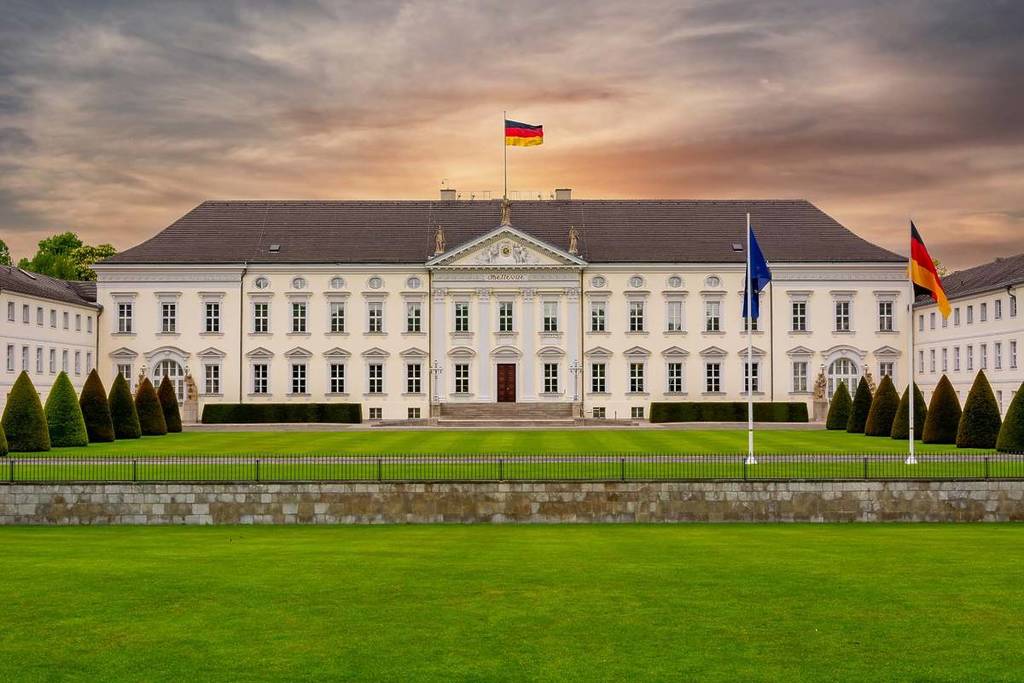
Also built in the late 18th century, the palace in Berlin’s Tiergarten served for a long time as the residence of the Prussian royal family. It has retained its official function to this day, even though it no longer serves as a residence for kings and emperors, but rather as the official residence of the German Federal President. Unlike many other palaces in Berlin, visiting opportunities here are very limited due to this function. Guided tours are offered, however, and can be booked with about nine months’ advance notice.

The castle’s origins date back to the 16th century, when it was first built as a hunting lodge. Over time, it was renovated several times and evolved into a Renaissance-style castle with its characteristic red bricks. Its picturesque location on an island in the Dahme River adds to its charm and creates a peaceful and inspiring atmosphere, perfect for a Sunday outing!
A special feature of Köpenick Palace is its connection to the Museum of Decorative Arts and Design, a museum dedicated to decorative arts and design that is housed within the palace. Here you’ll find a diverse collection of objects, including furniture, ceramics, textiles, and more, offering insight into the artistic and cultural trends of various eras.

Peacock Island itself is already an exciting destination that offers not only the birds for which it is named but also plenty of historic landmarks. Among them is the small castle located right on the banks of the Havel. It was built in 1794 by King Frederick William II for himself and his mistress. The half-timbered structure, clad in wooden planks, looks like the romantic backdrop of a ruin.
The interior, on the other hand, surprises with a certain South Seas aesthetic, evident, for example, in a tower room designed as a bamboo hut. This peculiarity stems from a trend of the time—the South Sea island of Tahiti had been discovered just over 20 years before the palace was built, and descriptions of it inspired the king to create his own “exotic” paradise. For this purpose—fun fact—real palm trees were later brought to the island, though they were destroyed in the fire that consumed the Palm House in 1880. And then there’s the story of the alchemist’s curse, who practiced “black magic” on Peacock Island….