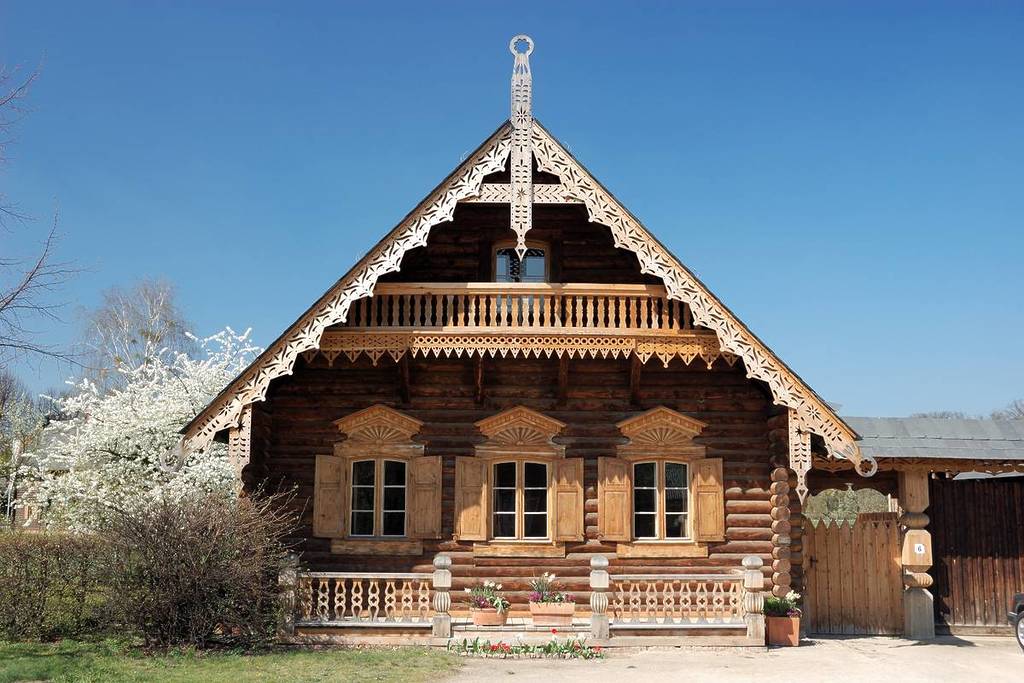
The capital itself is not the only city to hide places with a turbulent history – such as the former NSA listening station or a disused ghost train. There are also numerous places around Berlin with important, sometimes dark pasts. These include a number of lost places, such as abandoned sanatoriums and former tuberculosis clinics, whose present-day decay gives you goosebumps. While many of these historic places are no longer accessible for safety reasons, there are also some gems that have been preserved and converted into museums to bring visitors closer to the history behind them. One of these is the Russian colony Alexandrowka in the north of Potsdam. It dates back to 1826/1827 and was built following the coalition wars against Napoleon. Today it is a UNESCO World Heritage Site – an impressive destination for a day trip from Berlin.
The history of Alexandrovka
The small, idyllic colony of Alexandrovka was named in honor of Tsar Alexander I, who was considered a friend and ally of Prussia. It was founded to provide a home for the members of a choir of singers who served at the Prussian court. This choir consisted of 62 Russian soldiers who had been captured in the coalition wars against Napoleon and subsequently remained in Prussia. The construction of Alexandrovka in 1826/1827 was a visible sign of the friendly relationship between Prussia and Russia.
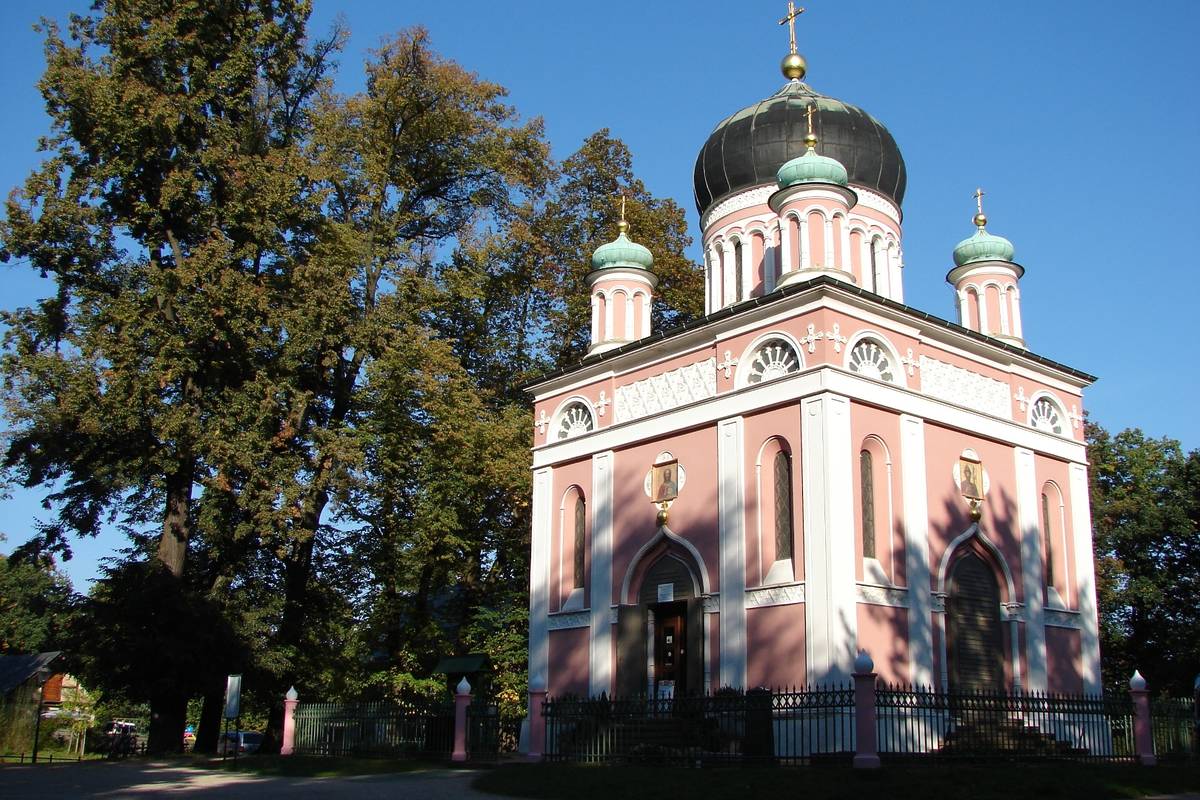
The 14 picturesque houses are designed in the style of Russian log cabins – technically, however, they are half-timbered houses with wooden facades, which were intended to give the impression of real wooden buildings. The designs for the project were created by the Italian-Russian architect Carlo Rossi, who also designed a similar Russian village in Pavlovsk near St. Petersburg. The basic shape of the colony is reminiscent of a hippodrome with a St. Andrew’s cross inside; the sergeant’s house is located at the intersection of these axes. Each house traditionally has its own garden where fruit and vegetables are grown. The colony is also home to the Alexander Nevsky Memorial Church, the oldest Russian Orthodox church in Germany, built between 1826 and 1829. Although the Greek Orthodox Church of St. Nicholas in Leipzig is considered to be older in terms of its parish history, its current church building was built later – making the Alexander Nevsky Church the older one in architectural terms.
The Alexandrovka Museum
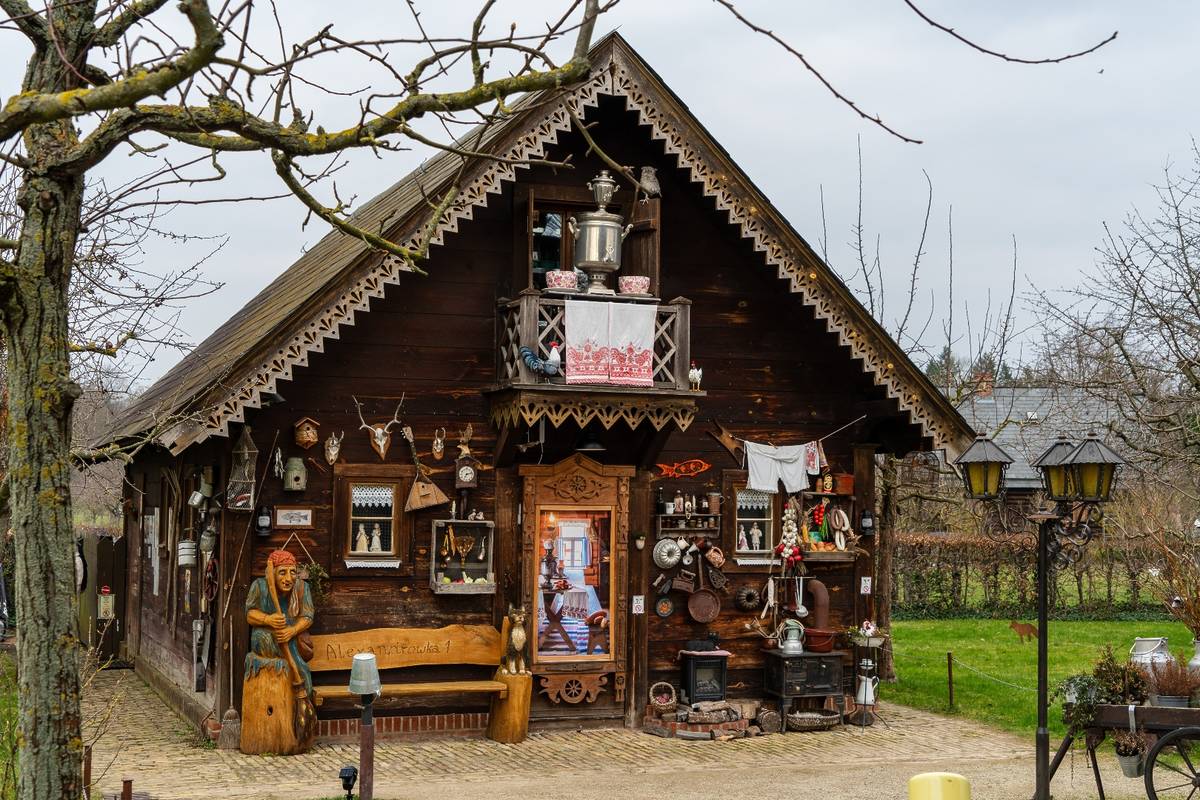
On a trip from Berlin, you can reach the Russian Colony Alexandrovka either after a 40-50 minute drive via the A115 towards Potsdam or by taking the RE1 towards Brandenburg Hbf – in just 20-30 minutes to Potsdam Hauptbahnhof. From there, take the 603 bus in the direction of Krampnitz to the “Puschkinallee” stop; from there it is only a 10-minute walk to the colony. Once there, it is worth taking a walk along the historic wooden houses and visiting house no. 2, the Alexandrowka Museum. Exhibits on the history of the colony are displayed in six rooms in the Biedermeier style. The outdoor area includes a 2,000 m² garden in which hundreds of old fruit varieties are replanted.
Visitors praise the special atmosphere and the seclusion of the place – Alexandrowka is particularly idyllic when the fruit trees are in full bloom. The last descendant of the singers, a member of the Shishkoff family, died in his house in the village in 2008. Alexandrovka belonged to the Prussian crown until around 1945, when it became part of the GDR. After the reunification of Germany in 1990, most of the houses became private property, but as protected architectural monuments they may not be altered in any way. Many buildings have since been extensively restored and carefully preserved. Alexandrowka has been a UNESCO World Heritage Site “Palaces and Parks of Potsdam and Berlin” since 1999 .