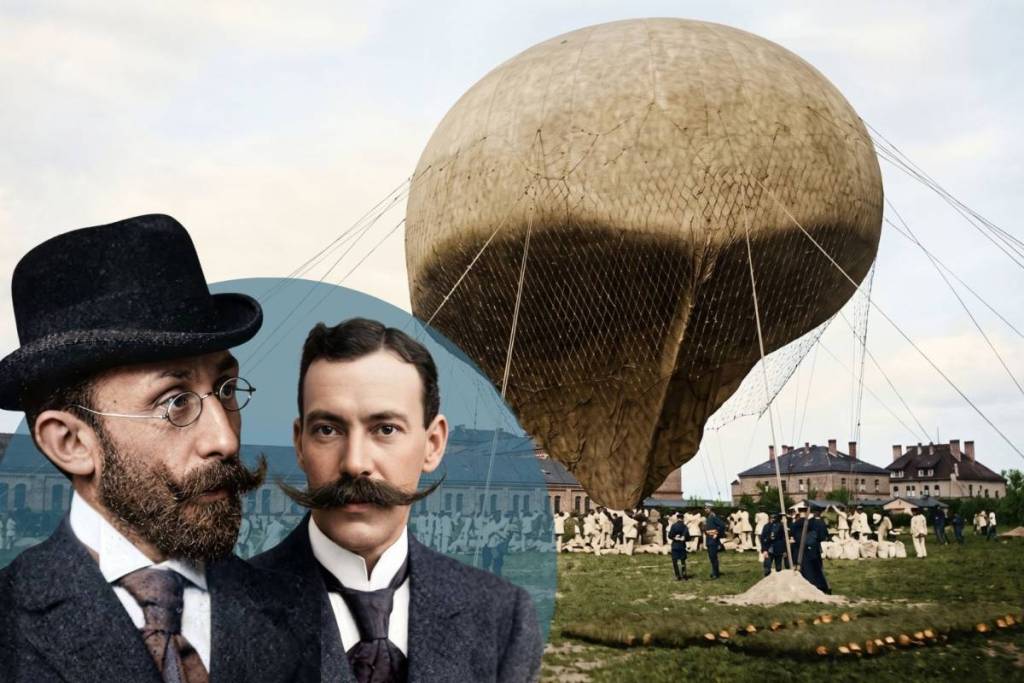

Weather researcher Richard Aßmann has a problem: His unmanned sounding balloons are delivering astonishing data—above about 10 km, the temperature doesn’t seem to drop any further, but rather to rise. How can that be?
Aßmann doesn’t trust the numbers—after all, the sun might have heated up the instruments. If only a person could verify the measurements. But no human has ever climbed that high.
(Insider tip: You, too, can go hot-air ballooning right in the heart of Berlin!)
The Discovery of the Stratosphere: The Flight of the “Preussen”
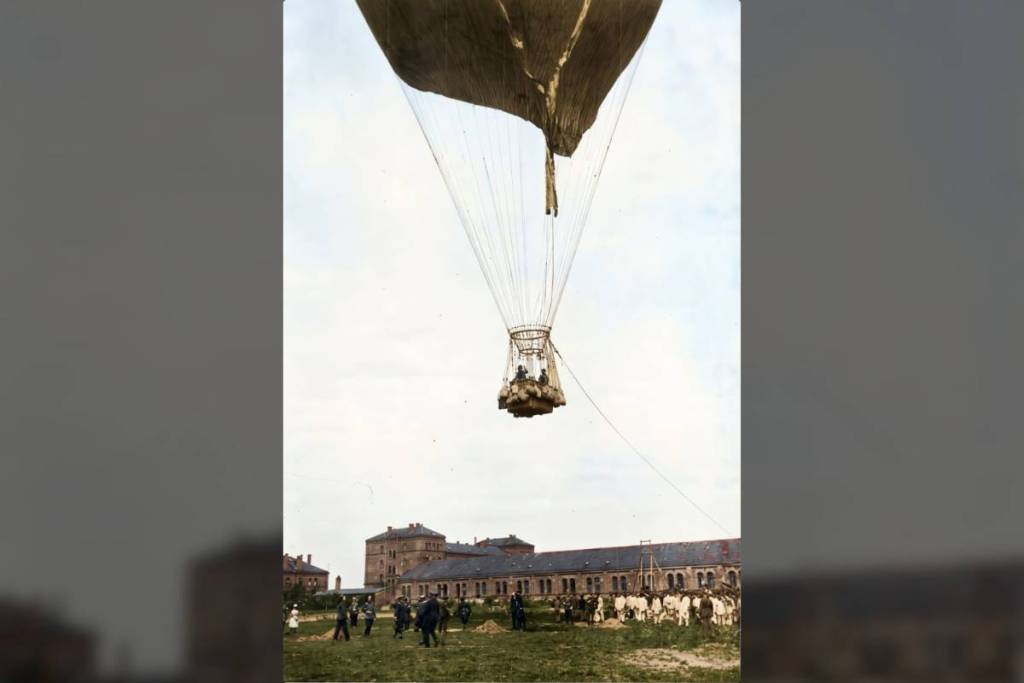
Aßmann hired two men to provide him with the proof: his colleague Arthur Berson and Reinhard Süring from the Royal Prussian Meteorological Institute. Their vehicle, the hot-air balloon “Preussen,” has a capacity of 8,400 cubic meters and a diameter of 25 meters.
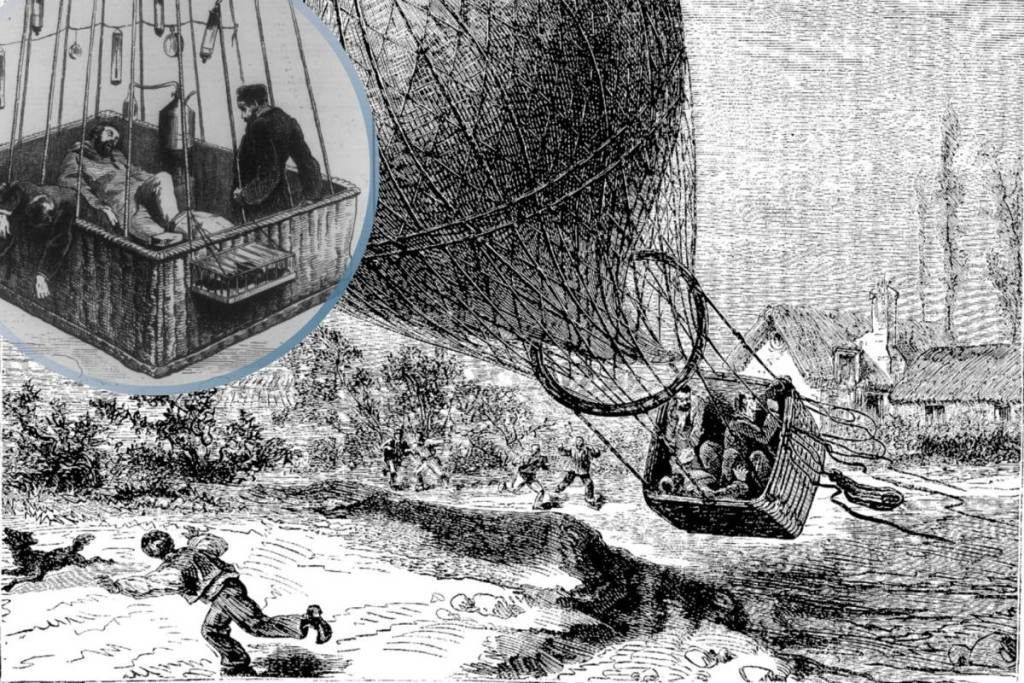
They know what’s at stake. They know what happened 16 years earlier: the tragedy of the *Zénith* in France. During an altitude record attempt, three men ascended to over 8,600 meters. Only one returned to Earth alive. Death by oxygen deprivation. No matter what happens, Süring and Berson must not lose consciousness under any circumstances.
The mission begins
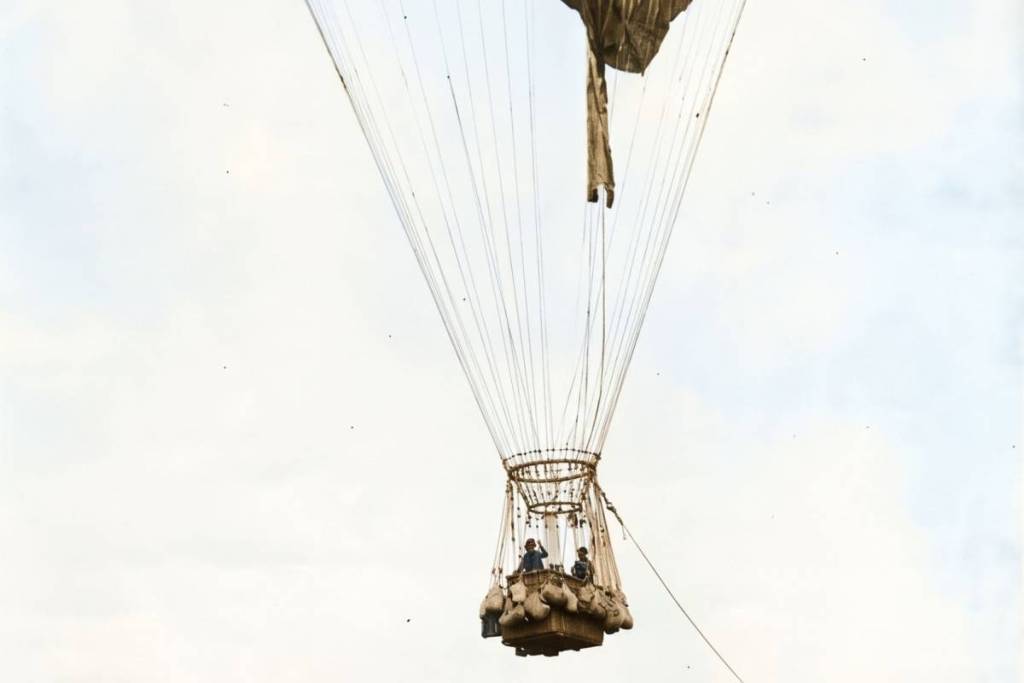
On July 31, 1901, shortly before 11 a.m., the massive gas balloon lifts off from the ground at Tempelhofer Feld. The first few kilometers of ascent go according to plan. Starting at 6,000 meters, the two begin breathing oxygen from bottles. 7,500 meters. 8,000 meters. They are in the “death zone,” where the air is too thin to supply the body with enough oxygen.
At 2:45 p.m., the thermometer reads -30 degrees at 9,000 meters. Up to this point, Arthur Berson is on familiar ground. He had set a world record in 1894 at 9,155 meters. But now the men are venturing into unprecedented heights.
At 10,500 meters, Berson releases some air; shortly afterward, Süring loses consciousness. Berson opens the valve to let the balloon descend, then he, too, faints.
Will the tragedy of the Zénith repeat itself?
It wasn’t until after a descent of about 4,800 meters that both of them regained consciousness. They realized that the balloon had risen even higher in the meantime, to an estimated 10,800 meters—a world record set by two unconscious men.
At 6:25 p.m., after 7 hours and 36 minutes, the “Preussen” touched down gently in a harvested field. At first, the two men didn’t know exactly where they had landed. They were told that they were near Briesen in the Cottbus district.
Mission accomplished!
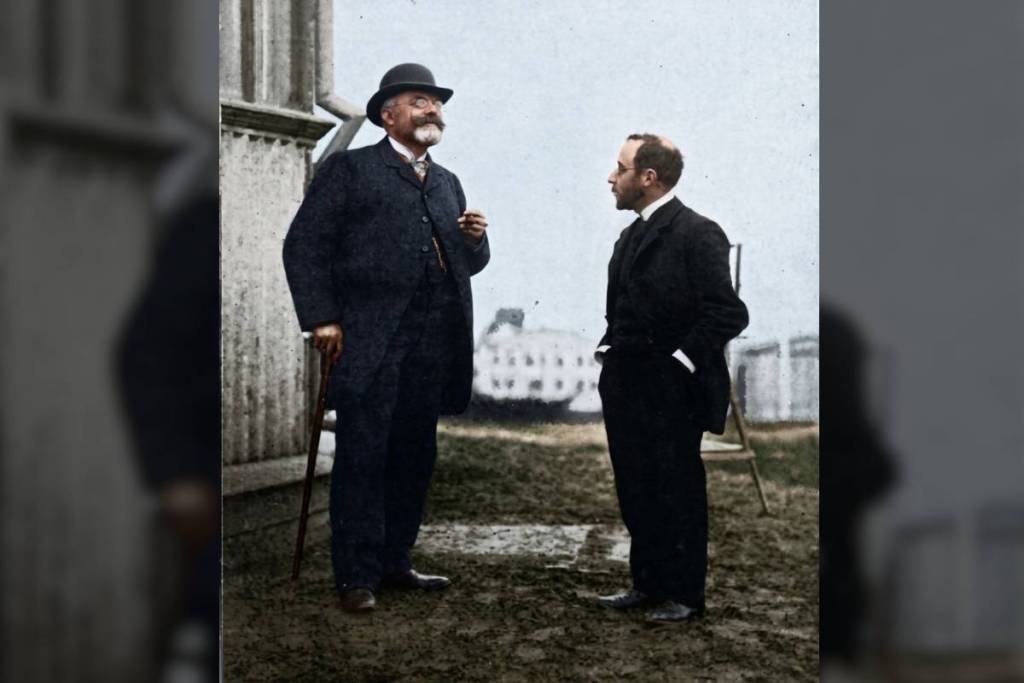
They bring their readings to Aßmann. (Image above: Aßmann and Berson) The measurements matched those from the unmanned balloons. Now there is no longer any doubt: The atmosphere is not a uniform layer of air, but is stratified.
In the spring of 1902, Aßmann announced the results in Berlin (in consultation with the Frenchman Léon Teisserenc de Bort): Above the turbulent lower layer of the atmosphere lies a second layer in which the temperature does not drop any further.
Teisserenc de Bort named the lower layer the troposphere and the upper layer the stratosphere. A British expert later described the discovery as the most surprising in the entire history of meteorology.
What does the discovery of the stratosphere mean?
All weather phenomena occur in the troposphere below; above it lies the calm, cloud-free stratosphere. This is where the ozone layer is found, which blocks most of the sun’s UV radiation; its role wasn’t recognized until decades later.
Today, commercial airliners usually fly at an altitude of 10–12 km, at the edge of the stratosphere, where the air is thin and calm (roughly where Berson and Süring lost consciousness).