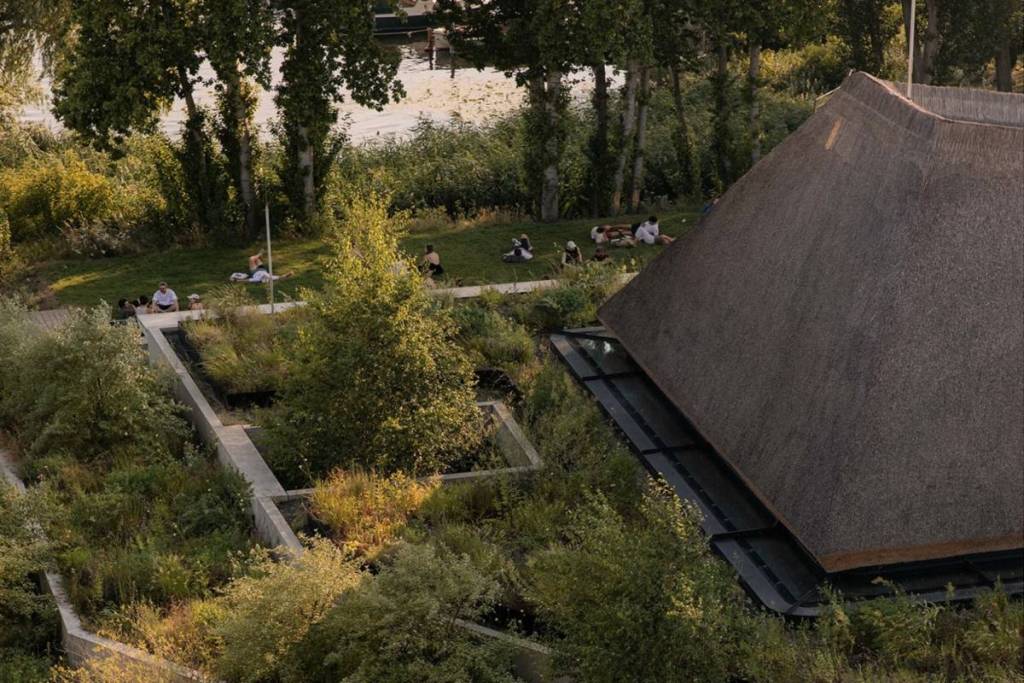

When the noise of the big city gets to be too much, we sometimes long for some peace and quiet in nature and the feeling of being far away from Berlin. Whether it’s a trip to one of Germany’s most popular mountain destinations or an idyllic hiking trail: the options for a quick getaway around Berlin are virtually endless. If you don’t want to venture too far from the city center, you’ll also find special places that let you forget for a moment that you’re right in the middle of Berlin. One of these is the Reethaus, an extraordinary cultural and event venue right on the Spree in Berlin-Lichtenberg.
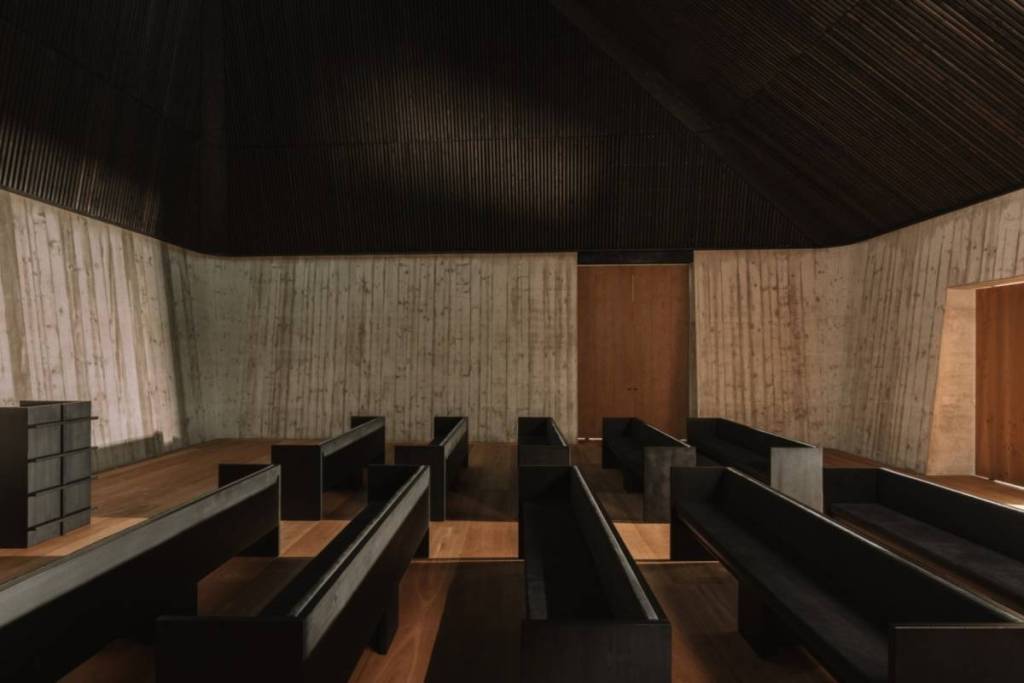
You’ll find it at Köpenicker Chaussee 3a, on the Flussbad Campus—an experimental cultural and hospitality project that combines art, architecture, music, wellness, gastronomy, and communal spaces. The Reethaus stands out even from the outside. The building is clad in reeds, giving it the appearance of a modern temple rather than a classic Berlin event venue. The architecture was deliberately designed to blend into the natural waterside surroundings . The building’s name also derives from its distinctive reed cladding.
The Reethaus’s main event is called “Open Haus.” Every last Sunday of the month , this special venue opens its doors for a so-called “Listening Experience.” This isn’t a traditional concert where you sit in front of a stage and watch artists perform. Instead, the focus is on mindful and spatial listening. The program changes from month to month and ranges from ambient music and experimental electronic music to nature recordings and voices, all the way to sound installations developed specifically for the space. This means you’ll experience a different acoustic world at every Open Haus.
A key part of the experience is the space itself. The Reethaus features a specially integrated 360-degree sound system that allows sounds to be perceived from different directions and to move through the space. In previous listening experiences, the 4DSOUND system was used for this purpose, among others; it allows natural phenomena such as wind, rain, or flowing water to be spatially represented as sound. This is precisely what sets it apart from a regular concert: the music doesn’t just come from the front, but can move all around you. You’re meant to focus as fully as possible on listening and to perceive the sound physically and spatially.
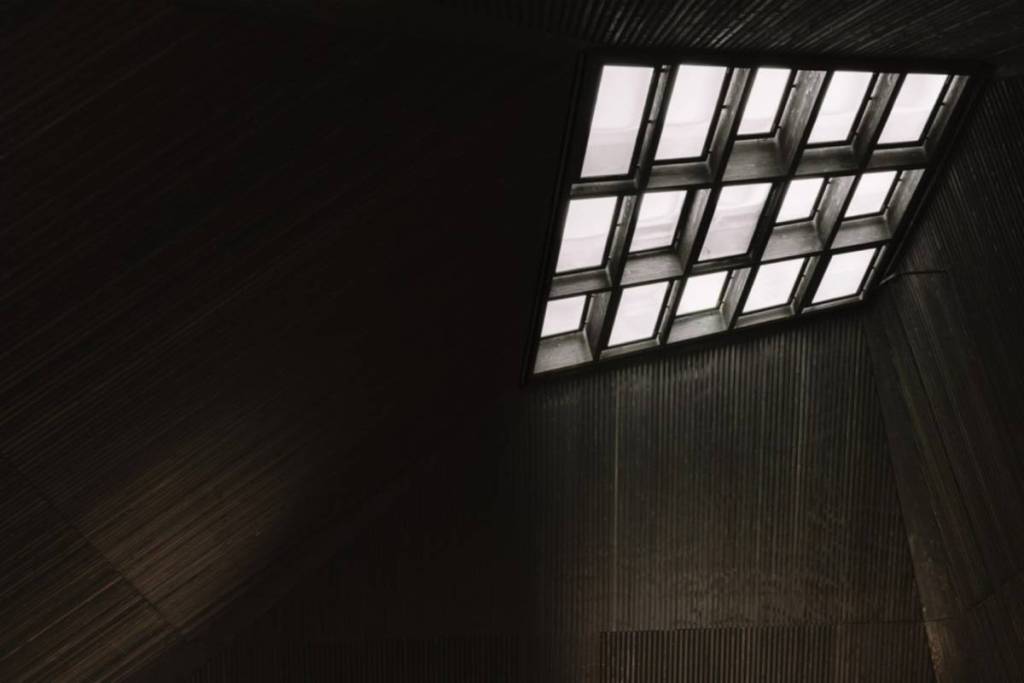
Even though the Reethaus is sometimes associated with sound meditation, its program isn’t limited to meditation alone. Rather, the venue combines deep listening, sound art, ambient music, experimental sound art, and meditation. At some events, breathing exercises, vocal toning, or guided meditations are also offered. Other formats, on the other hand, focus more on experimental sound art or nature recordings. For example, the sounds of birds and forests have already been integrated into the listening experiences.
The architecture also plays a major role in creating the atmosphere. Designed by José Cuevas , the Reethaus is situated right on the water. With its unusual shape and reed cladding, the building resembles a modern temple nestled in nature. The almost sacred atmosphere is a deliberate part of the concept. However, this isn’t a religious site, but rather a space where you can find peace, listen, and escape the hustle and bustle of city life for a moment.