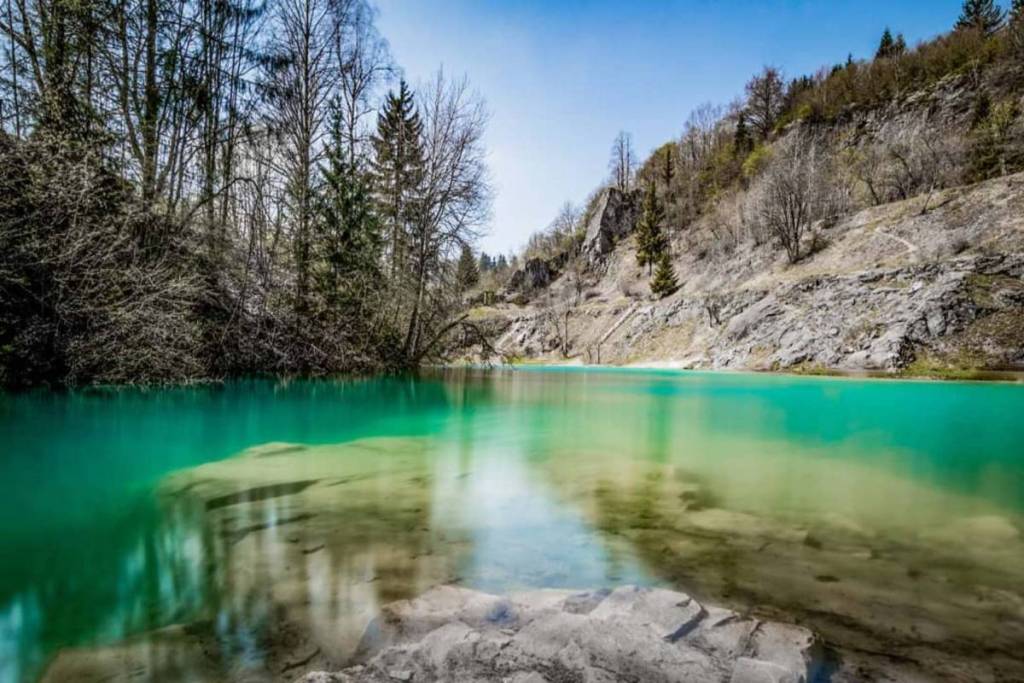

Are you fans of discovering more of your own country than just the well-known tourist spots? Then you’ve come to the right place, because we have special tips that aren’t too far from Berlin either. From Germany’s tallest chalk cliffs, located right next to one of the most beautiful island towns, to a UNESCO natural wonder in the Harz Mountains. Where you go is up to you. To give you even more options to choose from, we’d like to share one more special tip, also located in the Harz Mountains: The Blue Lake near Elbingerode is one of the most extraordinary natural phenomena in the Harz and captivates visitors every spring with its intense turquoise-blue water—though only for a few weeks a year.
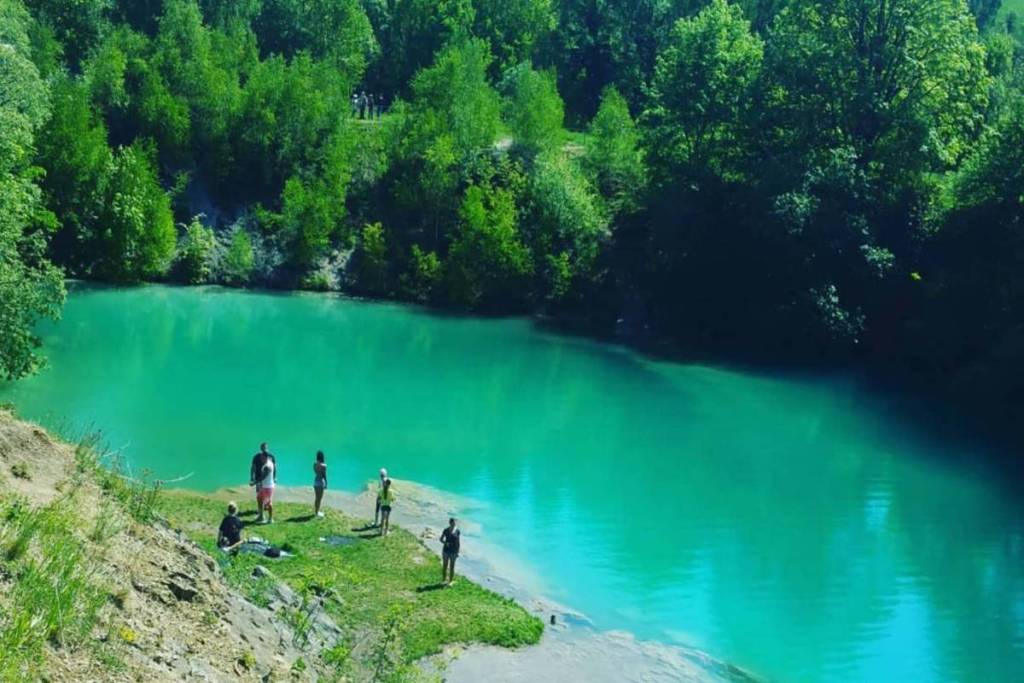
The Blue Lake is located between Rübeland and Hüttenrode near Elbingerode in the Harz district of Saxony-Anhalt. Nestled in the Harz Nature Park, it is surrounded by dense forests and striking limestone cliffs that form the lake’s impressive backdrop. The Blue Lake did not form naturally, but rather in a former limestone quarry at Garkenholz. Limestone was quarried there beginning in 1885; among other things, it was used to produce quicklime. After the quarry was closed in the 1950s, the former open-pit pit gradually filled with spring water and meltwater.
The Blue Lake owes its extraordinary color to a geological phenomenon. Several karst springs feed it with particularly calcareous water that contains large amounts of calcium carbonate. The fine limestone particles bind algae and other suspended matter, causing them to sink to the bottom. As a result, the water remains exceptionally clear and reflects sunlight in an intense turquoise to light blue hue.
However, the famous blue color isn’t visible year-round. Between March and May , the lake is usually at its most beautiful and glows with particular intensity. In summer, less spring water flows into the lake, while algae proliferate more rapidly, causing the water to appear increasingly greenish. During dry autumn months, the lake may partially or even completely dry up. In winter, it fills with water again, so this natural cycle repeats itself every year.
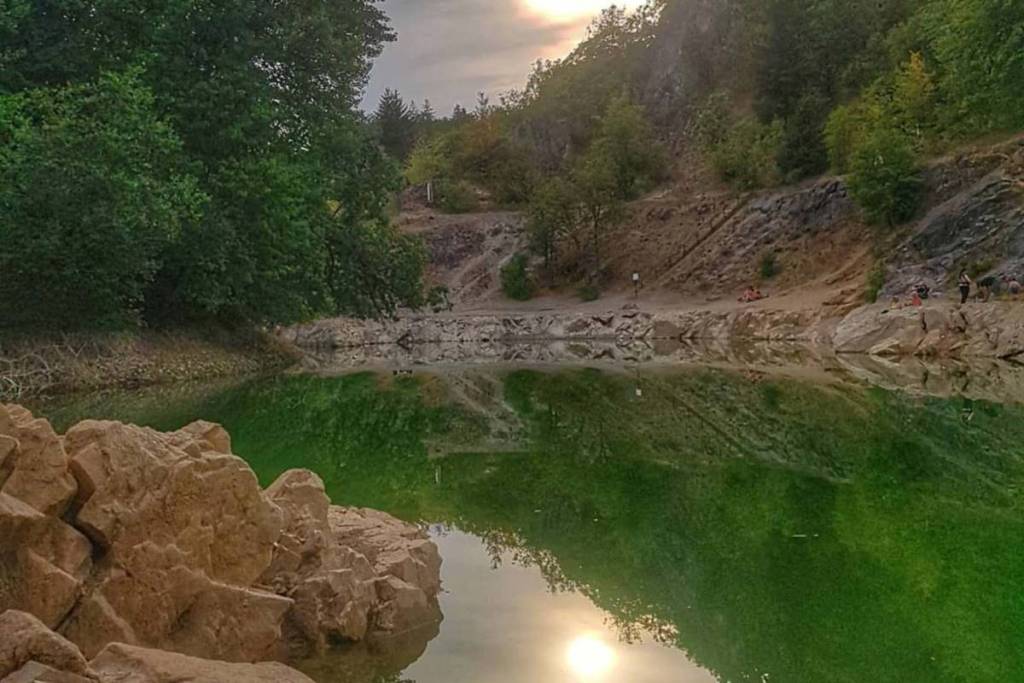
If you want to experience the Blue Lake at its most spectacular, you should visit between March and May if possible. But even in summer, when the water turns emerald green, this natural phenomenon impresses with its unique beauty. On sunny days in particular, the water looks almost Caribbean, displaying its most intense shades of turquoise and blue.
Although the clear water looks very inviting, swimming in the Blue Lake is officially prohibited. The reason for this is, on the one hand, to protect the sensitive geotope; on the other hand, the steep, sometimes unstable banks and sharp-edged rocks beneath the water’s surface pose a safety risk.