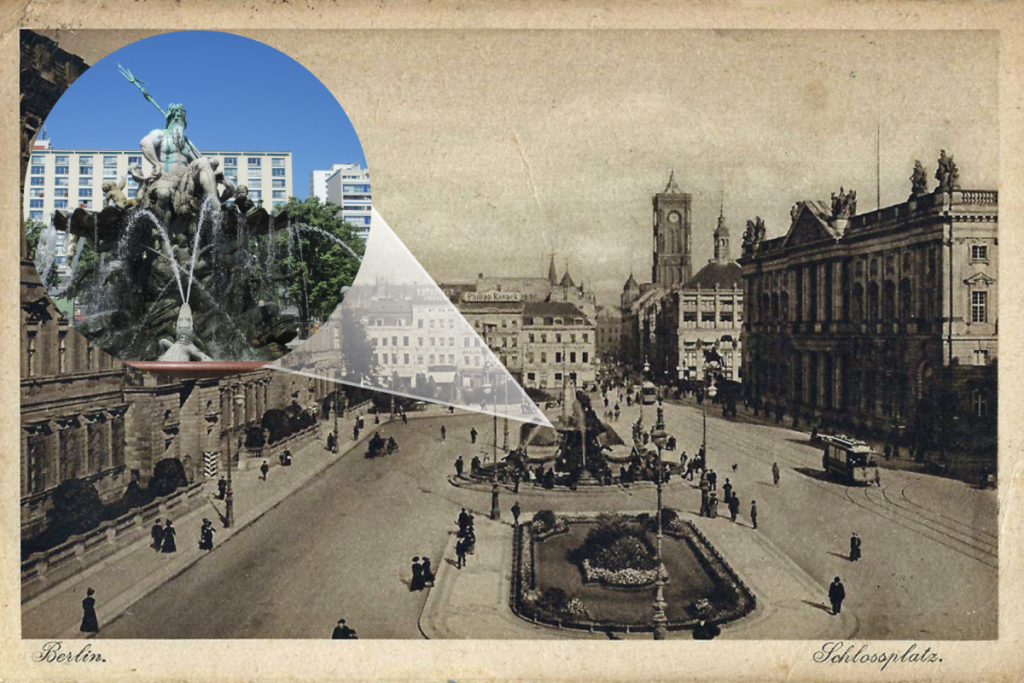

In the middle of the open space between the TV Tower and the Red City Hall in Berlin-Mitte stands one of the capital’s most striking water features: the Neptune Fountain. Completed in 1891 by Reinhold Begas, the Berlin City Council originally presented the monument to Emperor Wilhelm II upon his accession to the throne.
Sea foam, bronze, and Baroque drama: That’s what the Neptune Fountain is all about
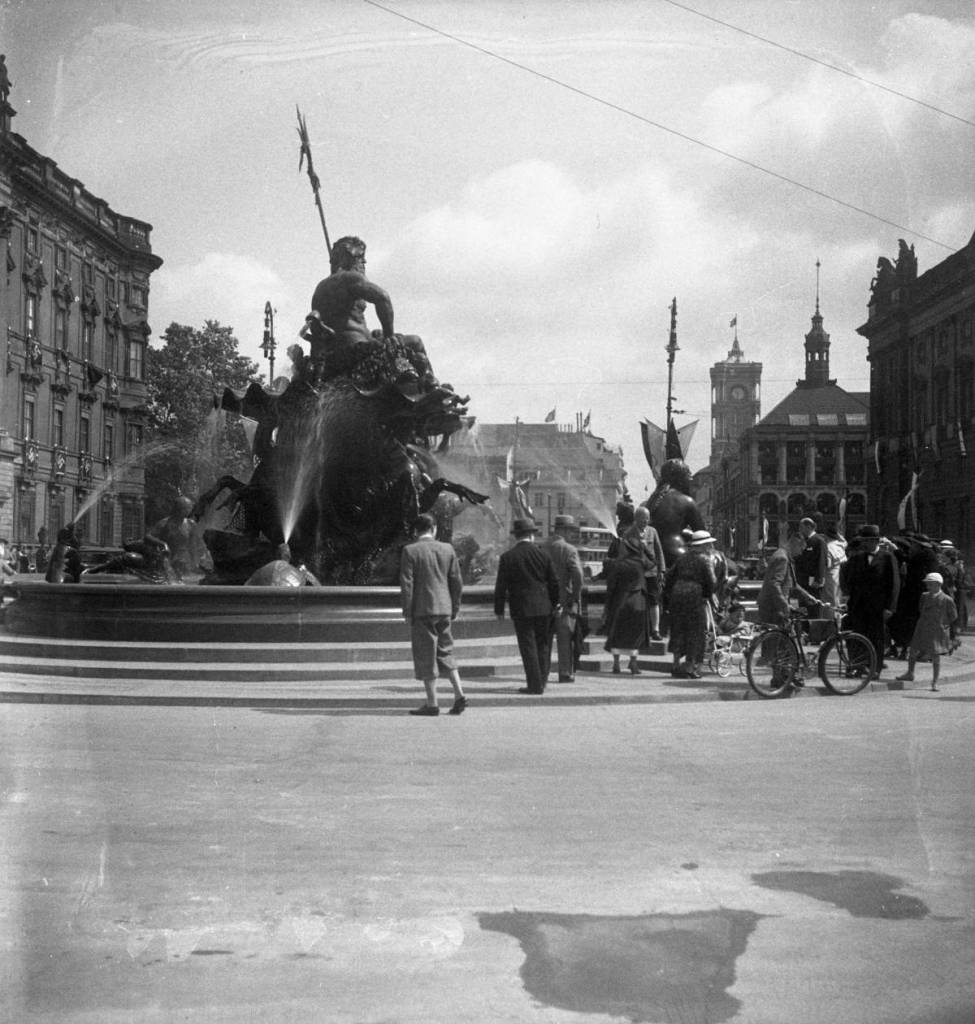
The sea god Neptune himself is enthroned on a massive basin of polished Swedish granite. Cast in solid bronze, he rests his trident on a giant seashell, which is hoisted aloft by powerful tritons and mythical sea creatures. Surrounding him are four allegorical female figures symbolizing the four major rivers of what was then Prussia: the Rhine, the Elbe, the Oder, and the Vistula—each surrounded by characteristic animals such as fish, geese, and toads.
The Palace Farce: Why Wilhelm II Had the God Turned Away
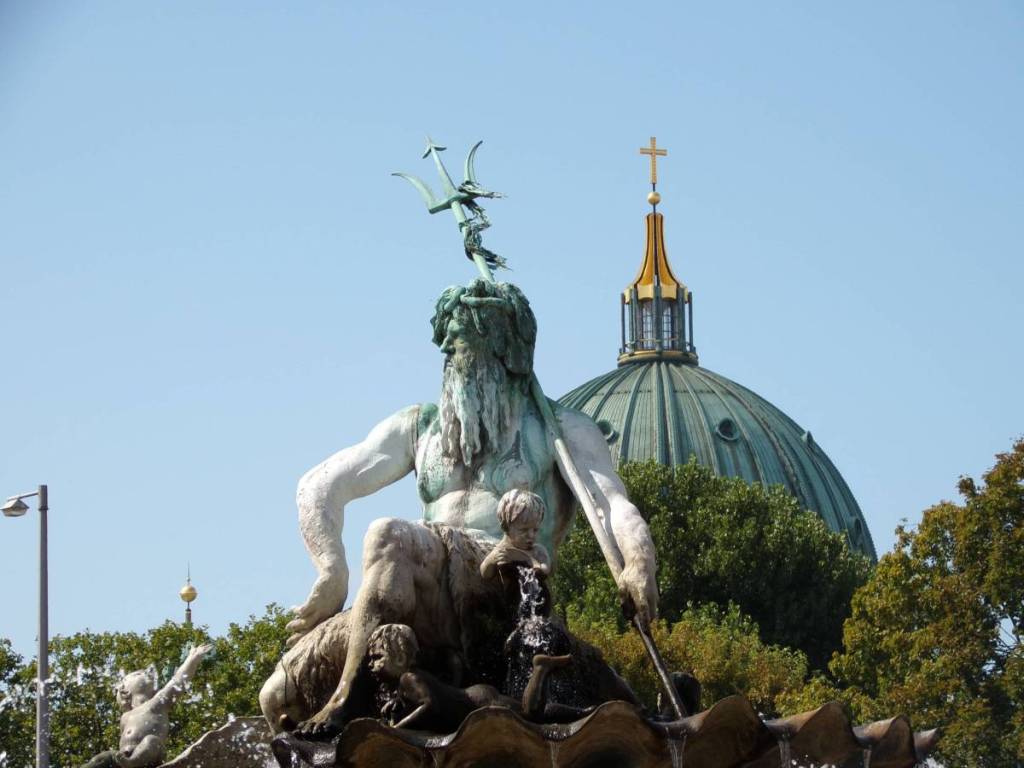
Do you know the risqué anecdote behind Neptune’s pose? Originally, the fountain stood on Schlossplatz. According to legend, Emperor Wilhelm II was thoroughly displeased that the naked sea god, in all his unabashed splendor, was looking directly into the empress’s private chambers. The monarch promptly ordered the figure to be rotated 180 degrees—from then on, Neptune simply turned his bronze backside toward the Hohenzollern Palace.
Since 1969, following its relocation from the war-damaged City Palace—which is now the Humboldt Forum—it has been permanently on display at its current location. Located 700 meters away as the crow flies, between the TV Tower and the Red City Hall, it attracts thousands of onlookers every day. For years, the Senate, historic preservationists, and cultural policymakers debated whether to return the masterpiece to its original location. However, it has now been definitively decided that the bronze sea god will remain where the GDR city planners placed him.
📍 Location: Rathausstraße 15 (open space in front of the Red City Hall), 10178 Berlin-Mitte
📆 Date and Time: Accessible year-round, 24 hours a day (water feature usually operational from April through October)
⏳ Duration: 15 to 30 minutes
💵 Cost: Free