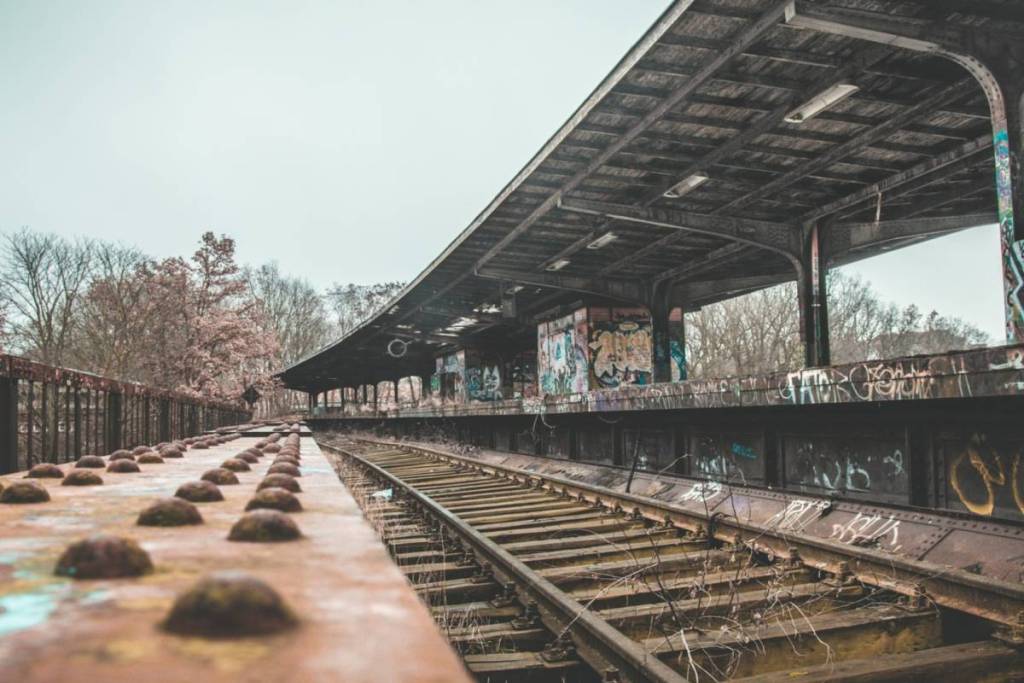

What was once one of Berlin’s most popular attractions is now merely a shadow of its former self. From the once-popular water park to one of the city’s most successful amusement parks—numerous places that were once full of life are now abandoned “lost places.” While the future remains uncertain for some of them, others are poised for a surprising comeback. This includes the legendary Siemensbahn: What today looks like a forgotten railroad line in the midst of dense vegetation was once one of the most significant transportation projects in Berlin’s industrial history.
On December 18, 1929, the approximately 4.5-kilometer-long Siemensbahn between Jungfernheide and Gartenfeld was opened. It was intended to transport thousands of Siemens employees to their workplaces quickly and reliably. But since September 1980, not a single regular passenger train has run here. Nature has reclaimed large sections of the tracks, while historic stations and viaducts have fallen into increasing disrepair. Now the historic, protected rail line is set for a comeback: Deutsche Bahn plans to resume S-Bahn service by the end of 2029.
At the beginning of the 20th century, Siemensstadt developed into one of Berlin’s most important industrial hubs. As early as 1924, Siemens employed around 45,000 people there, though only about 2,000 lived in the immediate vicinity. Most employees had to commute daily from other parts of the city, which, given the growing workforce, increasingly became a traffic problem. To improve access to its factories, Siemens decided in 1925 to build its own rapid transit line. Between 1927 and 1929, a roughly 4.5-kilometer-long line was constructed, running from Jungfernheide Station via Wernerwerk and Siemensstadt to Gartenfeld. The Siemensbahn was finally opened on December 18, 1929. What made this project unique was that the industrial conglomerate financed the construction itself, while the Deutsche Reichsbahn took over operations. At times, the line transported up to 20,000 workers to their jobs each day.
During World War II, the Siemensbahn was damaged by bombing raids. Subsequent dismantling also significantly impaired operations. Although individual sections could be used again after the war ended, it took until December 1956 for the entire line to be operational as a double-track line once more. The line was finally shut down in September 1980. During a strike by employees of the Deutsche Reichsbahn in West Berlin, service on the Siemensbahn was suspended. Unlike some other affected lines, the railway did not resume service afterward. What began as an interruption triggered by the strike turned into a decades-long shutdown.

After 46 years without regular passenger service, the Siemensbahn is now set to undergo a comprehensive revival. Deutsche Bahn plans to modernize the historic, protected route as part of the i2030 infrastructure project and reintegrate it into Berlin’s S-Bahn network. This will require not only replacing the tracks but also renovating historic bridges and viaducts. In addition, modern signaling technology, new switches, and barrier-free upgrades to the three decommissioned stations—Wernerwerk, Siemensstadt, and Gartenfeld—will be implemented. The historic steel structures are to be preserved as much as possible and restored in accordance with preservation guidelines.
According to the current schedule, initial preparatory work is planned for fall 2026, while major construction is set to begin in 2027. Service is scheduled to resume at the end of 2029. Afterward, S-Bahn trains are expected to run every ten minutes on the line. Whether this deadline can actually be met, however, depends on the progress of construction.