
In 2021, the Berlin subway station“Museumsinsel” opened . Due to the architecturally significant neighborhood, the entrances were deliberately kept unobtrusive. But underground, a fascinating structure was created as a tribute to Karl Friedrich Schinkel.
In this third article about painter and architect Karl Friedrich Schinkel, we look at the Berlin native’s time in the theater, how he continued to impress people even in difficult times, and how Berlin erected a somewhat different monument in his honor.
Schinkel astonishes Berlin with his incredible wealth of ideas
During the Napoleonic occupation, there was a shortage of construction contracts in Prussia. Out of necessity, Karl Friedrich Schinkel worked as a set and panorama painter. The spectacular diorama ofthe “Burning of Moscow” became a huge success in 1812. Because he illuminated the painting from behind with oil lamps, the audience felt as if they were standing in the flames themselves. Such stunts made him famous throughout Berlin.
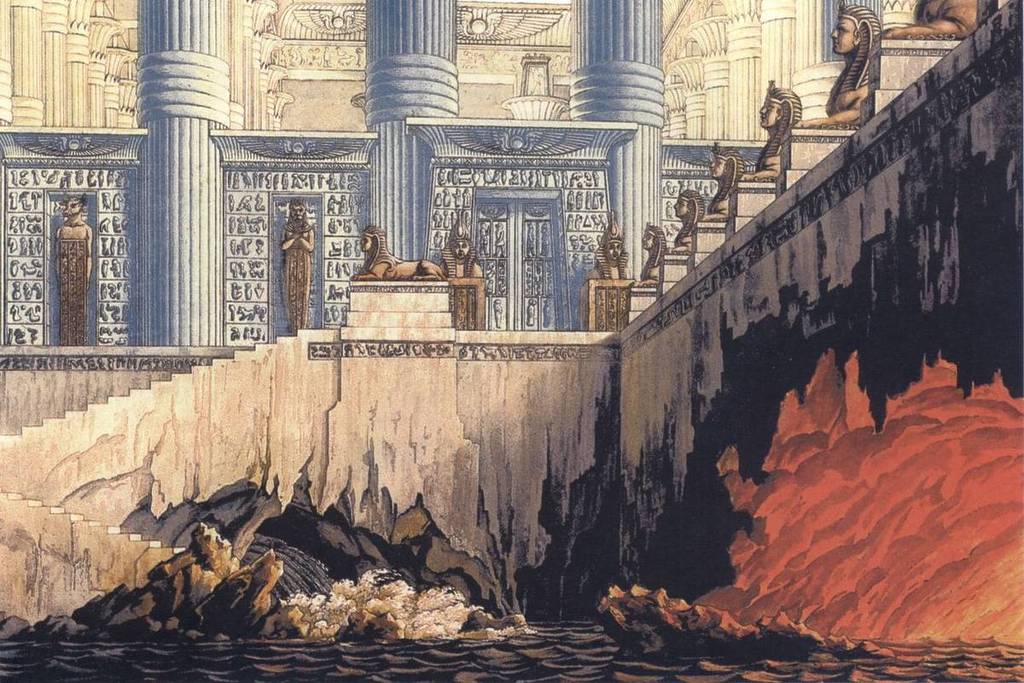
At the same time, Schinkel left his mark on the Berlin Opera with innovative stage designs for around 40 works. His stage designs for Mozart’s “The Magic Flute” in particular are still famous today! (Above you can see the Egyptian stage set.) His impressive scenography inspired not only theatergoers but also the planners of the new U5 station “Museum Island.”
If you want to know the best way to photograph urban architecture, check out this photography course designed specifically for subway stations!
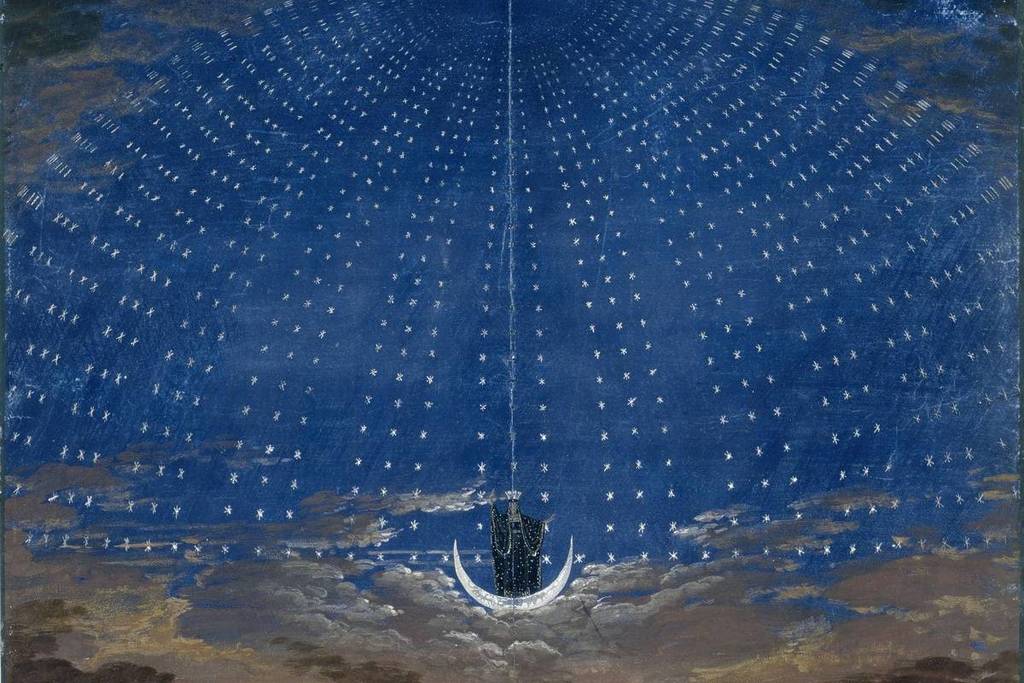
The subway ceiling is modeled after this Schinkel painting!
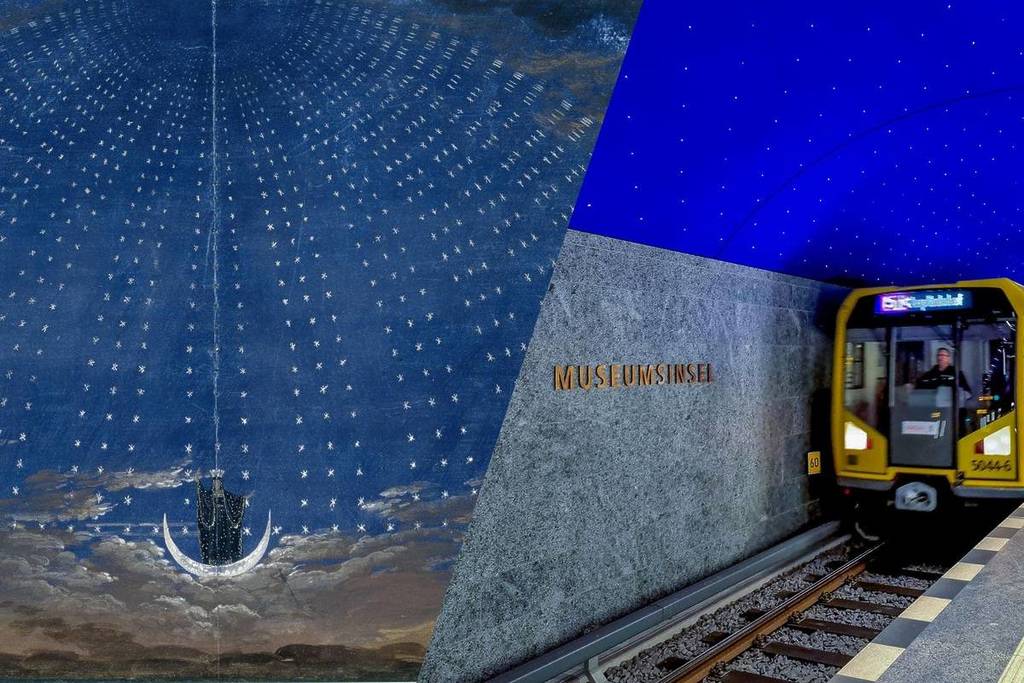
When the new U5 subway station “Museumsinsel” was designed, the architect chose Schinkel’s stage design for the Star Hall in the Queen of the Night’s Palace from Mozart’s opera “The Magic Flute” as the central element . He built a vaulted, ultramarine-blue ceiling structure. It is illuminated by more than six thousand artificial glowing stars. The striking pillars on the central platform are intended to evoke Schinkel’s colonnades .
Why this station of all places? Because Schinkel shaped the city center as a master builder right around this station!
The rest of the stop is intentionally kept simple.
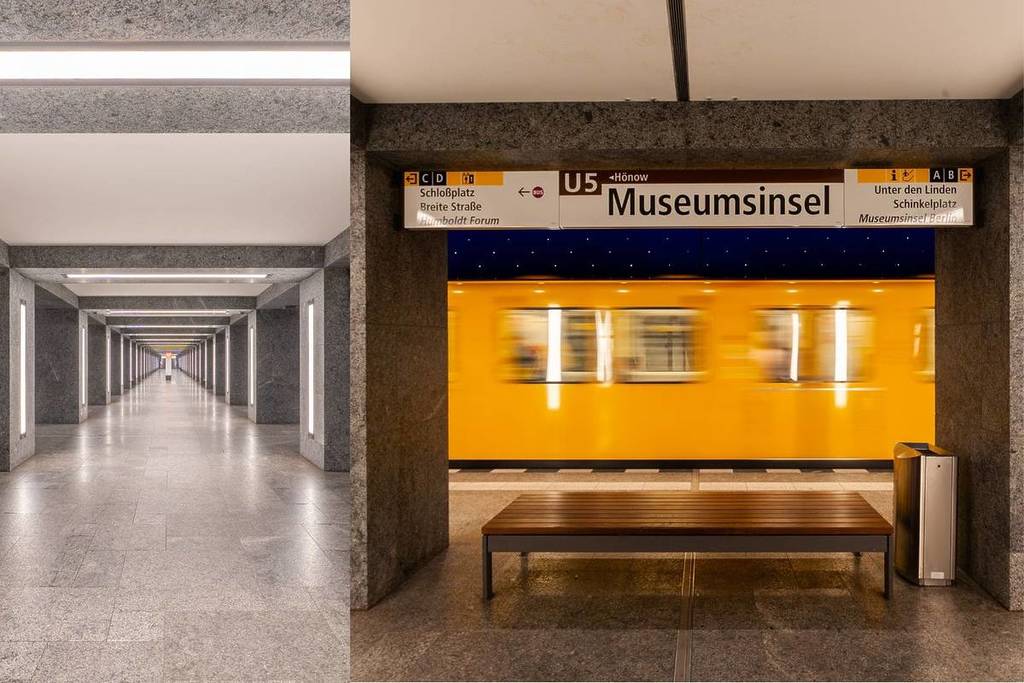
Blue-gray granite and white ceilings create an elegant atmosphere. Custom-designed lighting in the handrails and stairwells provides harmonious illumination. Architectural photos on the platform walls pay tribute to the historical heritage of the surrounding area. In this way, modern infrastructure and classical architecture blend seamlessly.