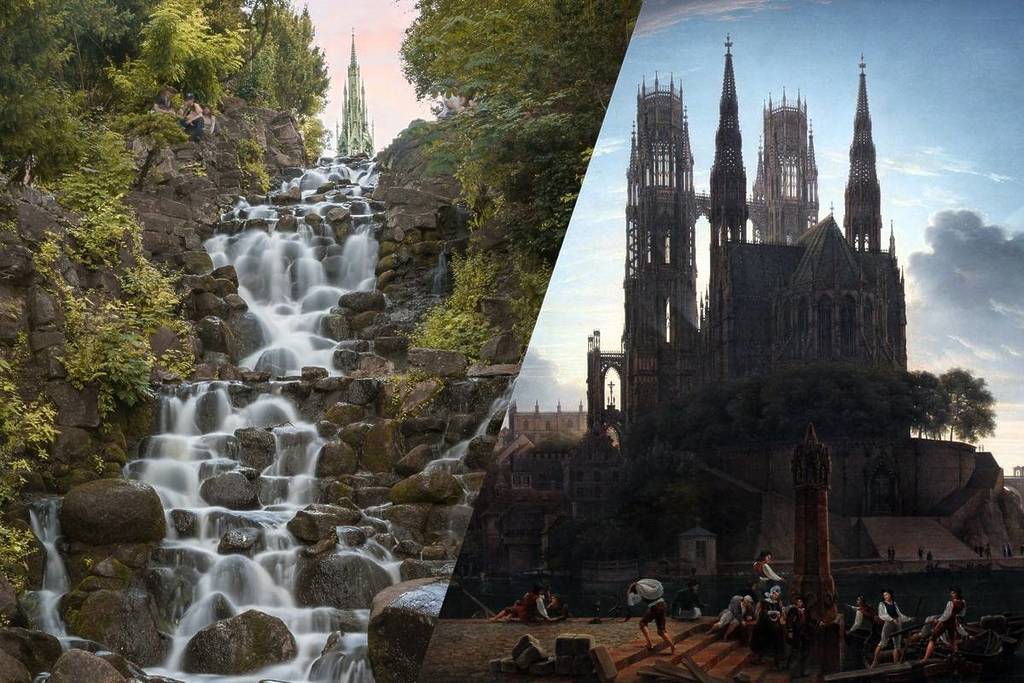

In spring, we’re all drawn out into nature and the old villages of Brandenburg. We long for peace and reflection, so that we can then enjoy the many wonderful things Berlin has to offer with renewed courage!
But you don’t necessarily have to leave Berlin to find your dream destinations. In this first of three articles, we’ll travel together back to the era of “ ” by the Berlin painter and architect Karl Friedrich Schinkel.
In Viktoriapark in Kreuzberg, you can see the spire of a cathedral that was never built
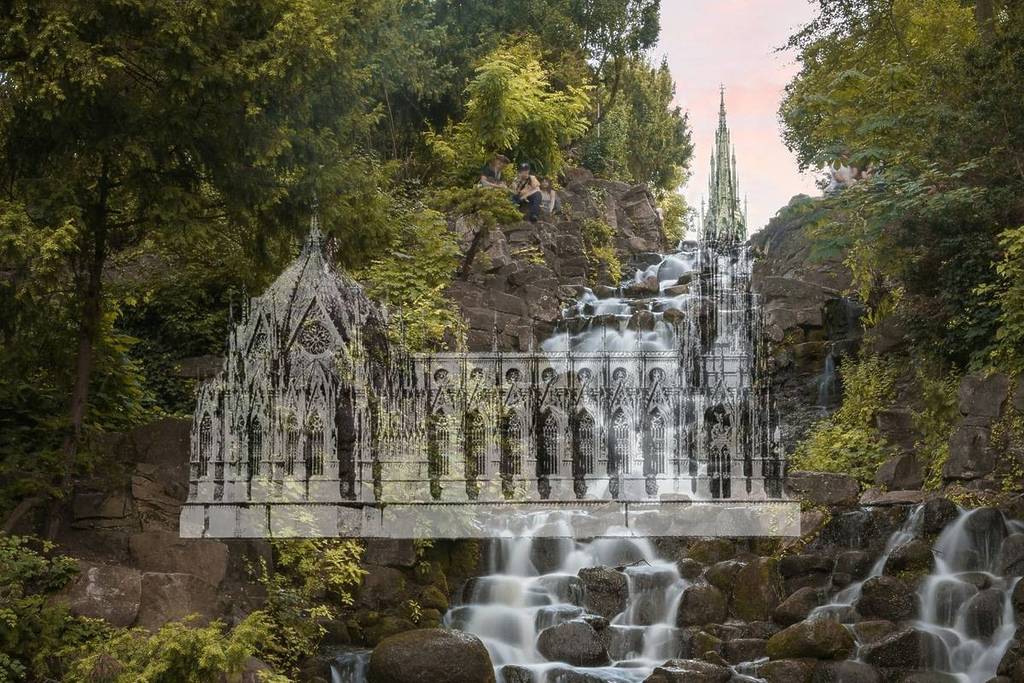
If you look up from the base of the waterfall in Viktoriapark, you can make out a spire. But the view from below is deceptive. It is not a spire, but the nearly 20-meter-high, neo-Gothic National Monument to the Wars of Liberation (known as the Kreuzberg Monument), which was erected by Karl Friedrich Schinkel in memory of the German Wars of Liberation.
Originally, a huge cathedral was planned to stand in place of the National Monument
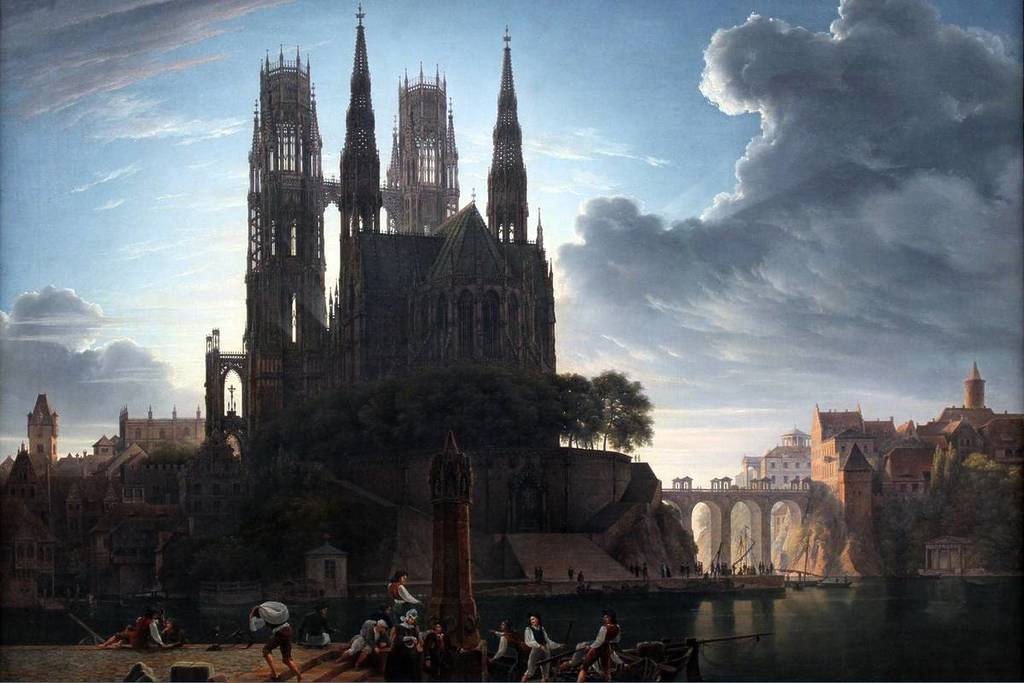
After the war against Napoleon was won in 1815, a massive“Liberation Cathedral”was to be built in Berlin. This had likely been a long-standing ambition of architect Schinkel. His fascination with such a gigantic structure was evident long before the war was even won.
In his masterpiece“Gothic Cathedral by the Water”(1813), Karl Friedrich Schinkel depicted an incredible scene that would be hard to surpass even in film! Such a masterful depiction remains unmatched to this day.
But the Prussian king was against such a massive construction: it was simply too expensive after the long war against Napoleon. Something smaller (and more cost-effective) was needed.
The National Monument to the Wars of Liberation in Viktoriapark in Berlin Kreuzberg
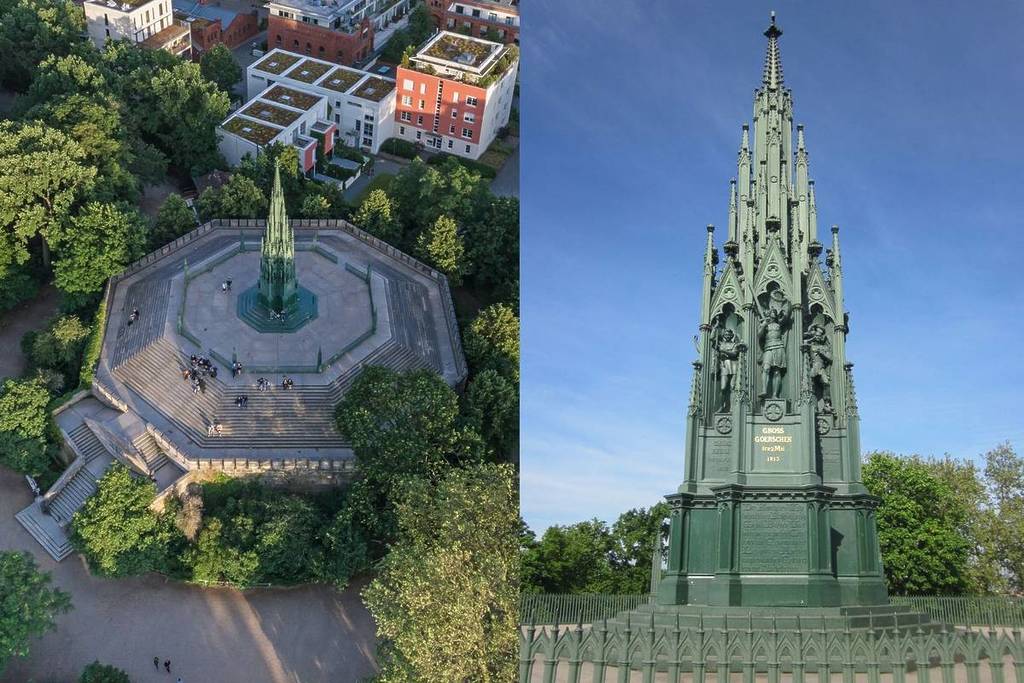
Despite cutbacks, the monument is impressive. It towers nearly 20 meters high over Kreuzberg. At the time, to save further costs, it was decided to construct the monument out of cast iron instead of expensive, hand-hewn stone. This was intended to symbolize the people’s willingness to make sacrifices, having previously donated their gold for iron to finance the war.
Personally, I’d be annoyed if I traded gold for iron and then saw a huge iron monument erected in the park after the war. But back then, iron was a progressive material! Iron was considered honest, hard, and patriotic.
Why not stop by Viktoriapark in Kreuzberg and take a look at the monument that was meant to be a cathedral!