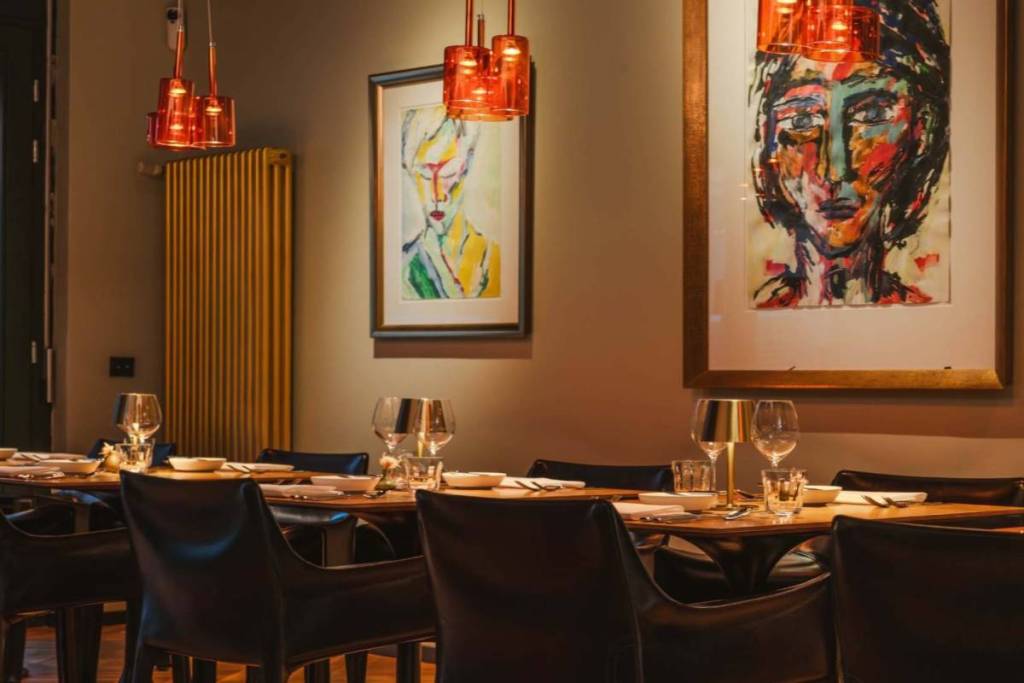

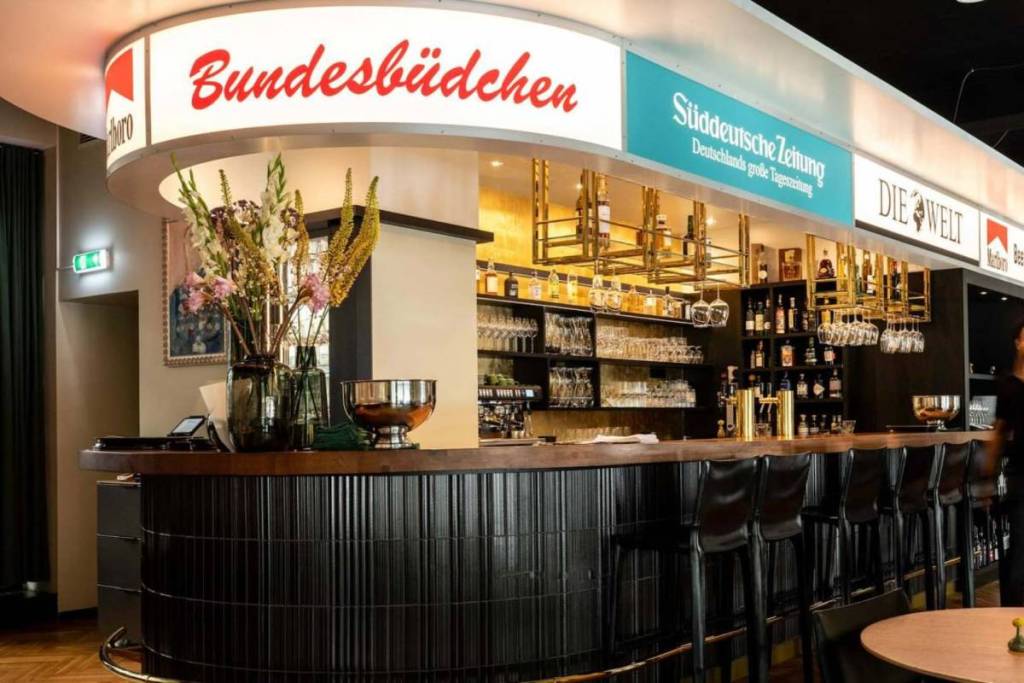
Going out to eat in Berlin while soaking up the atmosphere of bygone days—that’s nothing new. Because while the city offers plenty of new attractions, such as fancy brunch spots and trendy nightclubs, there are also those special establishments whose walls tell a piece of German history. One particularly special example is Berlin’s Bundesbüdchen. The restaurant is located at Hannoversche Straße 2 in Mitte, not far from the government district, and draws on the history of a legendary Bonn kiosk .
The story begins in 1957 in Bonn
The restaurant deliberately draws on the history of the iconic Bonn kiosk of the same name. While the original was a sales pavilion measuring just 20 m², the concept has been reimagined in Berlin as a modern restaurant. The Berlin restaurant describes the original kiosk as a meeting place for politicians, journalists, and locals, and aims to translate this principle of a casual gathering spot into a contemporary dining setting. The restaurant opened in 2025. This also creates a nice historical connection: The German federal government moved from Bonn to Berlin in 1999—and decades later, the name of perhaps the most famous kiosk of the Bonn Republic has now arrived in Berlin as well.
The actual story begins in 1957 in Bonn. Back then, a small, kidney-shaped sales pavilion was built in the government district. It stood practically in the middle of the political power center: diagonally across from the Bundesrat, not far from the Bundestag and the Chancellery. Anyone walking between these institutions almost inevitably passed by it.
Its history actually began even more modestly. The Rausch family initially sold their wares from a fruit cart, later from a simple wooden shack and a mobile sales trailer. This eventually gave rise to the distinctive kiosk in 1957. Its architecture—with an oval or kidney-shaped floor plan, glass sides, a tiled base, and a widely overhanging roof—was typical of the 1950s. Today, the original is a protected historic landmark.
A Meeting Place in the Bonn Republic
Konrad Adenauer picked up his daily newspaper there. Herbert Wehner was a regular. Helmut Kohl had his driver fetch bread rolls. Joschka Fischer bought Asterix comics there, Guido Westerwelle got ice cream, and Wolfgang Clement drank coffee. Kohl, Wehner, and Franz Josef Strauß are also associated with the Büdchen’s sausages. The Büdchen was by no means intended solely for top politicians . Ministry employees, journalists, members of parliament, drivers, security guards, and cleaning staff all stood together at the counter there. It was precisely this mix that made the place an informal gathering spot for Bonn’s political establishment.