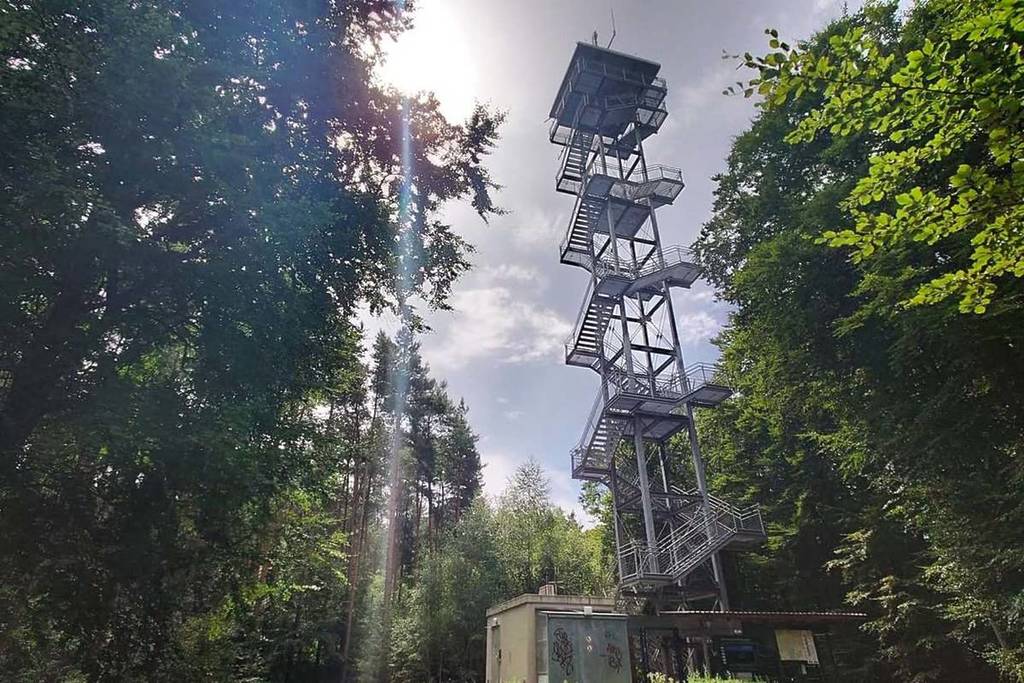

We have quite a few excursions around Berlin that offer great views and nature all around. From the Wolkenhain, accessible via the city’s first urban cable car, to the observation tower on Berlin’s highest elevation. And the selection of sweeping panoramic views is far from over. The Rauener Berge observation tower impresses with its unusually hilly landscape, dense pine forest, massive Ice Age boulders, and an extremely wide view over Brandenburg.
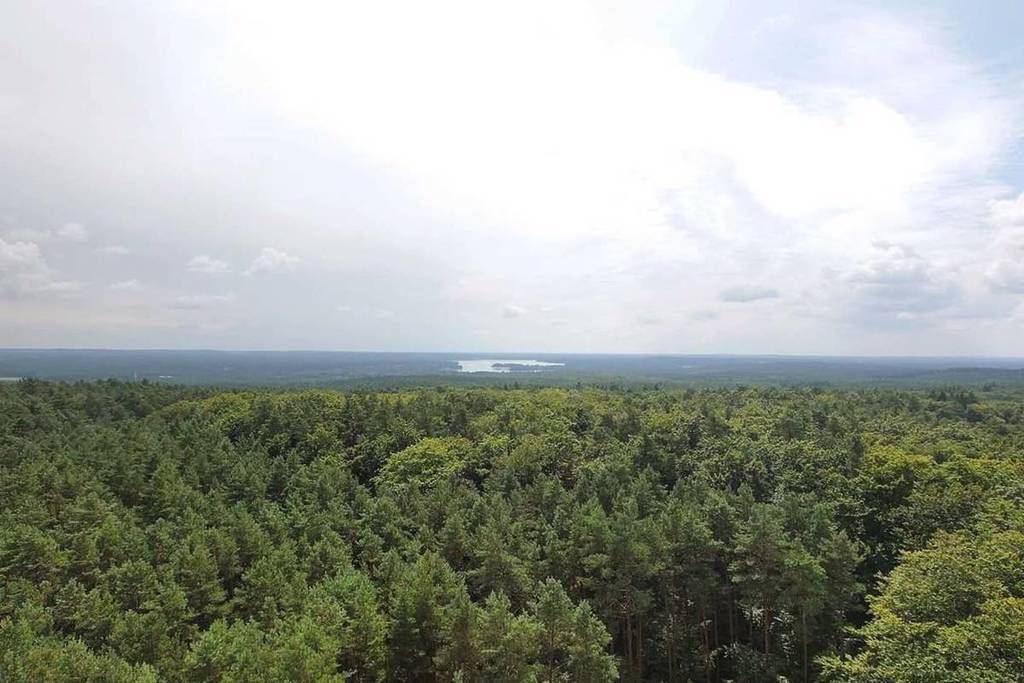
The Rauener Berge themselves are about 153 meters high, which is quite unusual for Brandenburg. The current tower is just under 40 meters high and consists of an open steel structure. As a result, you end up well above the treetops and get a complete 360-degree view. On a clear day, you can see Scharmützelsee, Fürstenwalde, the Berlin TV Tower, and in some cases even Tropical Islands Resort, whose massive dome is one of the largest self-supporting hall structures in the world.
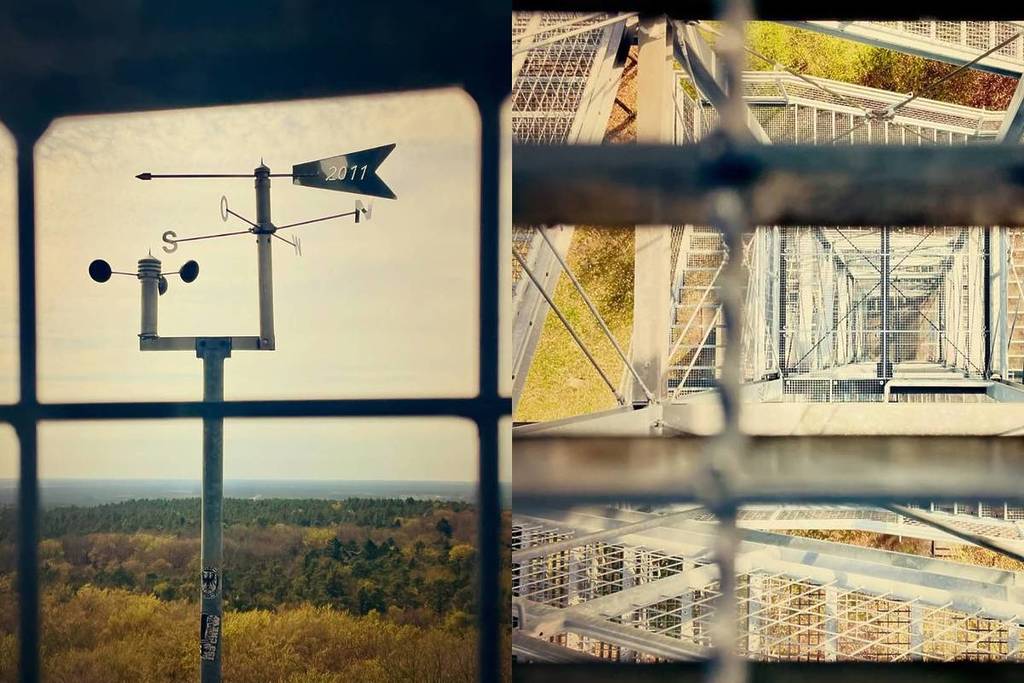
Many find the ascent particularly spectacular because the tower is open, sways slightly, and you can see straight down through the lattice steps. This makes it seem much taller than it actually is. People with a fear of heights notice this immediately. Right next to it lie the famous Markgrafensteine, gigantic boulders from the Ice Age. They are among the largest land-based boulders in northern Germany. One of the stones was partially quarried in the past; it was later even used to create thefamous granite bowl in front of the Altes Museum in Berlin.
The site is also historically fascinating. Surveying and observation towers stood there as early as the 19th century. Later, the area was used for military purposes and served as a forest fire observation post. Several older towers were destroyed by lightning strikes, storms, or wars. The current observation tower was not opened until 2011.
The area is particularly well-suited for hikes, sunsets, autumn fog, peaceful nature excursions, and photography. Especially in the fall or on slightly foggy days, the landscape there looks almost cinematic, with the tall pines, the rocks, and the elevated location.