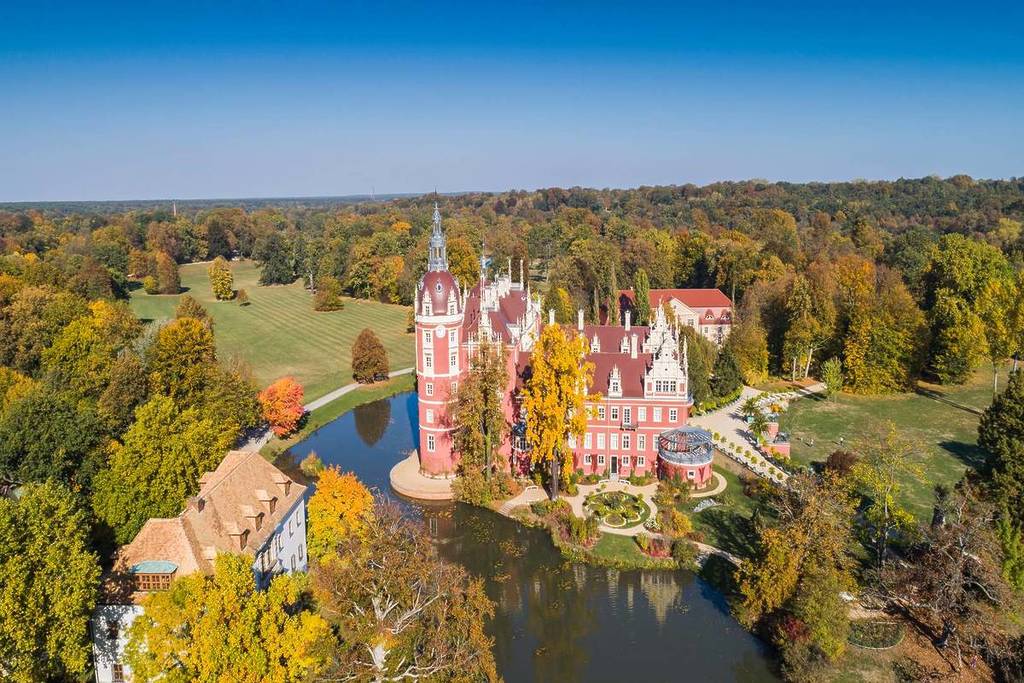

Castle enthusiasts, take note: From Berlin, you can not only reach the world’s tallest newly built castle in no time, but also visit numerous other impressive sites. Why limit your trip to just one castle when you can discover five castles, Italian gondola rides, and Europe’s only man-made volcano all in one place? Sounds amazing—but not spectacular enough? Then we have the ultimate tip: Fürst-Pückler-Park Bad Muskau is one of Europe’s most impressive landscape parks and is considered the largest English landscape park in Central Europe.
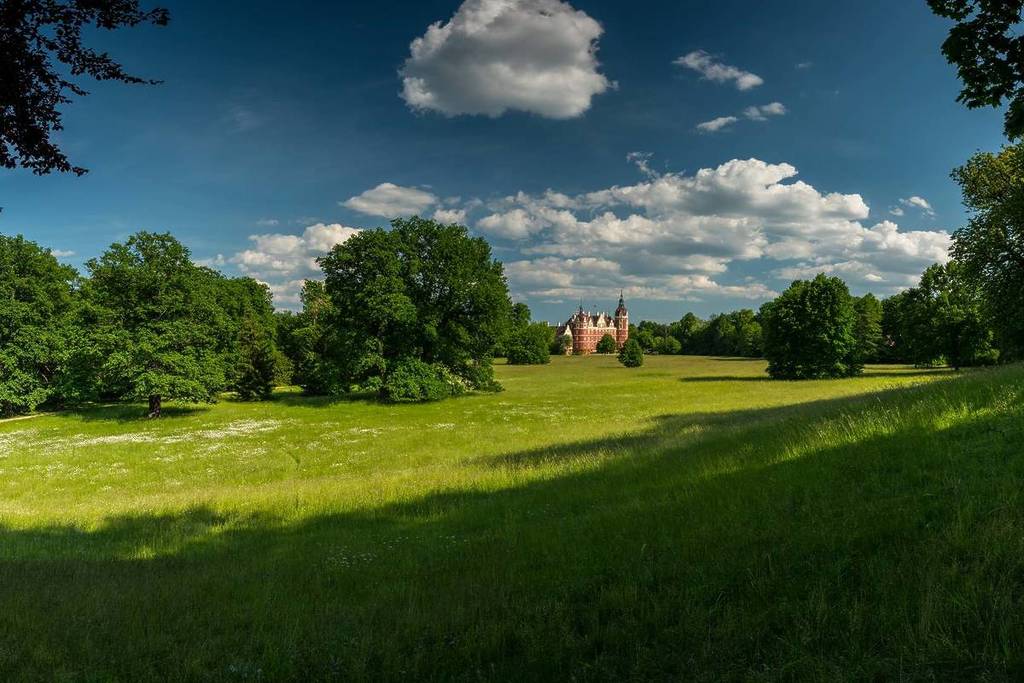
About two hours from Berlin, this UNESCO World Heritage Site stretches across a vast 830 hectares between Germany and Poland and looks more like a romantic painting than a classic castle park. What makes the site special is that the Neisse River runs through the park , connecting the two countries in a single, vast park landscape. During their walk, visitors can cross back and forth between Germany and Poland several times via historic bridges—often almost without noticing. It is precisely this cross-border character that makes Bad Muskau one of Germany’s most extraordinary UNESCO sites.
The park was designed in the 19th century by Hermann von Pückler-Muskau, who is still regarded today as one of Europe’s most significant landscape architects . His goal was not to create a strictly geometric palace garden, but rather an idealized natural landscape with perfectly staged sightlines, winding paths, lakes, meadows, and groves of trees. As a result, the atmosphere of the park changes completely with every section and every season.
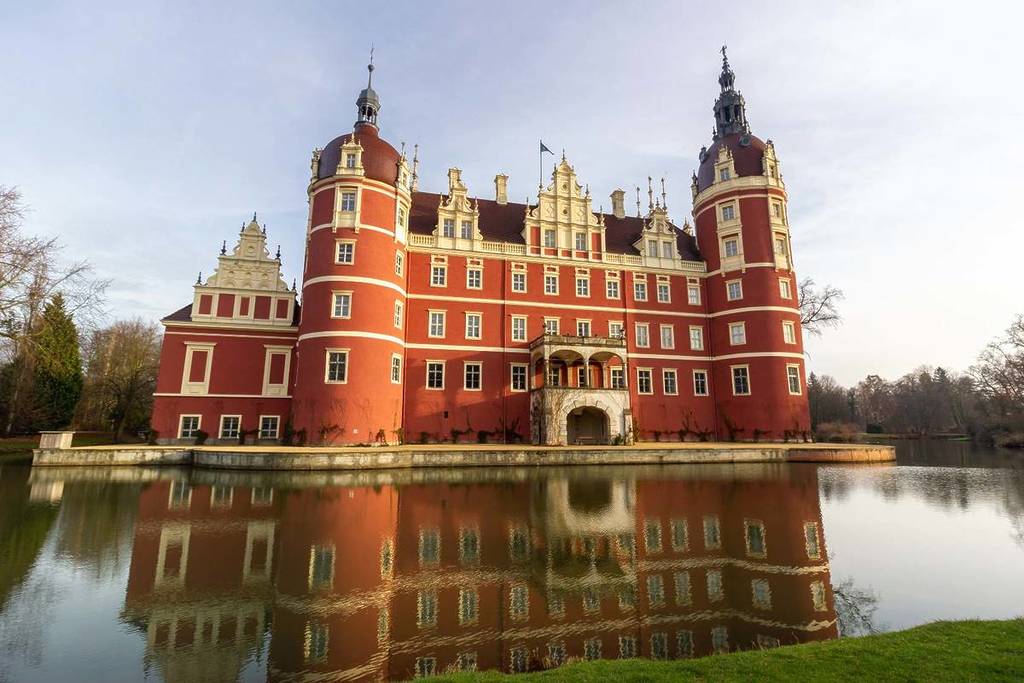
At the heart of the grounds lies the fairytale-like New Muskau Palace, situated directly on the water and resembling a movie set. Also particularly iconic are the elegant bridges, mirror-like lakes, vast flower meadows, and ancient tree-lined avenues that crisscross the entire park. Especially in spring and fall, the site ranks among the most photogenic landscapes in eastern Germany.
Unlike many well-known castle parks, Bad Muskau feels extremely spacious and peaceful. Instead of crowded tourist crowds, you’ll find miles of paths winding through an almost surreal landscape. Many visitors therefore explore the grounds not only on foot, but also by bike or on long day trips through Lusatia.