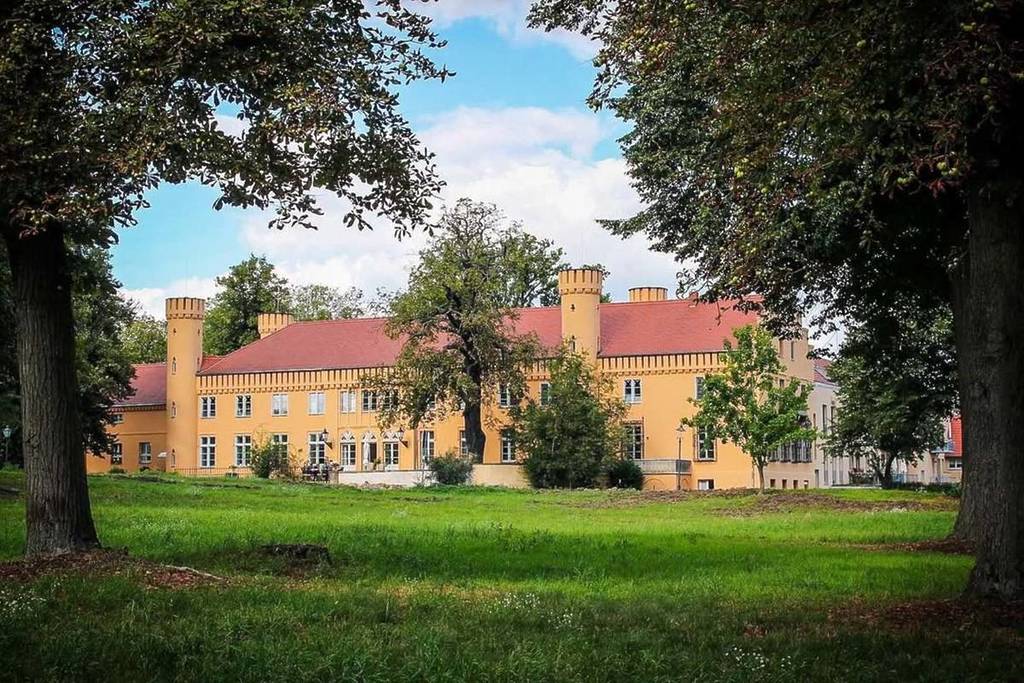

Admittedly: Castles in Brandenburg are a dime a dozen—but that doesn’t diminish their fascination in the slightest. Each one impresses in its own unique way. Whether it’s a romantic vision of Italian Renaissance architecture or a Tudor-style estate where even Bibi & Tina was filmed —the possibilities for discovery here seem endless. And we’ve found another highlight in Brandenburg’s castle landscape for you, one that’s perfect for a spring outing not far from Berlin: an often-underrated total work of art and historical ensemble— Petzow Castle with its idyllic castle park, which, with its British-style architecture, looks as though it were mistakenly placed in Brandenburg.
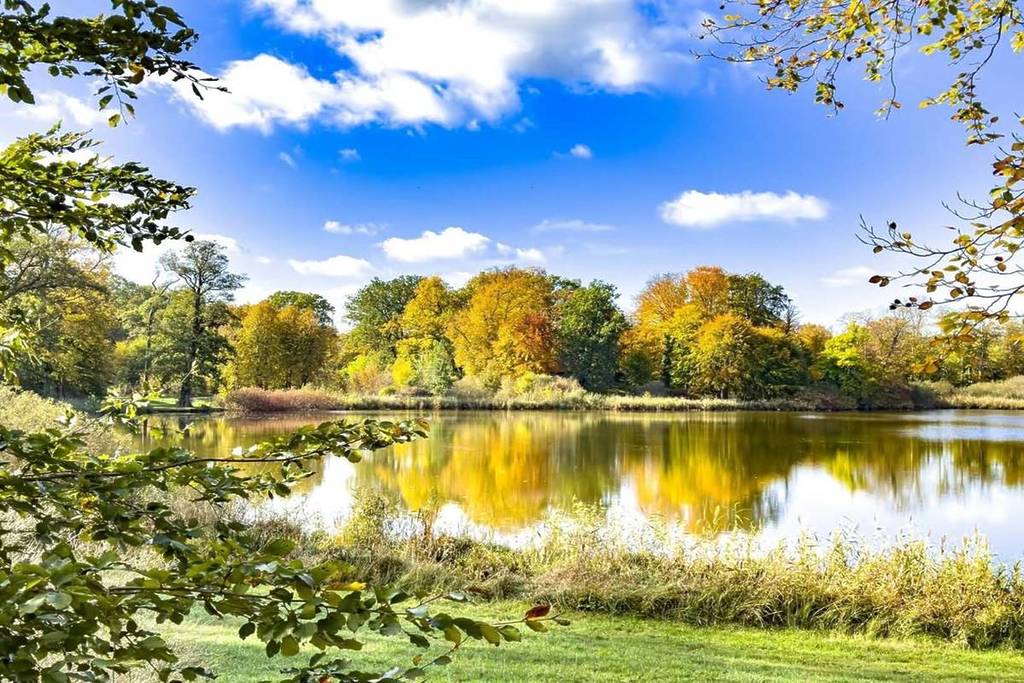
Together, the castle and its park form a harmoniously composed Gesamtkunstwerk of architecture, landscape, and village structure—nestled directly on the shores of Lake Glindow, not far from Werder (Havel). It was built in the early 19th century on behalf of the von Kaehne family and was significantly influenced by the Prussian architect Karl Friedrich Schinkel . It is one of the early examples of his Romantic-historicist architecture.
What’s most distinctive is its unusual, almost whimsical design: with towers, battlements, and asymmetrical shapes , the building is more reminiscent of an English manor house or a neo-Gothic villa than a classic Prussian castle. It’s precisely this break in style that gives it its special charm. Thanks to its location right on Lake Glindow, the castle seems to be set right into the landscape. Together with the park, it creates a deliberately staged scene— almost like something out of a painting or a movie.
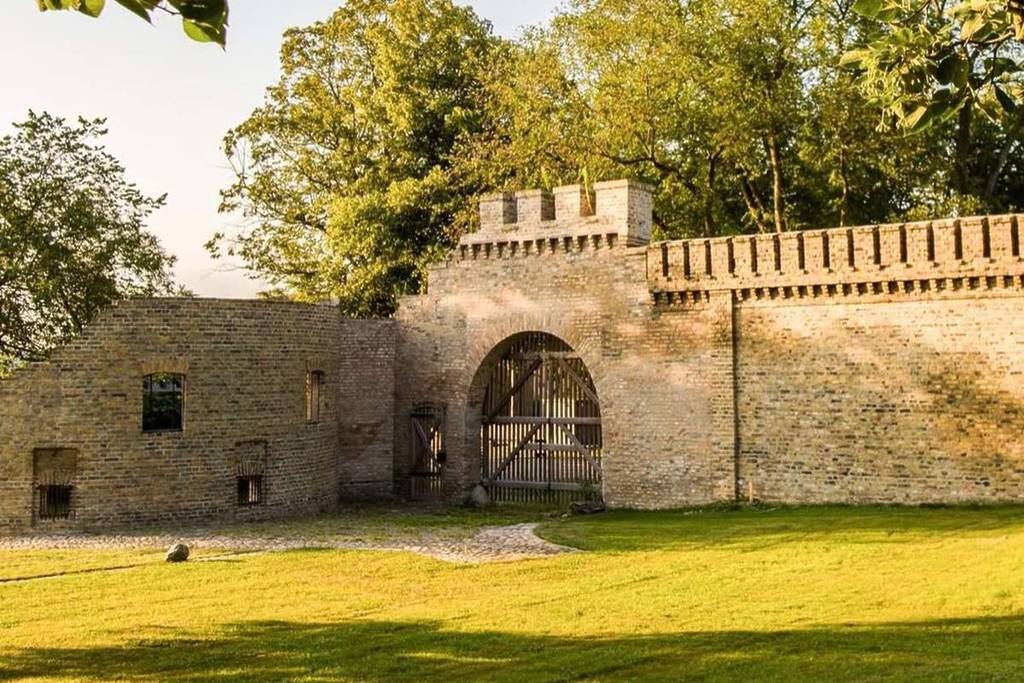
The palace park was designed by Peter Joseph Lenné , one of Europe’s most significant landscape architects. He designed it in the English landscape style, which deliberately contrasts with the strictly geometric Baroque gardens. Instead of clear axes, a natural-looking, gently undulating landscape with wide meadows and gentle hills awaits you in Petzow Palace Park. Curving paths wind through the park, constantly revealing new vistas, while old trees and carefully placed groups of trees give structure to the scenery. Nature and architecture blend seamlessly, so that everything appears to have grown organically.
The park is designed so that new perspectives constantly open up as you walk—whether of the castle, Lake Glindow, or the surrounding landscape. This deliberate staging makes the tour particularly varied and lends it an almost narrative quality, as if the landscape were unfolding step by step.