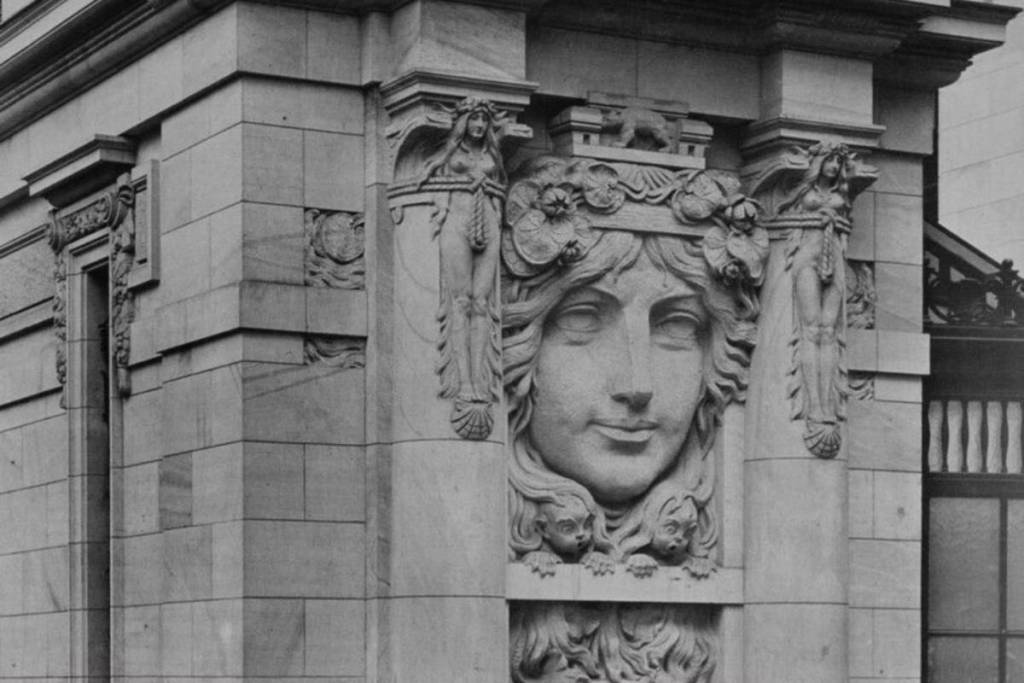

As diverse and modern as Berlin is today, the capital’s architecture was once even more magnificent. World War II left deep scars on the cityscape and destroyed numerous architectural masterpieces. While some historic sites still serve as reminders of Berlin’s turbulent past, others have long since disappeared entirely. For example, one of Europe’s once most dangerous border crossings has now become a world-famous tourist attraction, while a former Stalinist boulevard of grandeur has evolved into one of Berlin’s best-known streets. Yet some buildings are nowhere to be found today. One of them is the Palais Staudt, which, with its monumental architecture, ornate sculptures, and opulent façade, was almost reminiscent of a royal palace.
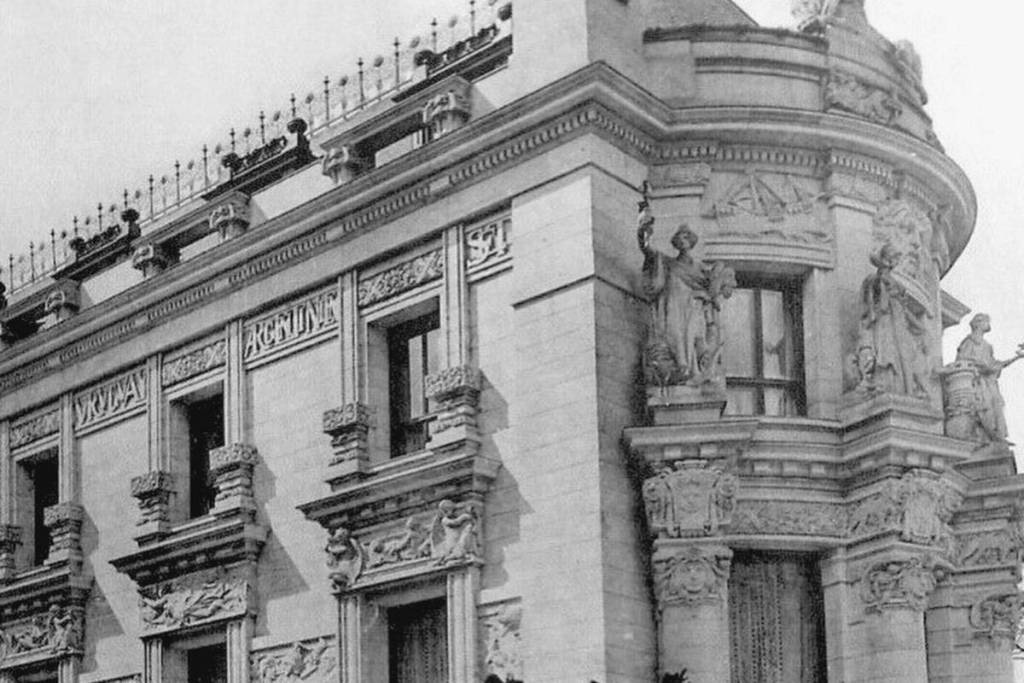
The history of the Palais Staudt begins with the entrepreneur Wilhelm Staudt, who had amassed a considerable fortune through trade and business ventures in South America. His financial success enabled a rapid rise in social standing, which he sought to underscore with an exceptionally prestigious residence in Berlin. Between 1897 and 1899, he therefore had a magnificent city palace built at what was then Tiergartenstraße 9, at the corner of Regentenstraße 1.
He commissioned the architect and sculptor Otto Rieth to design it, who combined elements of Historicism with the then-emerging Art Nouveau style. The result was an exceptionally opulent building characterized by monumental columns, richly decorated facades, elaborate reliefs, and numerous sculptures. Particularly impressive was the building’s striking corner section, which was adorned with allegorical figures. These symbolized, among other things, trade, shipping, industry, and agriculture, thereby reflecting the economic prosperity and the desire for social prestige of that era.
Numerous other artistic details also made the palace an architectural Gesamtkunstwerk. The column capitals were adorned with ornate masks, while a lion on the attic and a depiction of the sea god Oceanus on the roof cornice added further accents. In addition to Otto Rieth, other well-known sculptors were involved in the decoration, including Ludwig Manzel, August Vogel, and Wilhelm Widemann. The building thus embodied not only the personal wealth of its owner but also the extravagant architecture of an era in which wealthy entrepreneurs demonstrated their social status through buildings that were as impressive as possible.
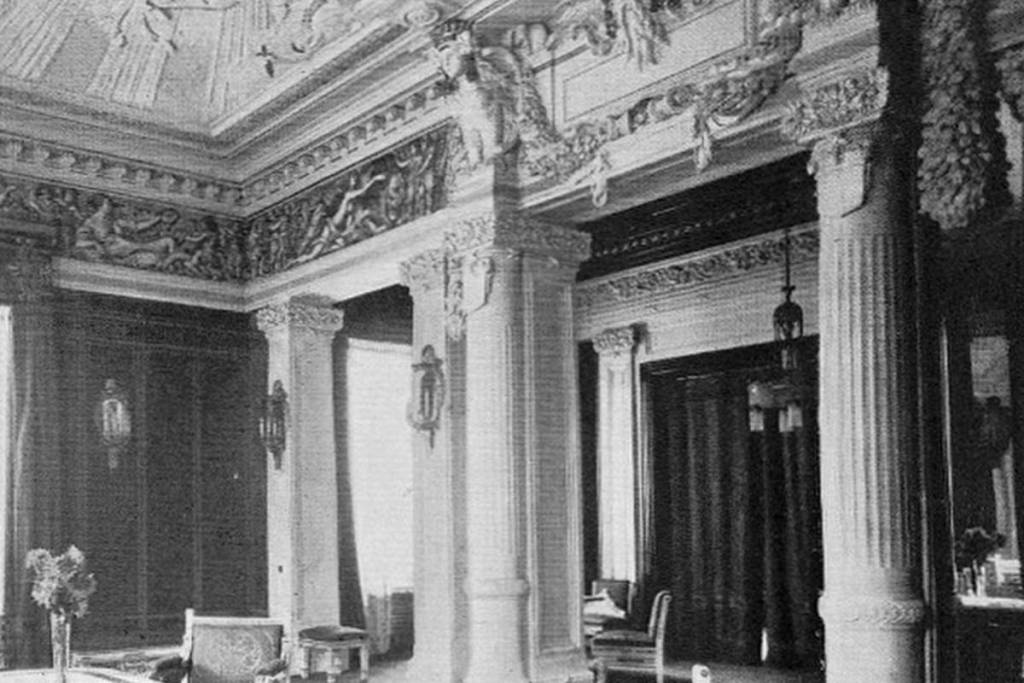
Wilhelm Staudt, however, was able to enjoy his magnificent residence for only a few years. The entrepreneur died as early as 1906, seven years after its completion. The palace initially remained in his family’s possession before taking on a new function in 1936. Due to the family’s close economic and personal ties to South America, the property was ceded to the Argentine government, which established its diplomatic mission there. The former private palace thus became the Argentine Embassy in Berlin.
But just a few years later, the building’s fate was sealed. During a heavy British air raid on the night of November 22–23, 1943, the Tiergarten district was extensively bombed. High-explosive bombs exploded in the immediate vicinity of the palace, while incendiary bombs sparked severe fires. The building was so severely damaged that it could no longer be used. Although parts of the massive structure initially remained intact, the palace was eventually demolished entirely after the end of World War II.
Today, at the former address of the Palais Staudt, there is hardly anything left to remind us of the extraordinary building that once dominated the streetscape here. The historic Tiergarten district, which was one of Berlin’s most exclusive residential areas before World War II, was almost completely destroyed during the air raids and the Battle of Berlin. Numerous villas, city palaces, and prestigious buildings vanished forever from the cityscape.