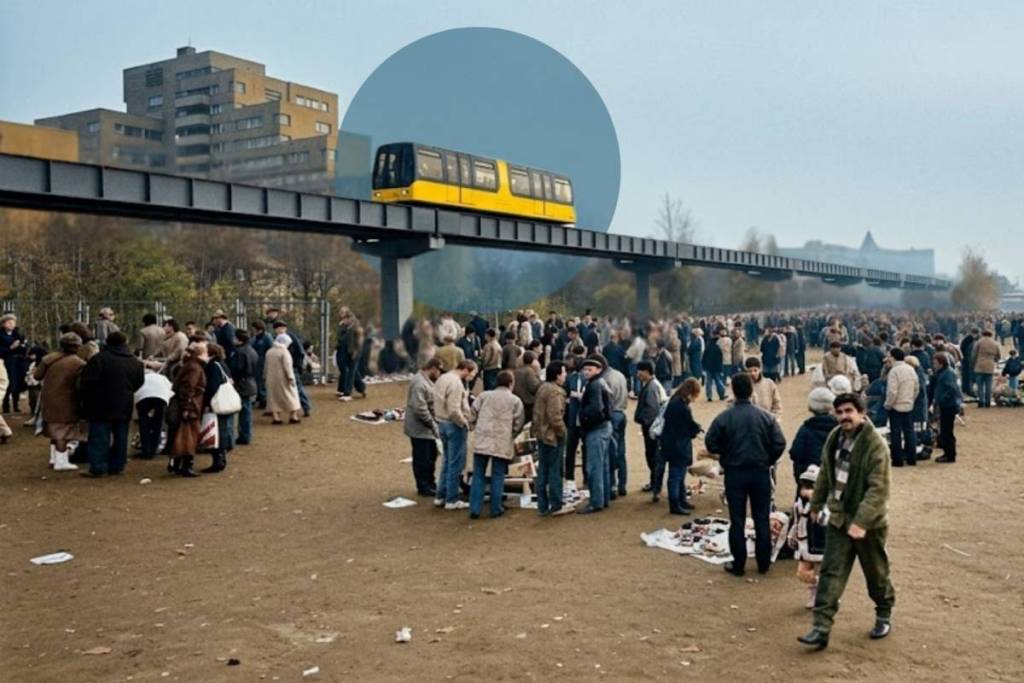

Berlin’s U-Bahn and S-Bahn are legendary. Where else do you have to hold your nose while listening to violinists playing next to boomboxes? Plus, we have beautiful subway stations and what is arguably the world’s most popular public transit system. (#BVG)
But there is also a forgotten chapter in our transportation history. At the time, the proposal sounded as if the world had been turned upside down: driverless trains gliding silently through the city on a magnetic cushion. Yet for West Berliners, this was reality for a brief moment.
The M-Bahn – Berlin’s foray into the world of maglev technology
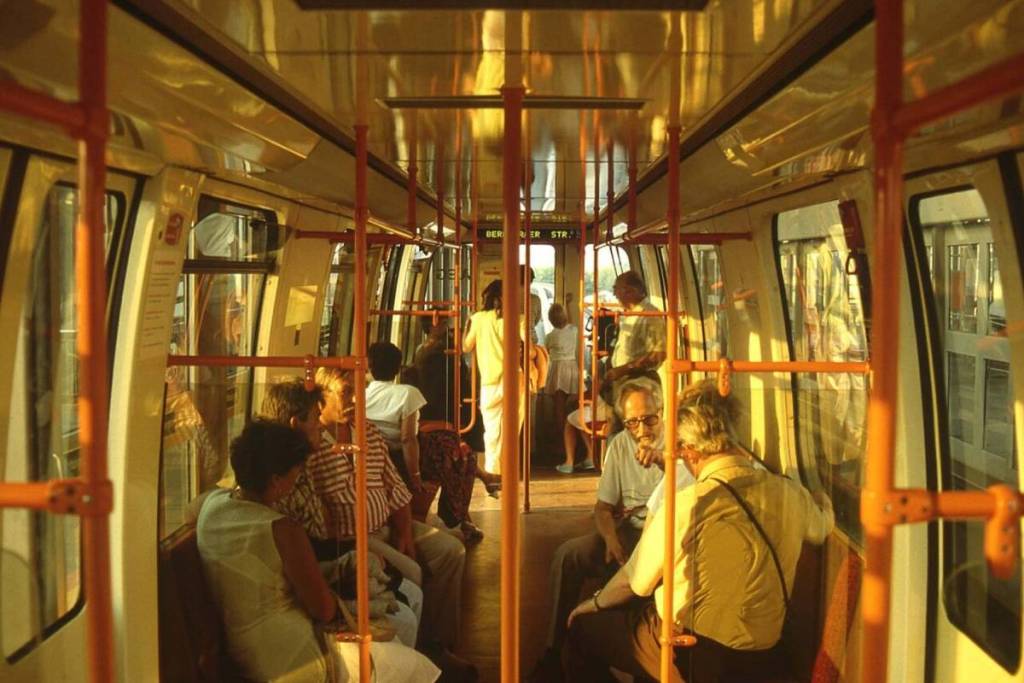
The idea emerged in the late 1970s. West Berlin was looking for ways to connect the new Kulturforum via public transportation. The idea: a fully automated maglev train—environmentally friendly, quiet, and low-maintenance. Since the route of the old U2 subway line lay dormant due to the division of the city, it presented itself as an ideal test track.
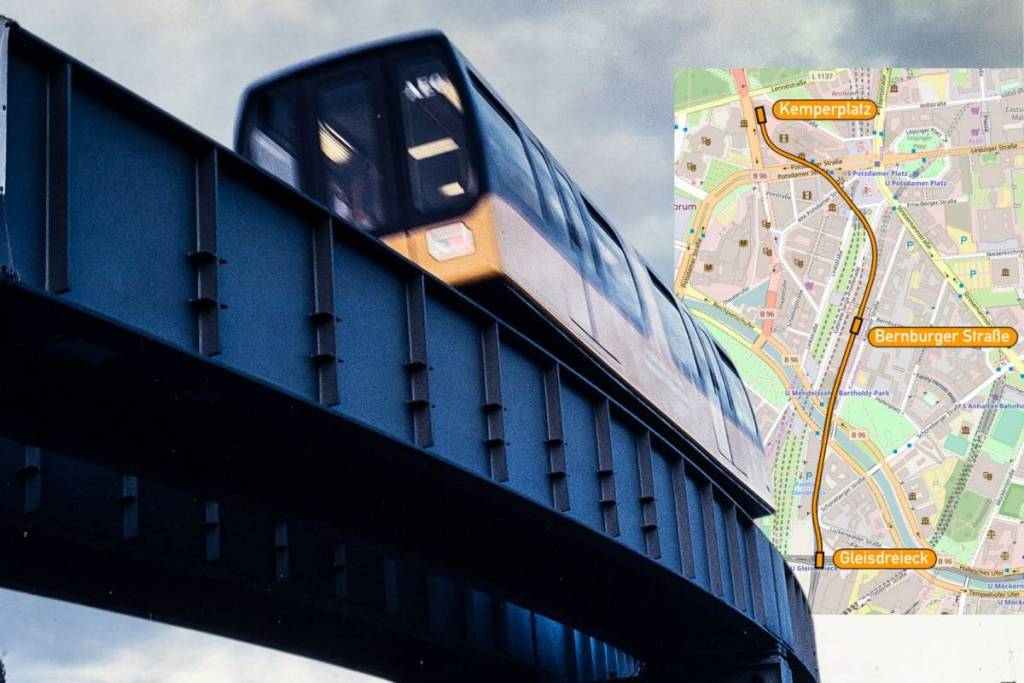
In 1984, construction began on the 1.6-kilometer-long line, which—after a few unforeseen hurdles—would ultimately cost around 160 million Deutschmarks (approximately 170 million euros after currency conversion and adjustment for inflation).
After a few setbacks (including an arson attack and an accident in which a test train crashed through the glass facade of the Kemperplatz terminal), the first passengers were allowed to board in August 1989.
You can take a 20-minute stroll along the old elevated rail line between Kemperplatz and Gleisdreieck. It’s doubly worth it, because at Potsdamer Platz you can stop by Upside Down Berlin.
West Berliners loved their futuristic attraction, but fate had other plans
In November 1989, everything changed abruptly for Berlin. The Wall, which had made the construction of the M-Bahn both necessary and possible in the first place, fell just a few months after the magnetic levitation train’s opening.
Urban planning priorities shifted overnight. The old U2, Berlin’s historic lifeline, had to be made fully operational again. To that end, the new M-Bahn was simply in the way.
It was the beginning of a gradual farewell
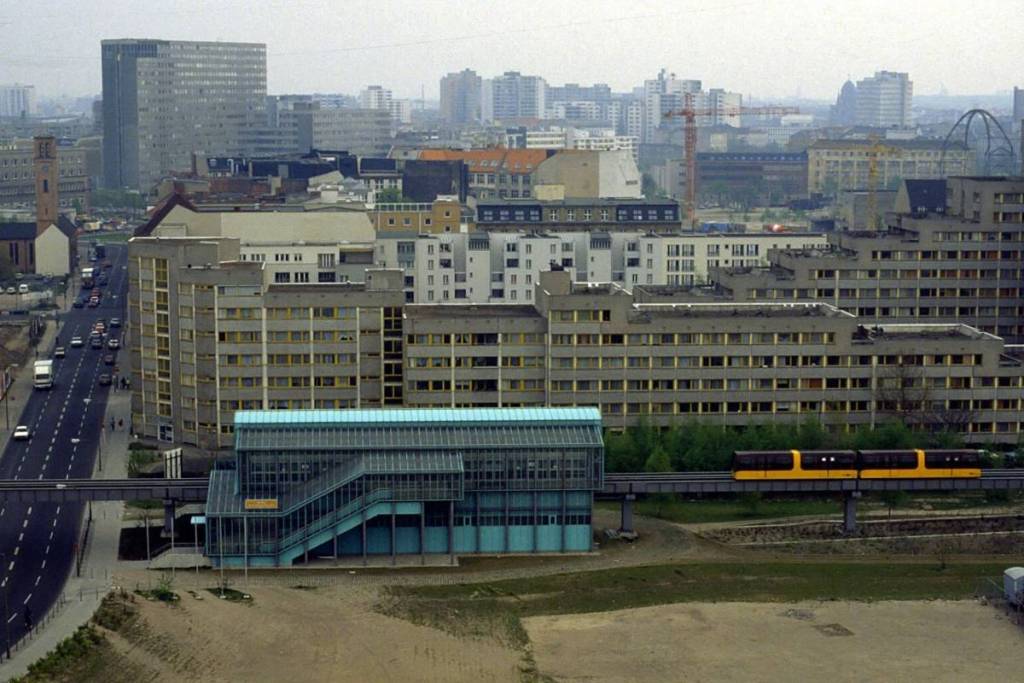
After just under two years of free trial operation, the train floated over the city for a mere 14 days during official regular service. In July 1991, the M-Bahn was incorporated into the regular fare system of the BVG network… In August of the same year, the line was permanently shut down. Demolition work began as early as the following year.
Today, there is hardly anything left in the cityscape to remind us of the project. The trains were scrapped or ended up in museums; the massive concrete pillars were dismantled; and the stations were repurposed or torn down.
The M-Bahn remains a fascinating footnote in Berlin’s transportation history, a technological dream that had to give way to higher priorities. It was the right idea at the wrong time, because the world was changing faster than a train could travel.