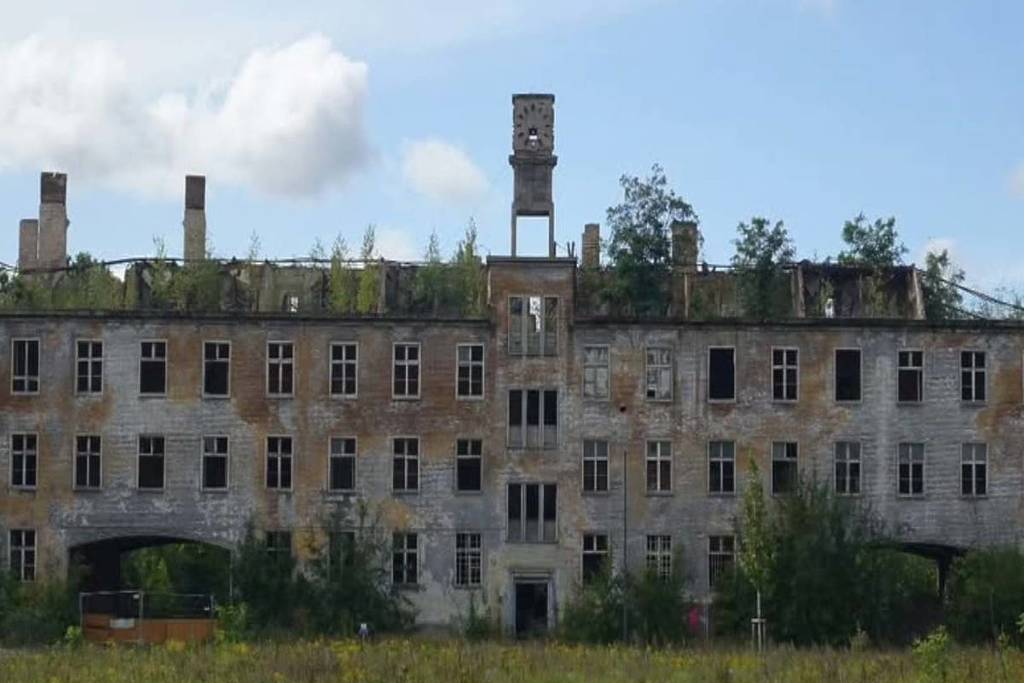

Visiting only perfect places where architecture and nature come together gets monotonous in the long run. While there are impressive landmarks around Berlin—such asneoclassical palaces by the water that almost resemble Lake Como, or fairy-tale-like parks—cinematic locations don’t always have to be immaculate. While Görlitz, with its well-preserved old town, is considered a Hollywood backdrop, there is a place very close to Berlin that has become a film set precisely because of its seclusion: the Krampnitz Barracks.
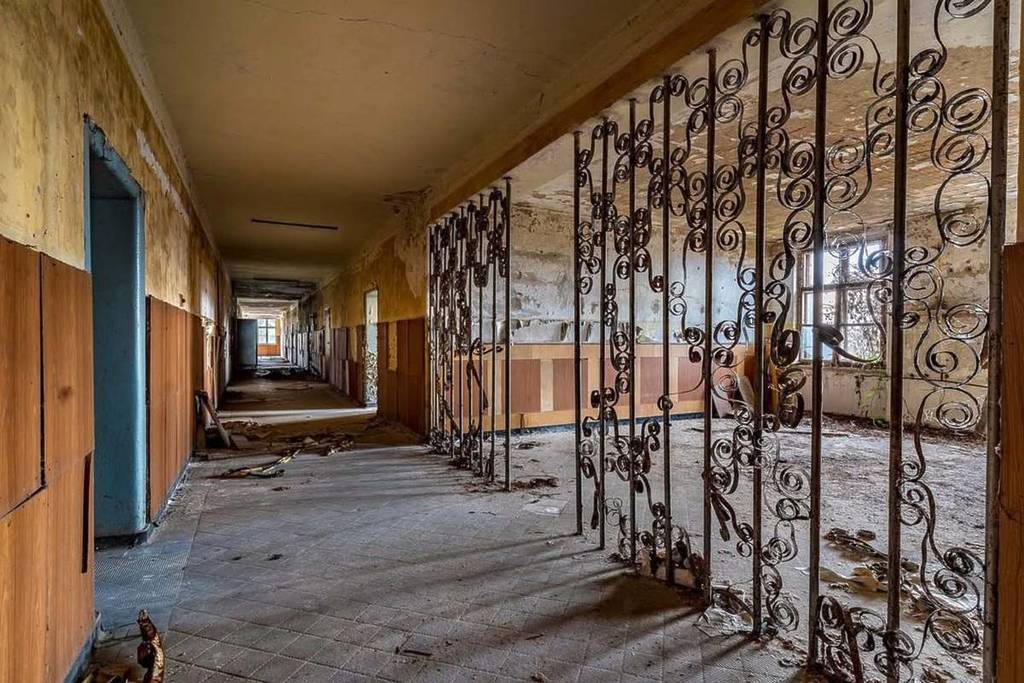
Hidden in the forest lies a vast complex with over 50 buildings that was completely abandoned for a long time and still exudes an almost surreal atmosphere. Built starting in 1937 as the Wehrmacht’s central army riding school, the facility served to train officers in riding and the military handling of horses. As one of Brandenburg’s largest riding school complexes, Krampnitz was correspondingly spacious—featuring several indoor riding arenas, stables, expansive training grounds, and imposing buildings in the monumental style of the era.
After World War II, the Red Army took over the site and continued to use it for military purposes for decades. It wasn’t until the 1990s, following the withdrawal of Soviet troops, that the barracks were abandoned. In the years that followed, decay set in: windows shattered, roofs partially collapsed, and nature gradually reclaimed the site.
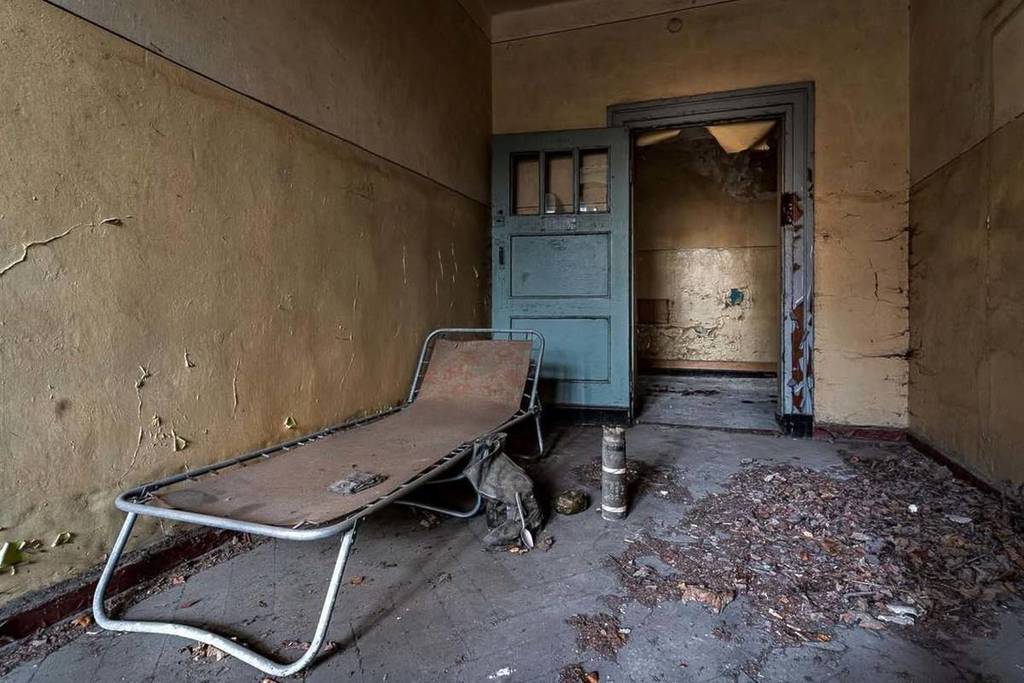
It was precisely this raw, unvarnished state that later made Krampnitz a sought-after film set. The site became particularly well-known through Quentin Tarantino’s film “Inglourious Basterds,” in which parts of the complex served as a filming location. Since then, the barracks have also been considered one of the most famous lost places around Berlin.
Today, however, the site is undergoing a transformation. Free exploration is no longer possible, as large sections are cordoned off and the area is gradually being developed into a new neighborhood. Plans include residential complexes, infrastructure, and green spaces, which will completely transform the former military site in the long term.