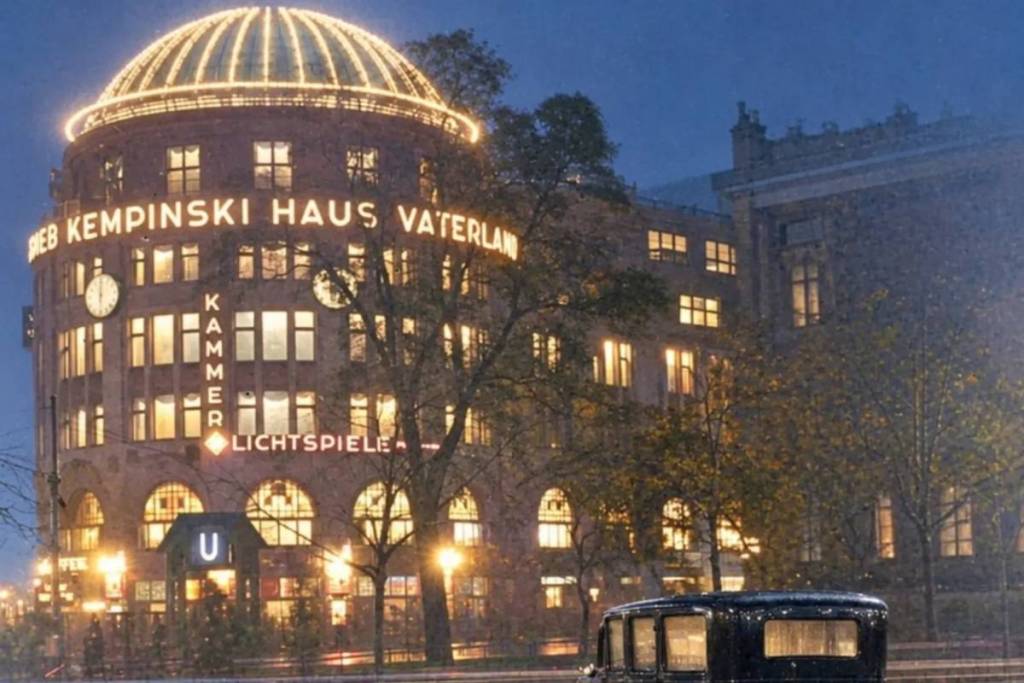

Berlin’s architecture tells stories that are hardly discernible at first glance. While the futuristic ICC Congress Center even served as a backdrop for *The Hunger Games*, other spectacular buildings have long since disappeared from the cityscape. Among them is the legendary Haus Vaterland at Potsdamer Platz, which attracted around one million visitors annually during the Golden Twenties. With twelve themed restaurants, space for 8,000 guests, and artificial thunderstorms, it offered an entertainment experience of the highest order. Today, only a few traces remain of the former entertainment palace.
The Haus Vaterland at Potsdamer Platz was one of the most spectacular entertainment venues of the Golden Twenties and was ahead of its time in many respects. The monumental building was constructed as early as 1912 according to plans by architect Franz Schwechten and initially housed the Café Piccadilly, which, with around 2,500 seats, was one of Berlin’s largest coffeehouses. With the outbreak of World War I in 1914, it was renamed Kaffeehaus Vaterland.
On September 1, 1928, following an extensive renovation led by architect Carl Stahl-Urach, the building opened as a massive entertainment palace. The renowned Kempinski company took over the restaurant operations. Up to 8,000 guests could dine, celebrate, and immerse themselves in various themed worlds here at the same time. Twelve elaborately designed themed restaurants offered a veritable journey around the world right in the heart of Berlin. These included a Bavarian beer hall, a Turkish café, a Wild West bar, a Viennese wine bar, and a Spanish bodega.
Probably the biggest attraction was the so-called “Rhein Terraces,” which were designed with artificial rocks, castles, and a romantic Rhine landscape. Here, a spectacular thunderstorm featuring artificial lightning, thunder, and rain was staged every hour. International musicians and jazz artists such as Sidney Bechet also performed at the Haus Vaterland. With around one million visitors annually, the entertainment palace became one of the capital’s most famous entertainment hotspots.
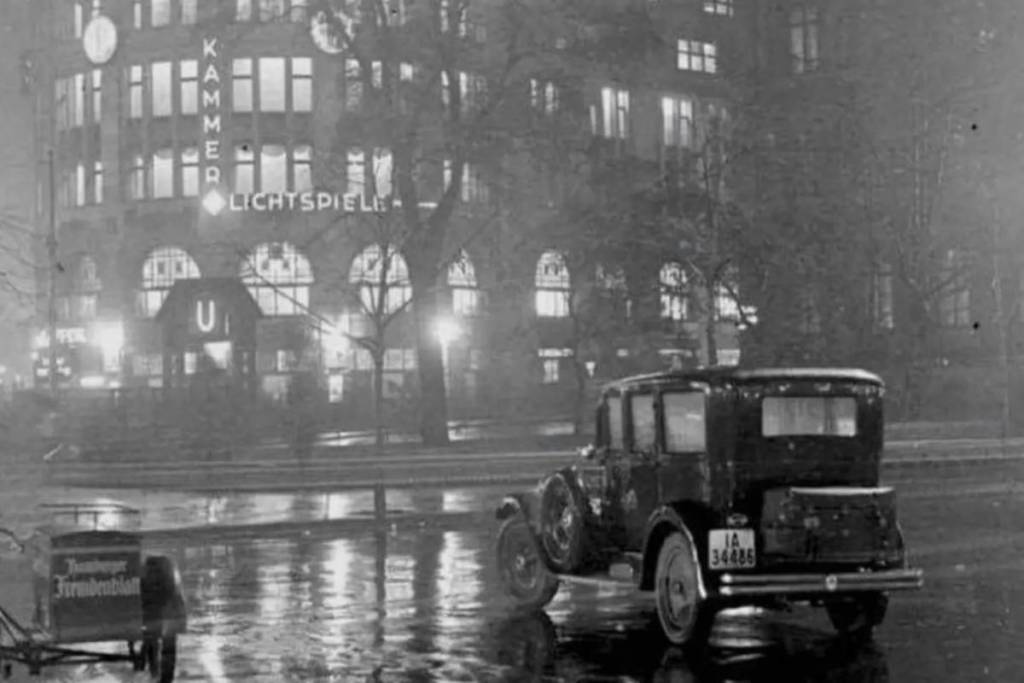
However, a dark chapter in its history began when the National Socialists came to power in 1933. The Jewish Kempinski family of entrepreneurs was forced out of the company in the wake of Nazi persecution. In 1937, Aschinger AG took over operations. During World War II, the building was severely damaged in 1943 during Allied air raids.
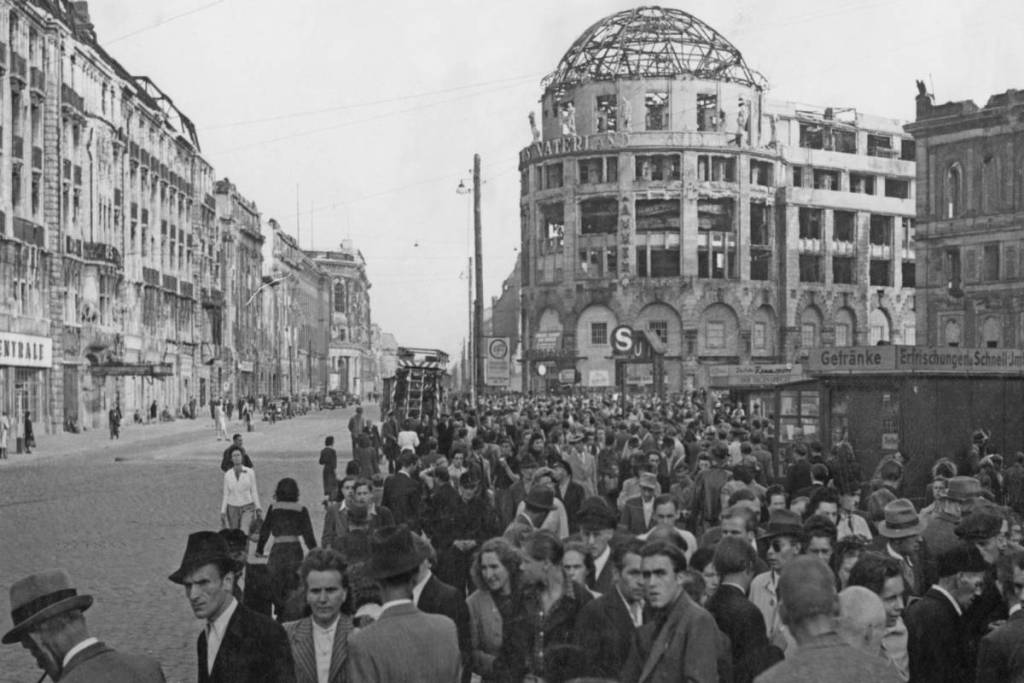
After the war, parts of the building were temporarily used as a restaurant again. However, during the popular uprising on June 17, 1953, the building burned down once more. With the construction of the Berlin Wall in 1961, the ruins ultimately lay within the border zone and fell into increasing disrepair. In 1976, the remaining parts of the building were finally demolished. Today, the Park Kolonnaden office and retail complex, completed in 2002, stands on this site. Nothing remains of the former entertainment palace that once thrilled Berlin with artificial thunderstorms and a trip around the world in a single evening.