
Hardly any international musician is as closely associated with Berlin as David Bowie. When he moved to West Berlin in 1976, he was seeking a fresh start and found in the capital a creative freedom that would have a lasting impact on his career. Even decades later, his legacy lives on: On February 14, 2027, the immersive concert experience “David Bowie: Stage” is set to celebrate its world premiere in Berlin. A fitting occasion to look back on his legendary years in Berlin and the place where a piece of music history was written.
David Bowie was just 29 years old at the time, internationally famous, and looking for a fresh start. After years of excessive drug use in Los Angeles, he wanted to escape his old life and rediscover himself. He chose West Berlin, a city that was still enclosed by the Berlin Wall at the time and held a special allure with its alternative art and music scene.
Together with his friend and fellow musician Iggy Pop, Bowie spent one of the most creative periods of his life here. Ironically, the apartment at Hauptstraße 155—which, from the outside, gave little hint of its famous resident—was to become one of the most well-known addresses in his Berlin history.
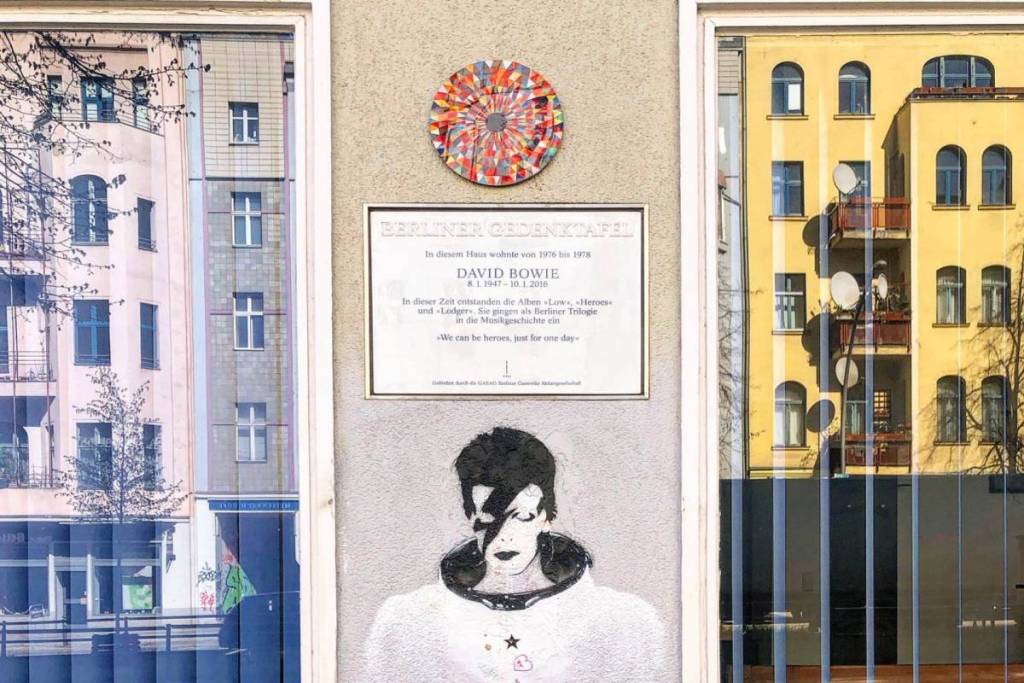
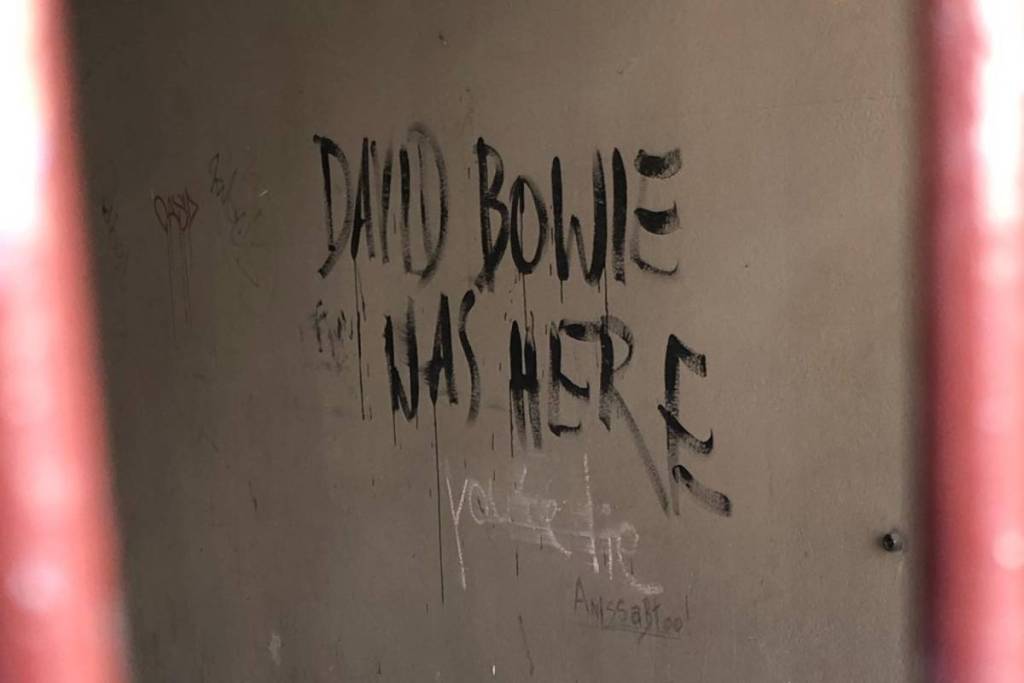
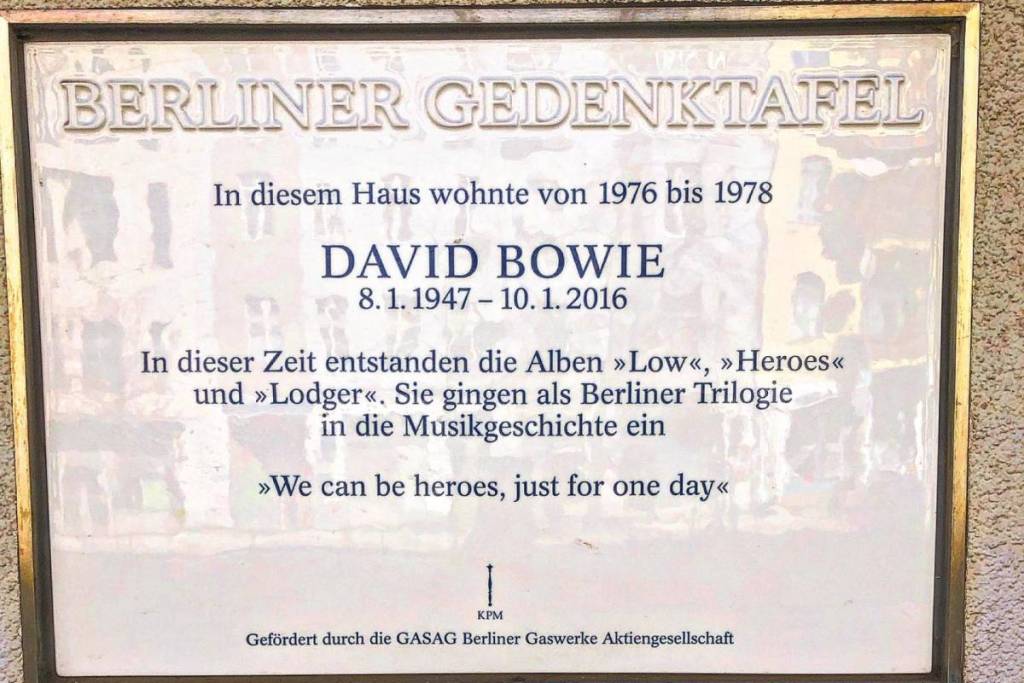
Today, 50 years after he moved in, the building still stands. The former private residence has become a place of remembrance that Bowie fans from all over the world visit. But while the house is now considered a pilgrimage site for music lovers, the former apartment continues to be used privately.
Although David Bowie was already one of the most successful musicians of his generation at the time, he didn’t opt for a luxurious villa or an exclusive penthouse in Berlin. Instead, he moved into an apartment on the first floor of an ordinary old building in Schöneberg. At around 240 square meters with seven rooms, the apartment was exceptionally spacious, but its furnishings were surprisingly simple for an internationally celebrated rock star. The rooms featured ceilings about 3.50 meters high with stucco decorations and were connected by a long hallway. Instead of expensive furniture and elaborate decorations, Bowie is said to have slept, among other things, on mattresses laid directly on the floor. He used one room for painting, while another was equipped with a stereo system and served his passion for music.
Nearly five decades after Bowie moved out, the building at Hauptstraße 155 has changed relatively little on the outside. The old building still stands in Schöneberg and continues to be used primarily as a residential building. The property never became a David Bowie museum, and the musician’s former apartment is not open to the public.