
We encounter Berlin’s history in many places throughout the city. From one of Europe’s once-largest multi-story parking garages to the former Quelle department store from the 1970s —both have since been transformed into modern food, cultural, and event hotspots. Among the most exciting examples of this transformation is the former Central Livestock and Slaughterhouse. Opened in 1881, the facility was built in response to the sanitary challenges posed by Berlin’s rapid growth into a metropolis of over a million people.
At that time, there were still numerous small private slaughterhouses in the city. The new large-scale slaughterhouse was intended to centralize the meat supply and organize it in a significantly more hygienic manner. The facility was built based on the ideas of physician Rudolf Virchow and the plans of Berlin City Planning Officer Hermann Blankenstein. Even at its opening, the site impressed with its enormous size. Initially, it covered around 37 hectares; later, the area was expanded to about 50 hectares . This made the slaughterhouse one of the largest facilities of its kind in Europe.
In its first year of operation alone , more than 126,000 cattle, nearly 393,000 pigs, around 112,000 calves, and over 650,000 sheep were processed here. These figures illustrate the enormous importance of the site for supplying the capital. To transport the huge quantities of animals, the site had its own rail tracks spanning approximately 15.5 kilometers. Several freight trains could be unloaded simultaneously at the livestock ramps. Today’s Storkower Straße S-Bahn station was originally even named “Zentralviehhof,” and thus still serves as a reminder of the area’s history.
During World War II, around 80 percent of the facility was destroyed. Nevertheless, the site remained an important part of Berlin’s meat industry even afterward. It wasn’t until 1991 that slaughter operations were finally discontinued.
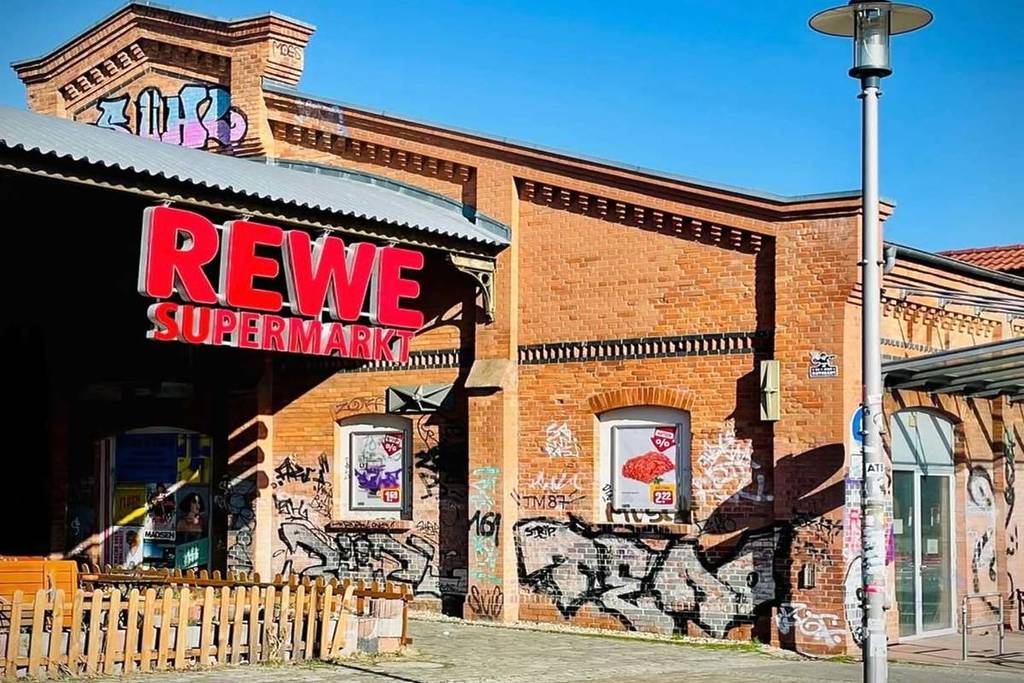
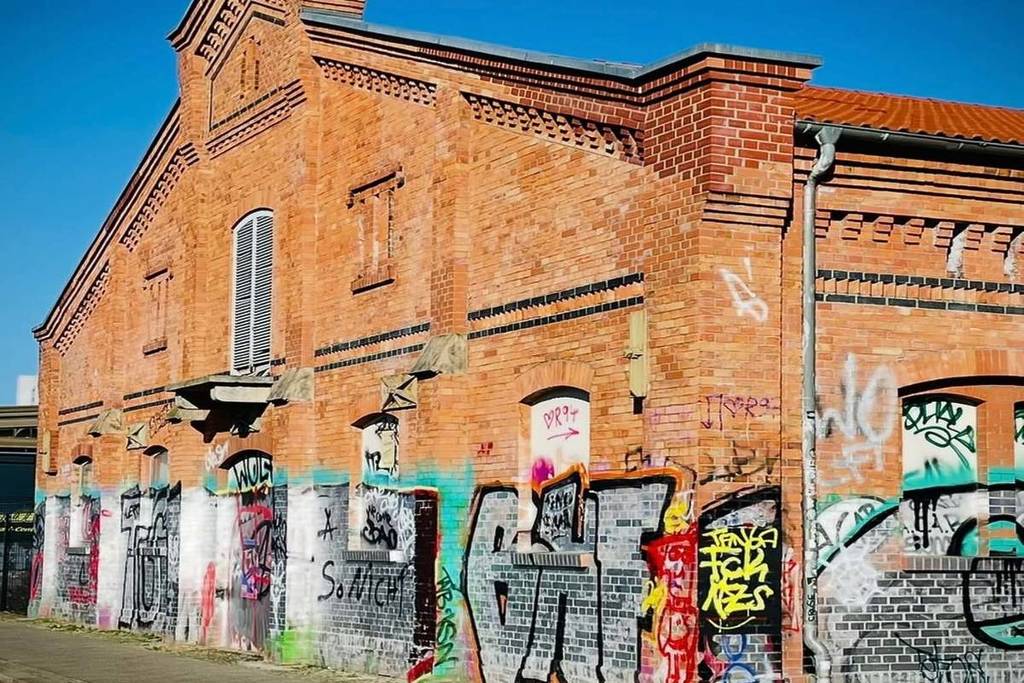
After it was decommissioned, one of Berlin’s largest urban development projects began. Instead of tearing down the historic buildings, many of the brick halls—which are listed as historical monuments—were preserved and repurposed. The former industrial site has been transformed into today’s Alter Schlachthof development area, featuring apartments, restaurants, cafés, offices, creative businesses, and spacious green spaces.
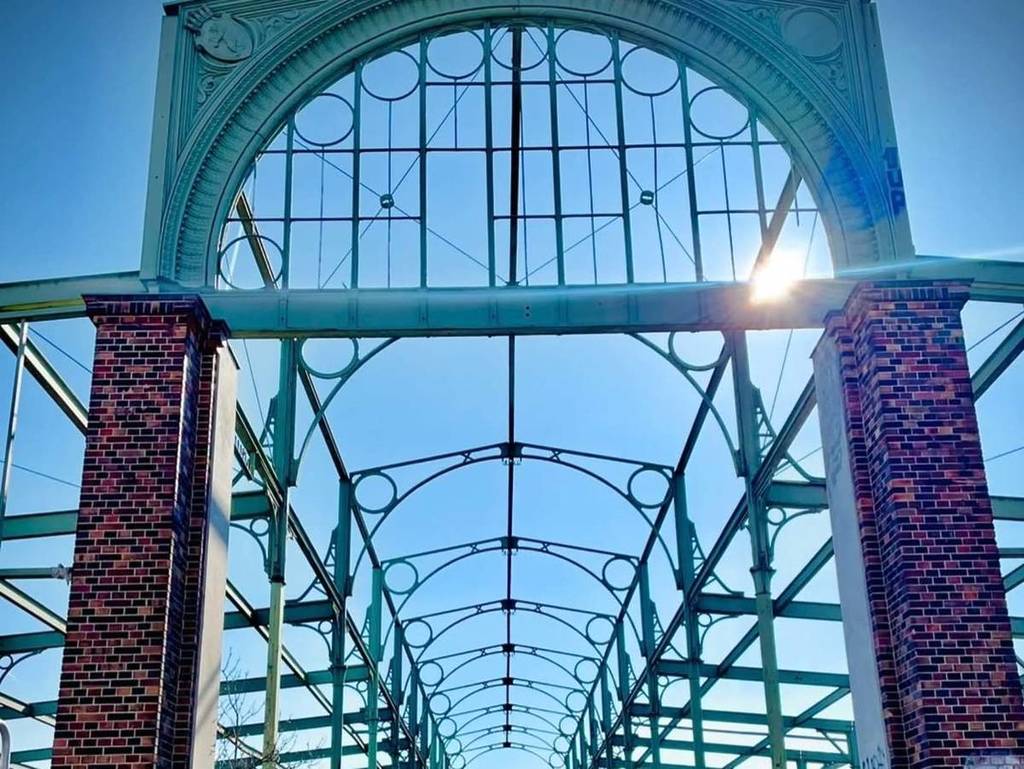
Today, Hermann-Blankenstein-Park lies at the heart of the neighborhood. The approximately 5.1-hectare green space incorporates the striking steel framework of the former sheep auction hall, which today towers over the park like a giant industrial sculpture and ranks among the most unusual relics of Berlin’s industrial history.
The distinctive brick architecture still serves as a reminder of the site’s industrial past. At the same time, modern restaurants, urban housing projects, and creative businesses shape the neighborhood. It is precisely this contrast between historic industrial architecture and contemporary urban culture that makes the area so special today.