
There are many abandoned places in Berlin. But some are not just abandoned; they have been completely lost in the whirlwind of time. Here we present color photos that show Berlin across different eras. And take note, because you can still visit one of these buildings today!
From bad to worse: The Old Hotel Adlon (1907–1945)
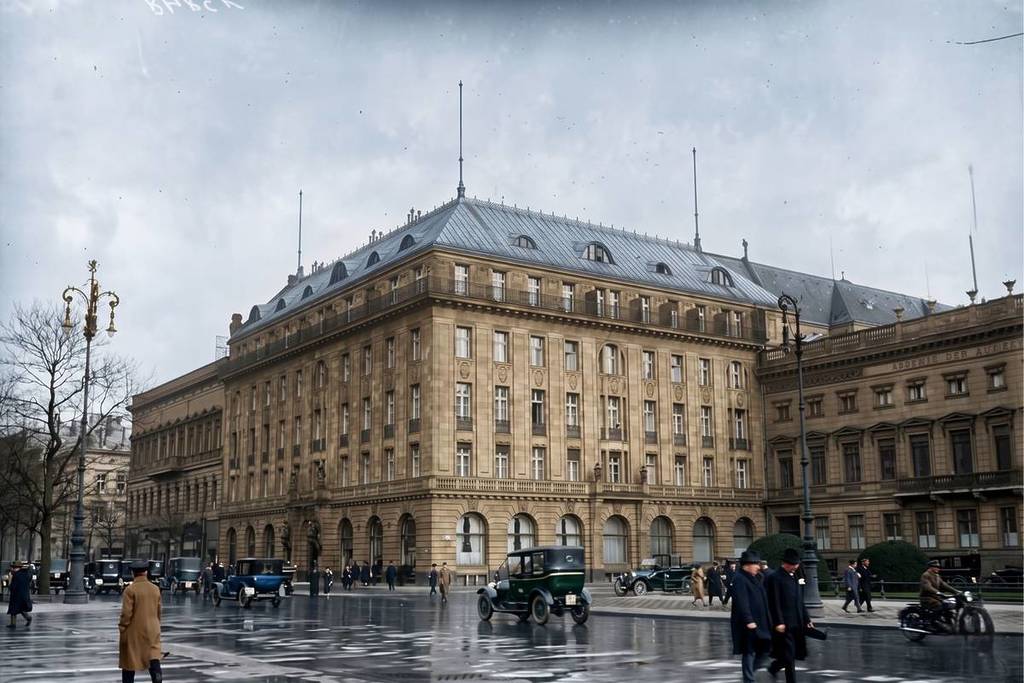
The original Adlon on Pariser Platz was a legend. It was Germany’s most luxurious hotel and a meeting place for the greats of their time, such as Charlie Chaplin and Albert Einstein. It offered running hot water and electricity in every room—a sensation.
The Adlon survived the bombing raids and the Battle of Berlin, only to burn down a few days later due to a carelessly discarded cigar left behind by a celebrating Red Army soldier.
The new Adlon also has many famous guests and a major scandal.
Wertheim Department Store on Leipziger Platz (1904–1944)
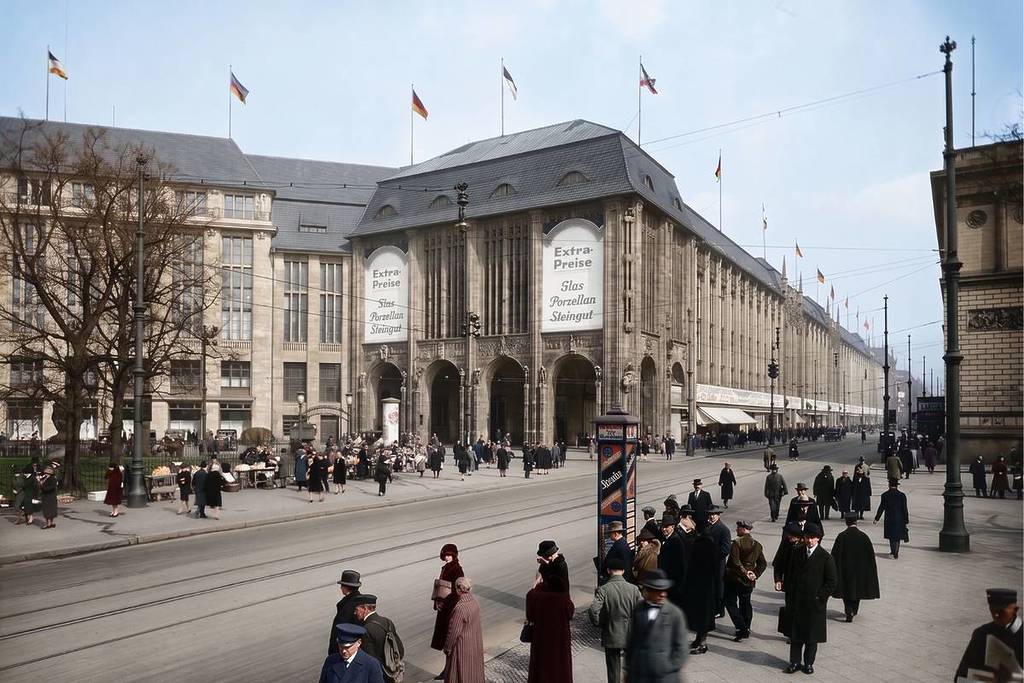
The Wertheim was considered the largest and most modern department store in Europe. Architect Alfred Messel created a facade of glass and stone. Then the building was severely damaged by Allied bombing raids. The ruins were finally demolished in the 1950s.
A phoenix rising from the ashes: The French Cathedral (1785–present!)
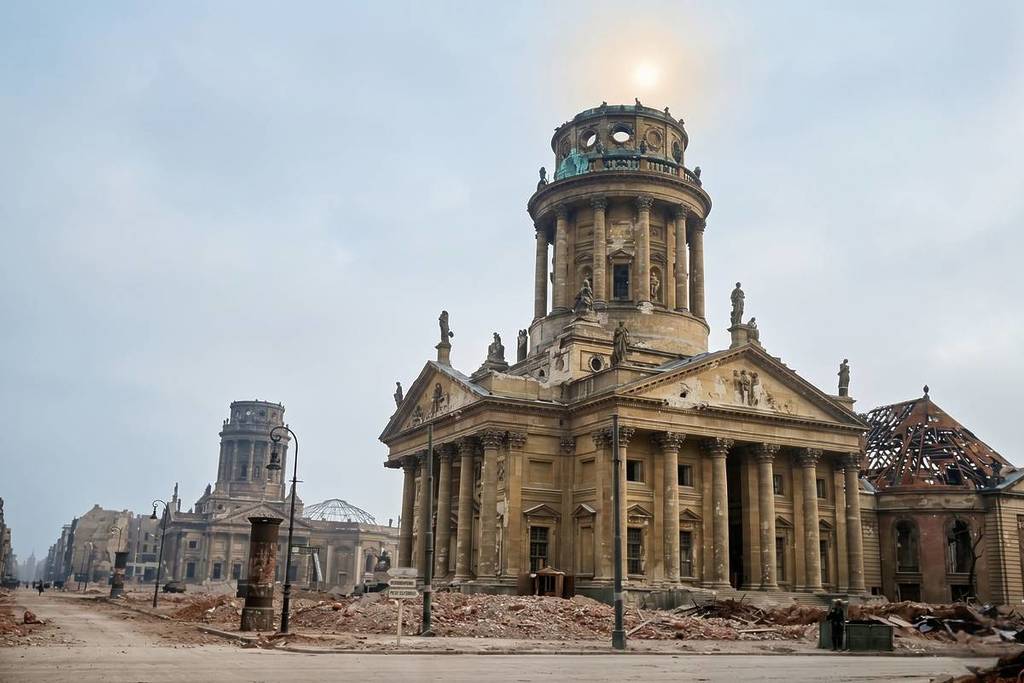
Not all treasures are lost. Here you can see the French Dome after the war. (By the way, “Dom” means “dome” in French—it’s not a church!) After years of restoration work , the building stands today in its former glory on Gendarmenmarkt. You can even enjoy wonderful candlelit concerts inside !
Prussian Ostentation: Kaiser Wilhelm National Monument (1897–1950)
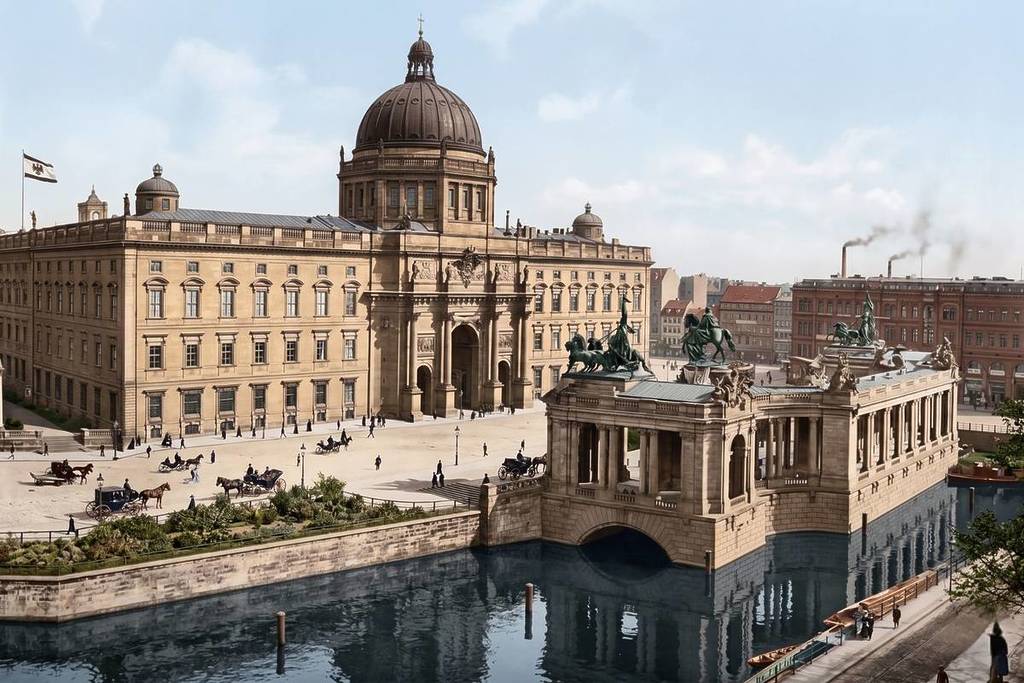
An equestrian statue of Emperor Wilhelm I, flanked by a semicircular colonnade in front of the Berlin City Palace. The monument survived World War II. But the GDR leadership had it demolished as a symbol of Prussian militarism. Soon, the Freedom and Unity Monument (under construction) will stand there.
Would the old emperor have liked that? After all, Emperor Wilhelm did have a sense of humor sometimes…
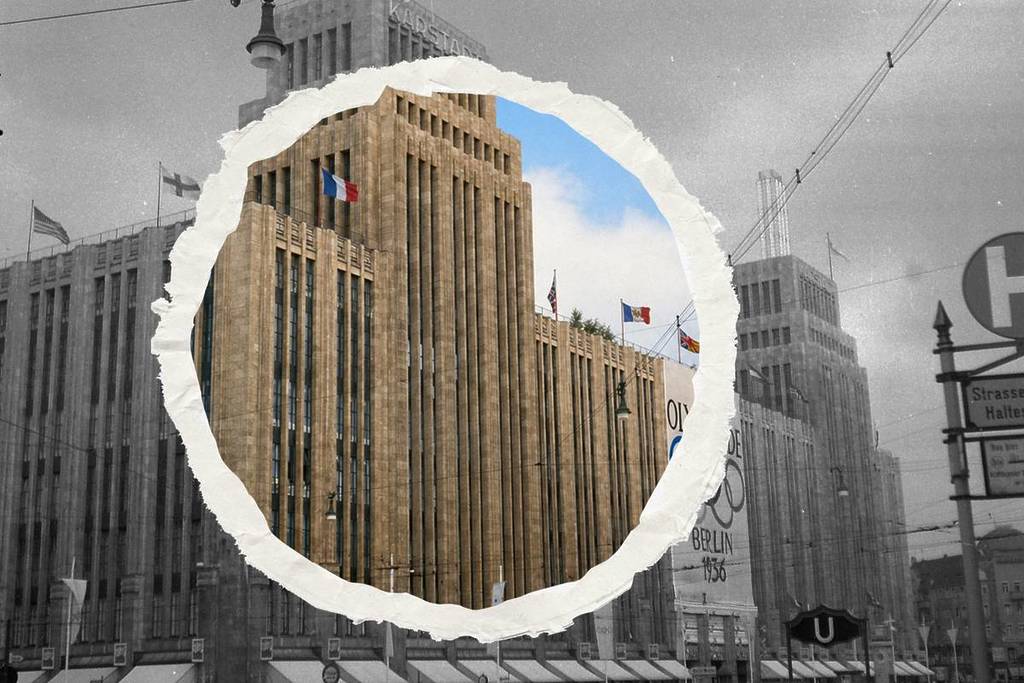
A real eye-catcher: The Karstadt on Hermannplatz (1929–1945)
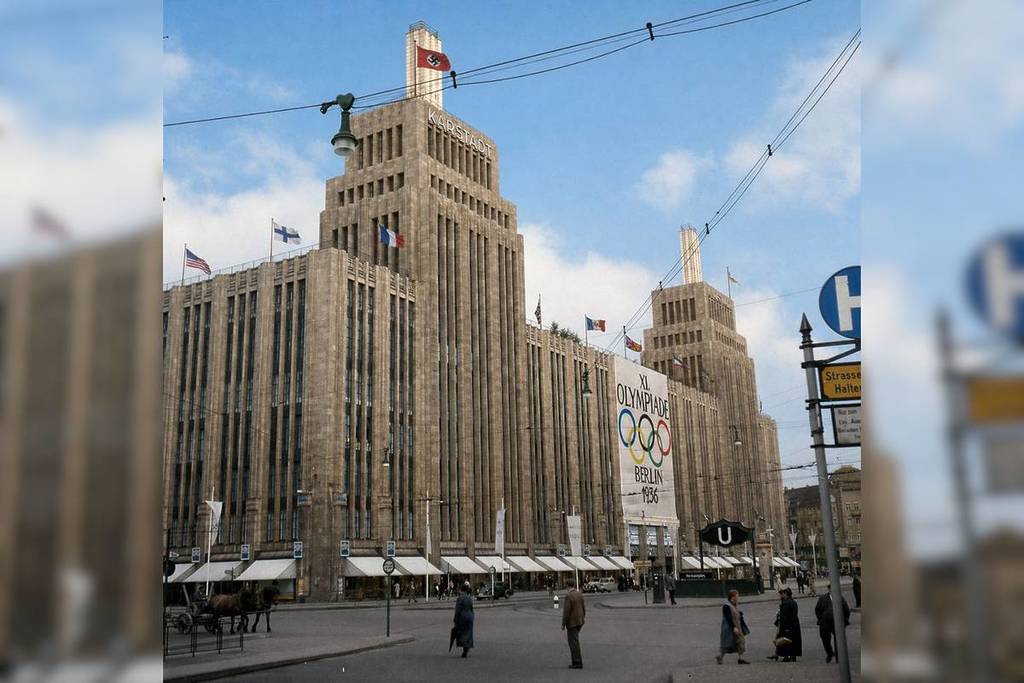
This fascinating Art Deco Karstadt had two 71-meter-high illuminated towers, its own subway access, and a rooftop garden with 4,000 seats. The building survived the bombings but was blown up by the SS in the final days of the war to prevent it from falling into the hands of the Red Army.
Legendary for better or worse: The Berlin Sportpalast (1910–1973)
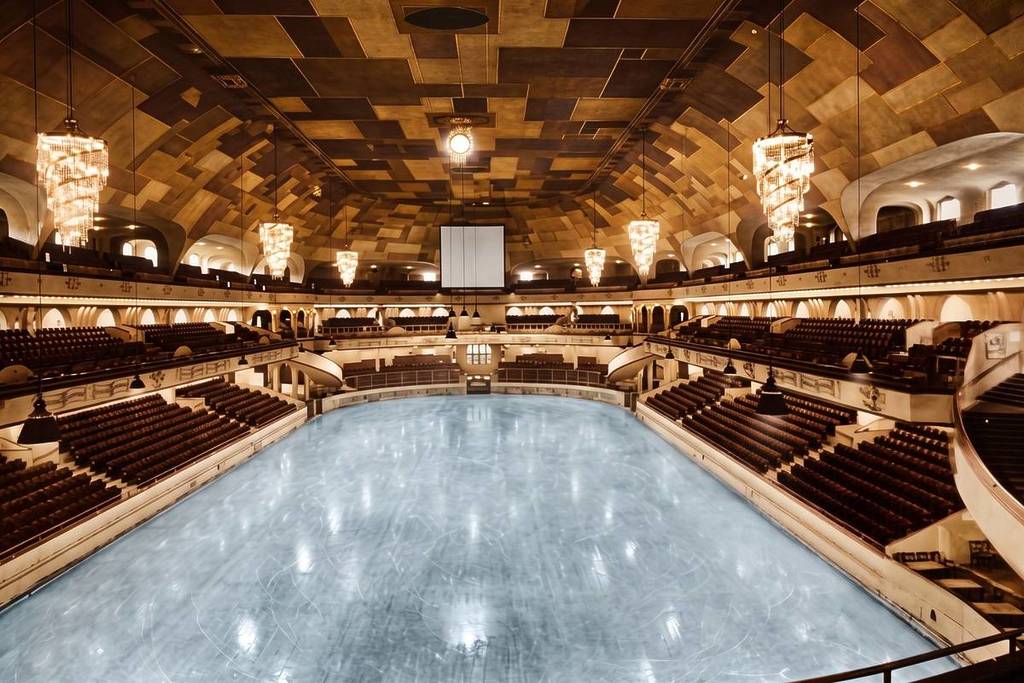
The Schöneberg Giant was the world’s largest ice rink, home to the famous “Six-Day Races,” and could accommodate over 10,000 people. It became infamous due to Goebbels’ “Do you want total war?” speech. By the 1970s, the facility was no longer profitable. The building was demolished to make way for social housing (“Pallasseum”).
145 m long and 44 m high: The GDR Ministry of Foreign Affairs (1967–1996)
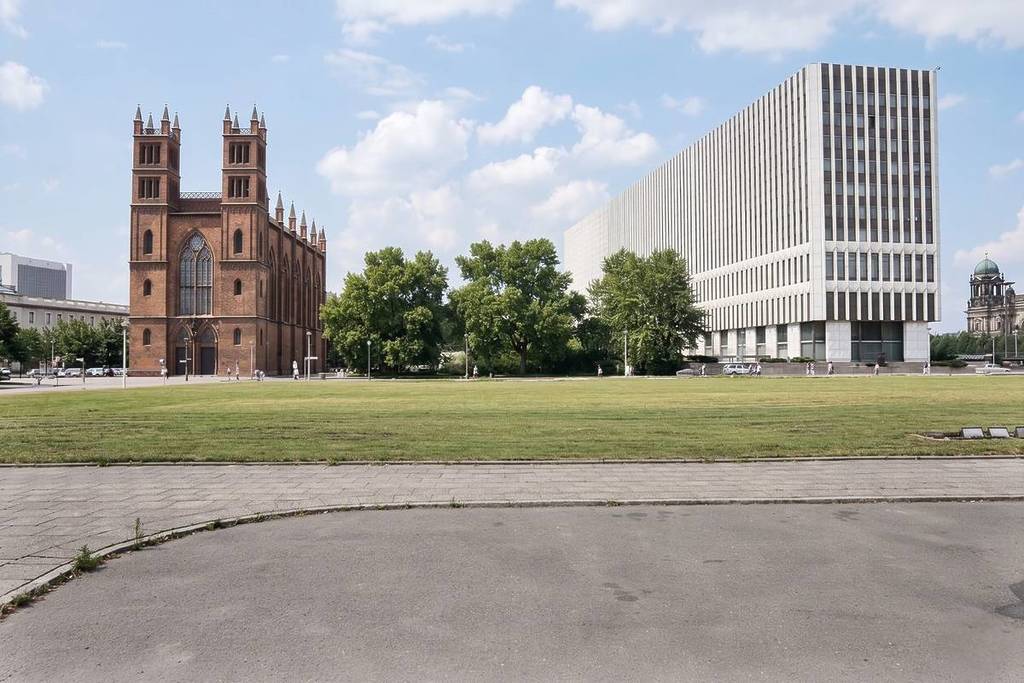
The building stood next to the Friedrichswerder Church. This symbol of power was an important representative of socialist modernism. After reunification, the colossus no longer fit into the concept of “critical reconstruction” of Berlin’s historic city center. Although it was an important architectural testament to its time, it was demolished in 1996.
An Expressionist Masterpiece: Großes Schauspielhaus or “Stalactite Cave” (1919–1985)
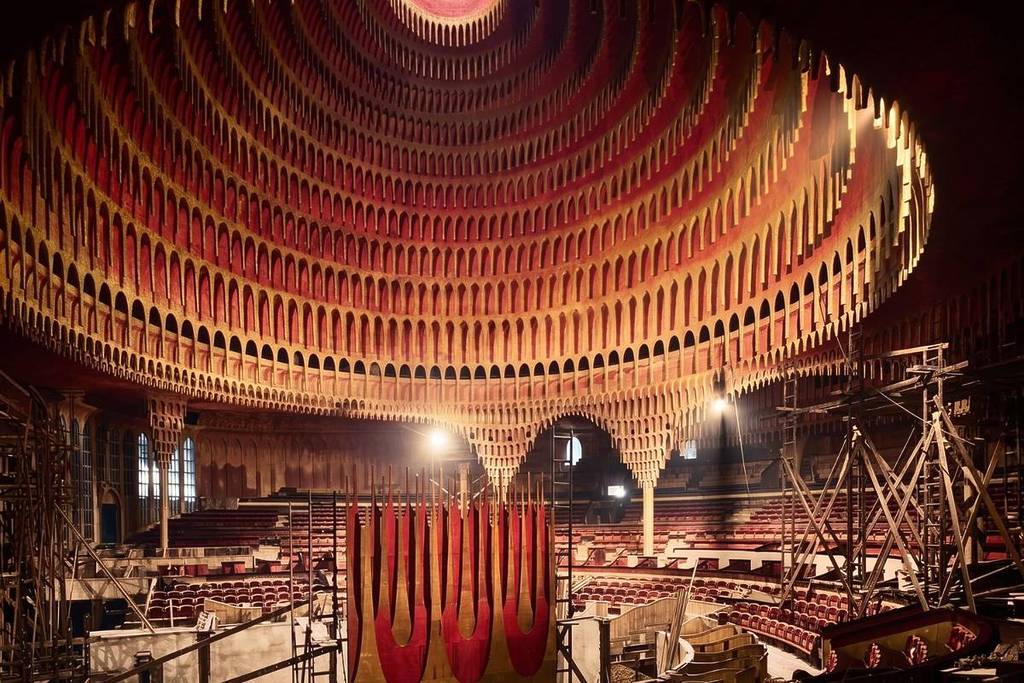
Architect Hans Poelzig converted an old circus hall into a theater for over 3,000 spectators. Hundreds of cone-shaped stucco elements hung from the ceiling of the huge hall, illuminated in various colors. After the war, the building was used as the Friedrichstadt-Palast. But since it had been built on marshland , the wooden piles of the foundation rotted. First, it was closed due to the risk of collapse and eventually demolished.
Palace of the Republic or “Erich’s Lamp Shop” (1976–2006)
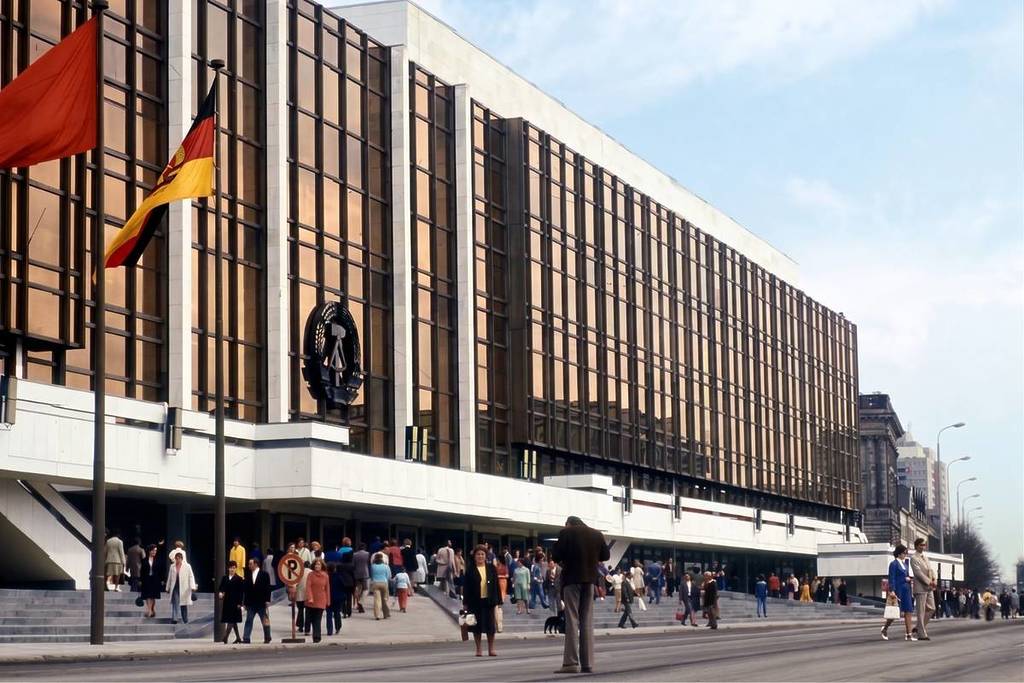
With its bronze-mirrored facade, over 10,000 spherical lamps in the foyer, a bowling center, theater, and the seat of the People’s Chamber, it was (along with the brand-new TV tower) the center of the GDR. Due to severe asbestos contamination, the building was closed after reunification. After heated debates , the Palace was demolished to make way for the reconstruction of the Berlin City Palace.
Haus Vaterland on Potsdamer Platz (1928–1976)
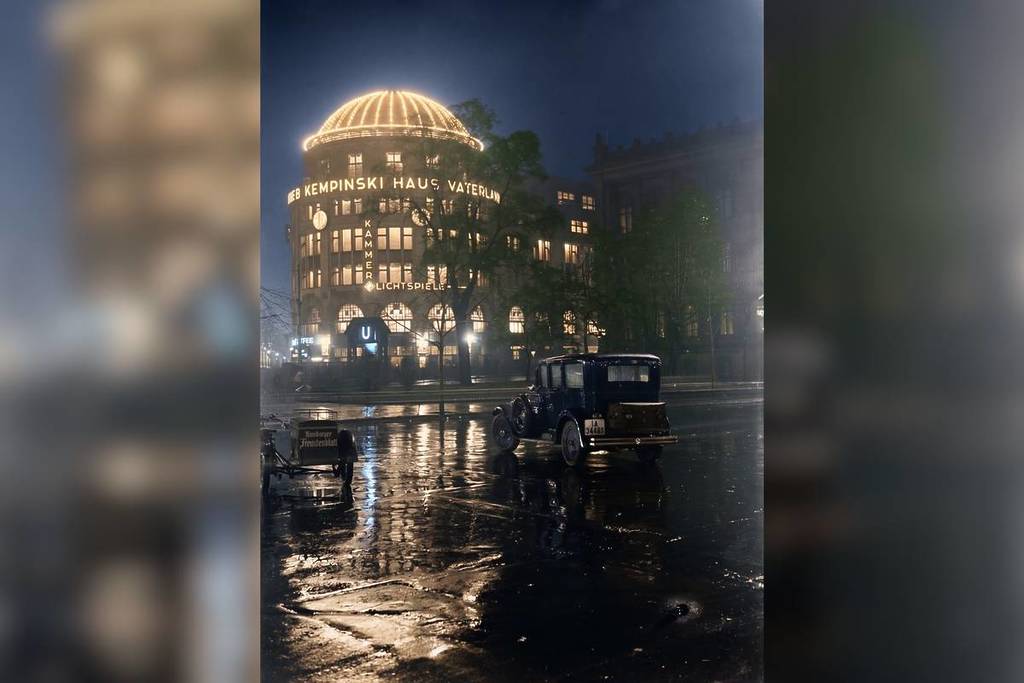
A palace of entertainment that housed themed restaurants under its massive dome. The “Rheinterrasse” was the most famous of these. Artificial thunderstorms were staged there every hour!
After being hit by bombs, the building burned to the ground. After the war, the building continued to operate as the “HO Restaurant.” During the popular uprising on June 17, 1953, it was set on fire and burned completely down. Afterward, it lay as a ruin on the border until the West finally had the ruins demolished in 1976.