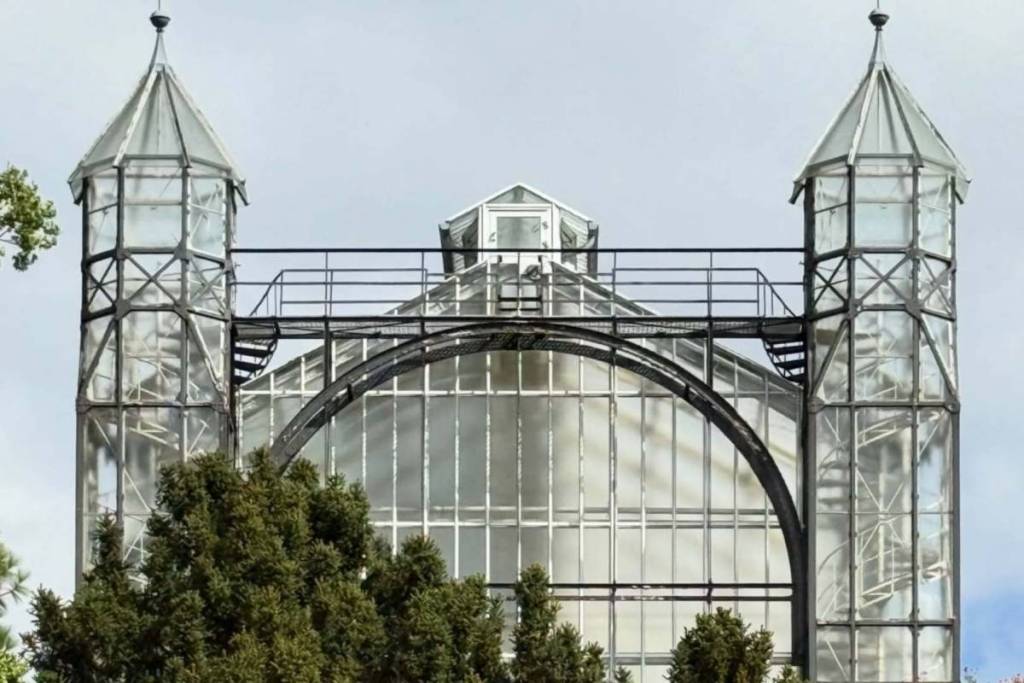

Berlin is a city full of unique architectural landmarks. From one of Germany’s most significant radio buildings to the “Whale at the Brandenburg Gate” designed by Frank O. Gehry —the list could go on forever. But if you’re a fan of Art Nouveau , there’s one very special building you should know about: The Mediterranean House is located in the Berlin Botanical Garden and is one of the most architecturally significant buildings in the entire complex.
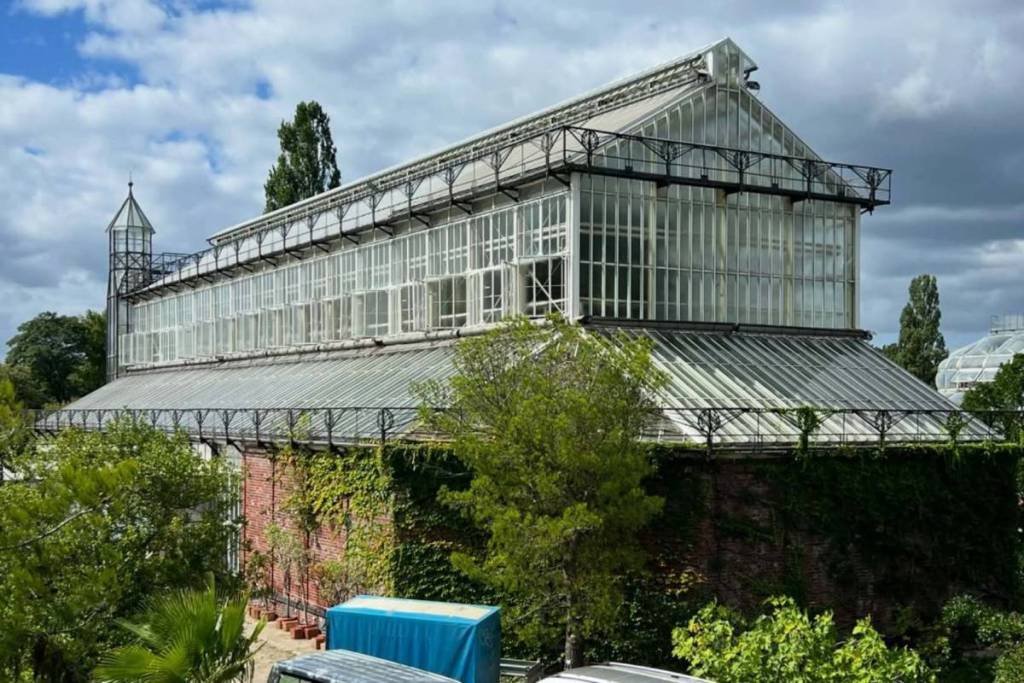
It is not simply a historic greenhouse, but one of the few fully preserved Art Nouveau greenhouses in Europe. It is particularly remarkable that the building remains largely in its original condition to this day . At the same time, it is the oldest of the Botanical Garden’s 15 historic greenhouses. The Mediterranean House was completed as early as 1904, making it more than 120 years old today. It was built even before the grand opening of the Botanical Garden and was the first greenhouse in the complex to begin operations. The building was designed by Royal Architectural Advisor Alfred Koerner, while the renowned civil engineer Heinrich Müller-Breslau was responsible for the structural engineering.
Architecturally, the Mediterranean House is distinguished by its three-nave steel structure, flanked by two glass portal towers. It also features numerous characteristic Art Nouveau elements. The historic greenhouse has a floor area of 878 square meters and reaches a ridge height of approximately 15.8 meters. With its combination of steel, glass, and decorative details, it is almost reminiscent of a historic glass palace.
But it’s not just the architecture that’s extraordinary. Inside is a significant collection of Mediterranean plants. During earlier renovation planning, there was talk of more than 1,100 plants. These include—or included—larger specimens such as the Cretan maple, the western strawberry tree, and the holm oak. Some plants are several meters tall and, as part of earlier preparations, even had to be dug up along with their root balls, placed in large containers, and temporarily moved to a wintering house. Especially during the cold months, the Mediterranean House thus offers a stark contrast to the Berlin winter and evokes the feeling of a Mediterranean landscape.
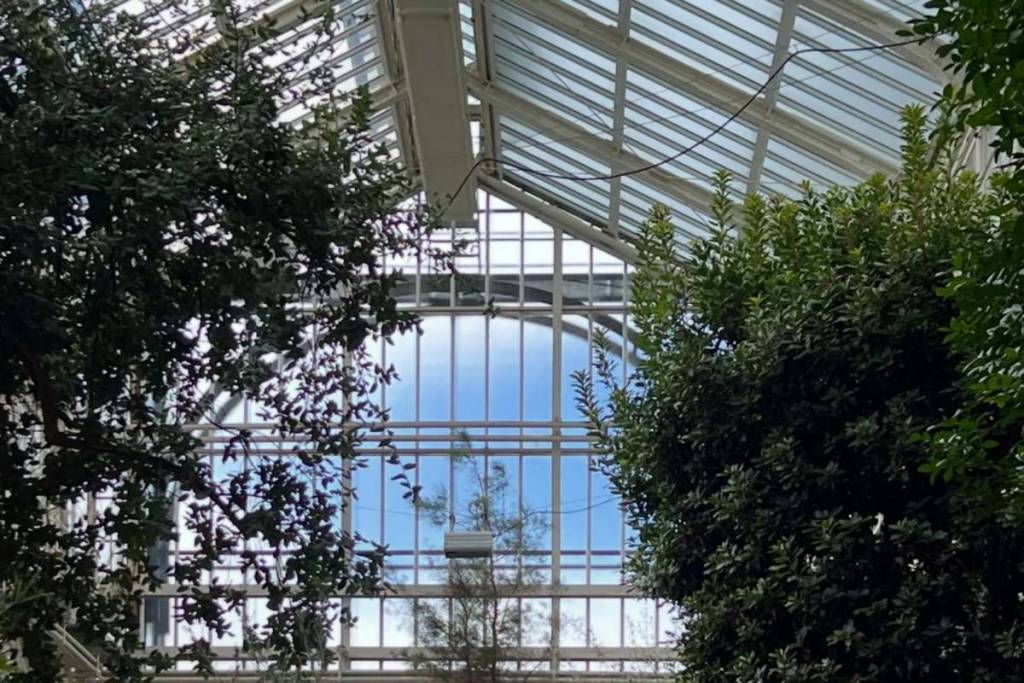
After more than 120 years, however, the historic building is now in urgent need of comprehensive renovation. The steel framework shows signs of corrosion damage to load-bearing components, which also compromises its structural stability. At the same time, the greenhouse still has old single-pane glazing that no longer meets today’s energy efficiency standards. The historic structure is therefore to be thoroughly renovated in accordance with preservation guidelines.
However, the building’s future was uncertain for a time. The renovation, which had already been planned, was halted in early 2025 due to Berlin’s budget cuts. In May 2026, the decision was finally made to save the Mediterranean House after all. Approximately 29 million euros are now available for the comprehensive renovation.
According to the current schedule, construction is set to begin in the spring of 2027. The Mediterranean House is expected to be closed for two to three years during this time. This means that the fall and winter of 2026 will be among the last opportunities to visit the historic Art Nouveau greenhouse before its extensive renovation.