
A few kilometers north of Berlin lies a place that for decades could not be found on any standard map of the GDR: In the Wandlitz Forest Settlement , the SED leadership isolated itself from the general population.
But is there any truth to the myth of decadent luxury, and what awaits you at this historically significant site just outside the capital? If you’re interested in uncovering more dark secrets, check out this amazing experience!
How “Volvograd”—a.k.a. the Wandlitz Forest Settlement—Came to Be
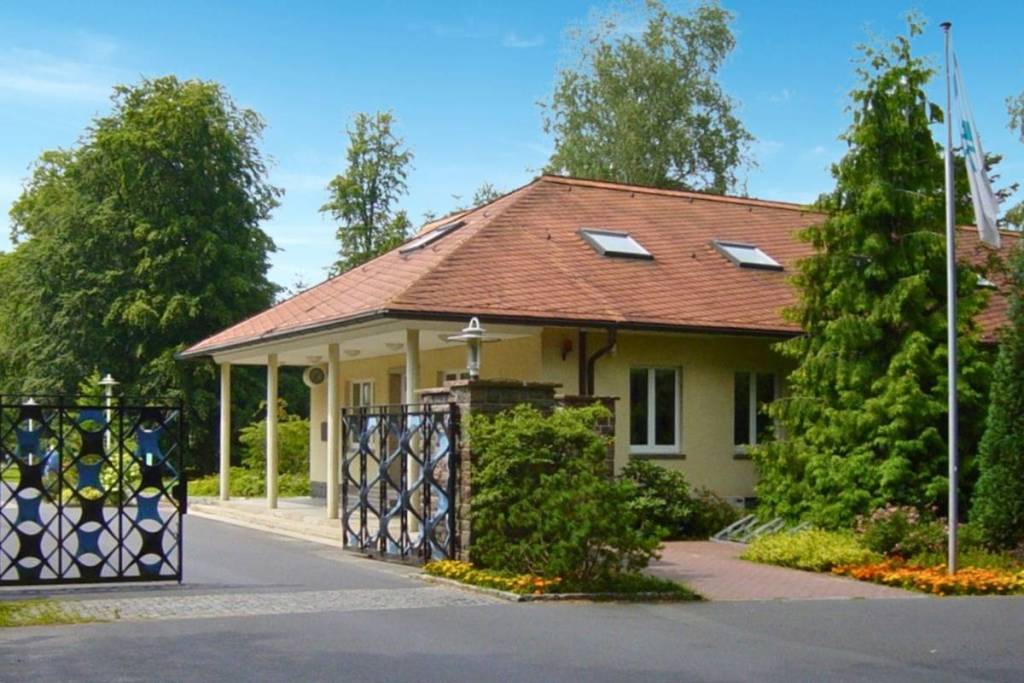
After the popular uprising of June 17, 1953, the SED leadership wanted maximum security. Starting in 1958, a heavily guarded, secret residential complex for members and candidates of the Politburo was built in a dense forest near Bernau (strictly speaking, not actually in the municipality of Wandlitz).
The Wandlitz Forest Settlement was shielded by two separate security zones:
- The Outer Ring: A sprawling barbed-wire fence in the forest, lined with signs reading “Wildlife Research Area.” Armed guards from the Stasi’s “Feliks Dzierzynski” Guard Regiment patrolled this area.
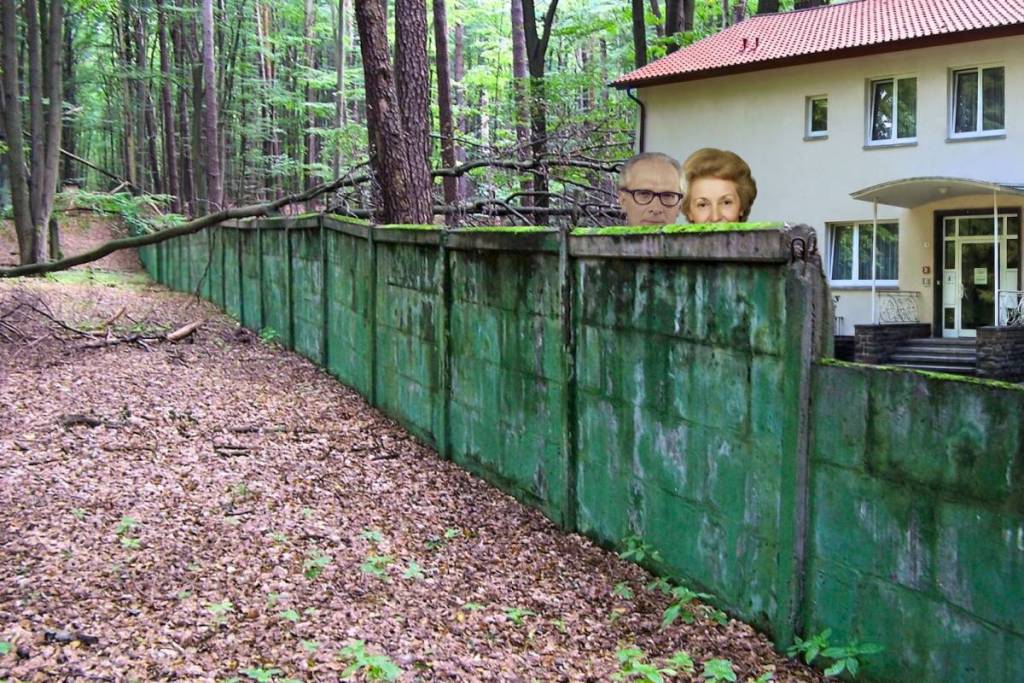
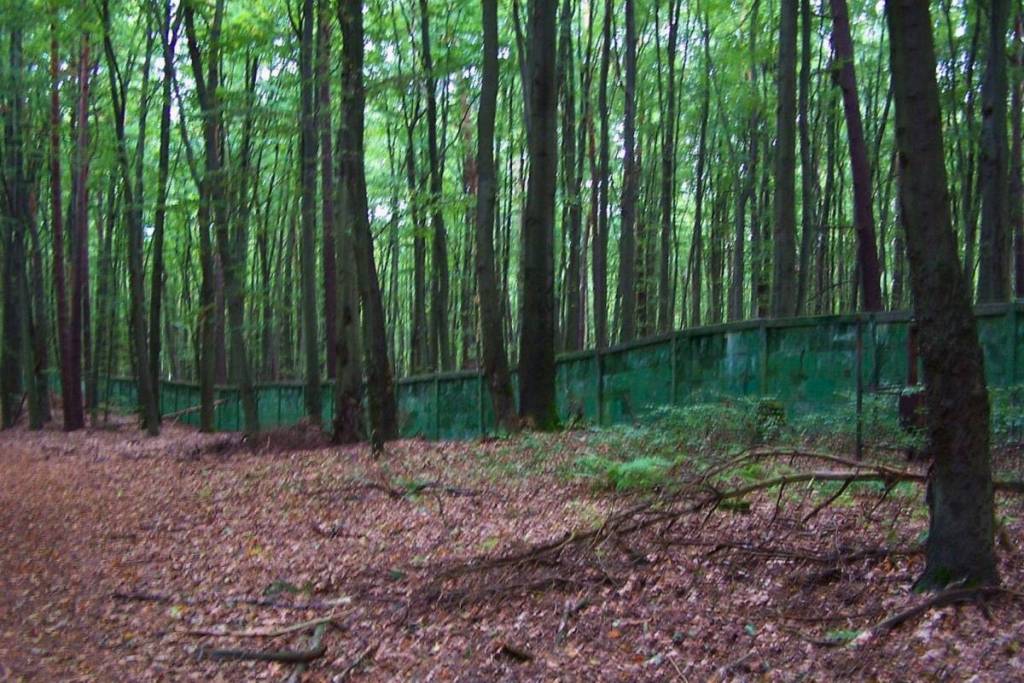
- The Inner Ring: A heavily fortified concrete wall about 2 km long that enclosed the immediate residential area of the SED leadership.
Here, the officials lived in an isolated parallel world. Colloquially, the area was mockingly called “Volvograd.” The reason: The leadership’s fleet of vehicles consisted primarily of luxury Swedish cars. Within the walls, residents enjoyed uncensored Western television, their own polyclinic, and access to exquisite (Western) goods.
House 11: This is where Erich and Margot Honecker lived
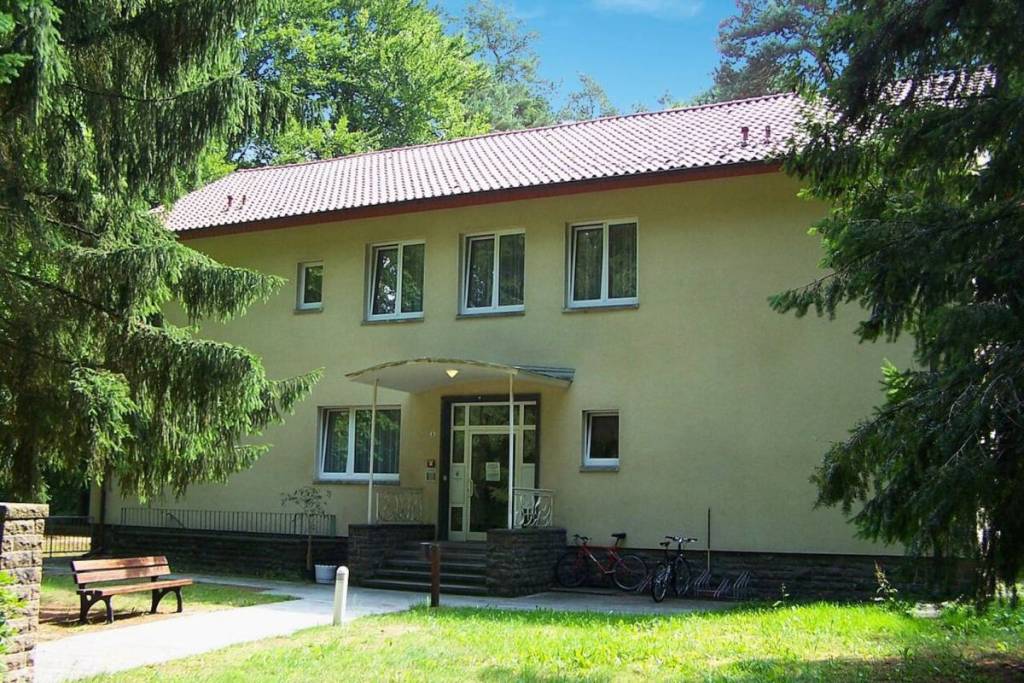
The most prominent building in the settlement is House 11. It was the residence of head of state and party leader Erich Honecker and his wife Margot.
But the house was no pompous palace. Compared to other state residences around the world, the house appears modest in its simplicity. The Honeckers’ home resembles an upper-middle-class single-family home in the style of West German suburbs from the 1960s and 1970s.
With about 400 square meters of living space, a spacious fireplace room, and state-of-the-art Western technology in the GDR kitchen, it was still luxurious by the standards of the time.
The site today: Between a rehab clinic and history
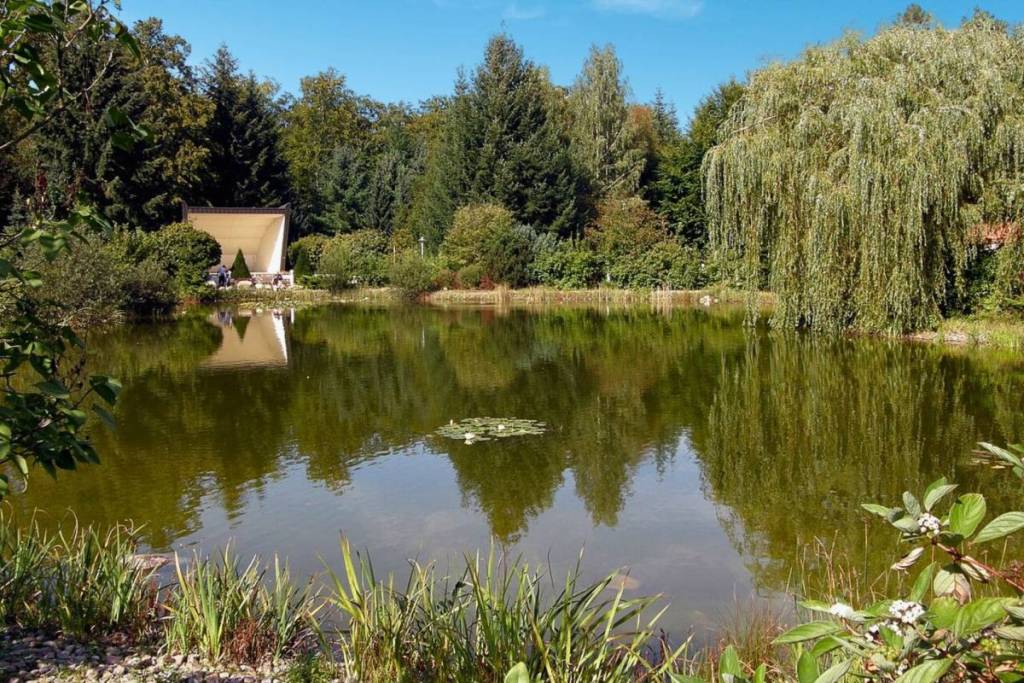
Today, there’s not much left to remind us of the isolated stronghold for party officials. After the fall of the Berlin Wall in 1989, the area was given a new purpose. Today, the sprawling grounds are home to the Brandenburgklinik, a rehabilitation center.
The vast wooded area is open to the public and makes for an exciting day trip destination. Here’s what you can do there today:
- Explore the Historical Trail: Information panels are scattered throughout the entire site, providing detailed explanations of the history of each building.
- Go on a historical tour: Honecker’s former House 11 (now a clinic administration building) and other residential buildings still stand and can be viewed from the outside.
- Combining nature and history: The quiet forest trails on the grounds can be perfectly combined with a bike ride or a hike to the nearby, picturesque Lake Liepnitz.
Here’s how to get to the Wandlitz Forest Settlement (don’t worry, you don’t have to walk through the forest!)
Public transportation: Take the S2 or RE3 to Bernau Station. From there, take bus line 894 (toward Wandlitz) for just under 15 minutes to the Bernau, Brandenburgklinik stop .
By car: Take the A11 toward Prenzlau to Wandlitz (Exit 16) and follow the B273 toward Bernau. After a few kilometers, you’ll see signs for the Brandenburgklinik / Waldsiedlung (Brandenburgallee 1, 16321 Bernau bei Berlin).
Tip for active travelers: Starting from Pankow, the route also makes for a wonderful bike tour (about 20–25 km)!