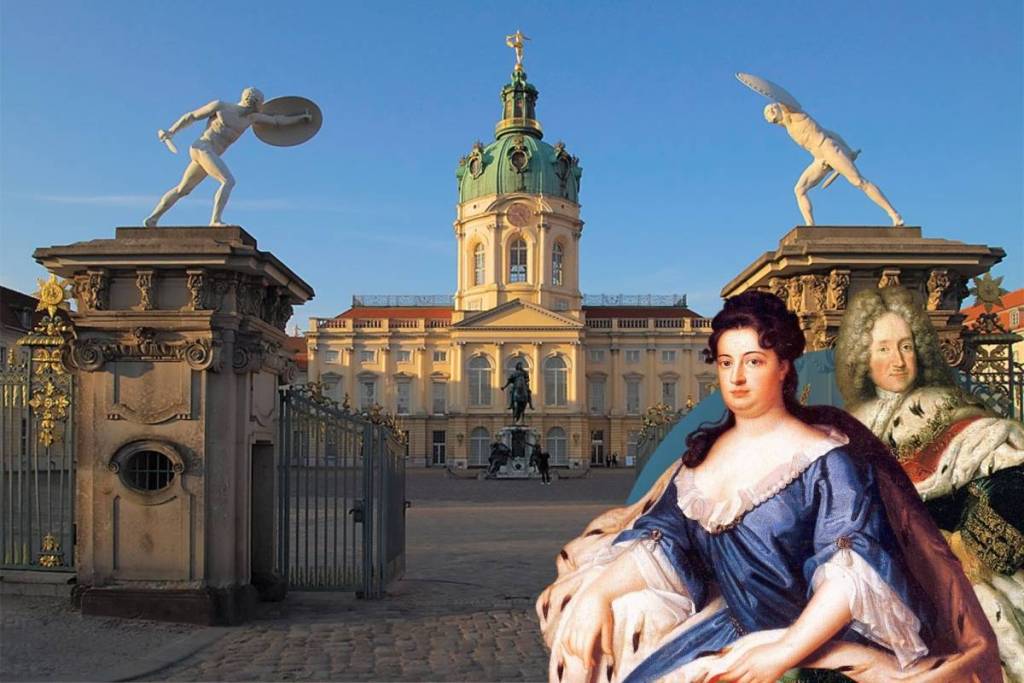

On February 1, 1705, Sophie Charlotte died in Hanover, where she was visiting her family. The Prussian queen was just 36 years old. Her husband, King Frederick I, mourned publicly and did what rulers like to do at such times: he erected a monument.
The Lietzenburg pleasure palace just outside the city gates, which his wife had loved so much, was henceforth called Charlottenburg Palace. In the same year, the village of Lietzow became a town in its own right, and its name continues to define an entire Berlin district to this day.
28 October 2026 00:00 + more dates
Schloss Charlottenburg
Charlottenburg Palace: A Tribute to a Queen with a Sense of Wit
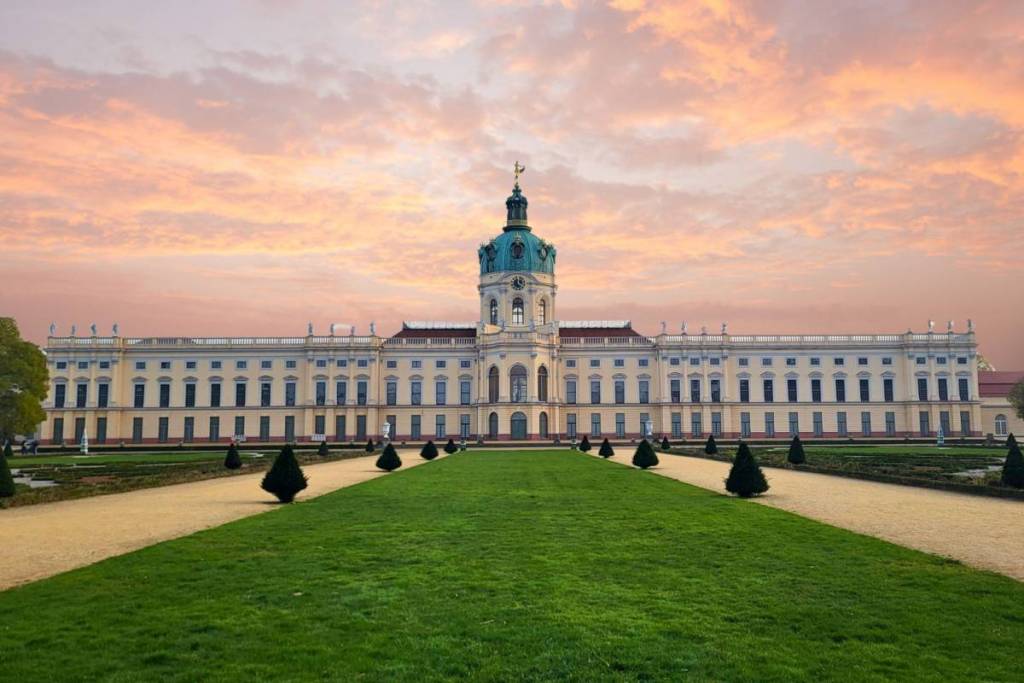
Sophie Charlotte was no fan of stiff court ceremonies. The well-educated woman from Hanover had Arnold Nering build her a summer residence on the Spree beginning in 1695, where she staged operas and spent hours discussing philosophy with Gottfried Wilhelm Leibniz.
She shared a close friendship with him; in 1700, he founded the Berlin Society of Sciences, which she supported. It is said that on her deathbed she comforted those around her: Now she would finally learn what Leibniz had never been able to fully explain to her.
From Summer Residence to Magnificent Complex
After her death, the palace continued to expand. Johann Friedrich Eosander added the 48-meter-high dome, crowned by a gilded statue of Fortuna that spins in the wind like a weather vane. Frederick the Great commissioned Georg Wenzeslaus von Knobelsdorff to add the New Wing, whose Golden Gallery is considered one of the most beautiful Rococo rooms in Germany.
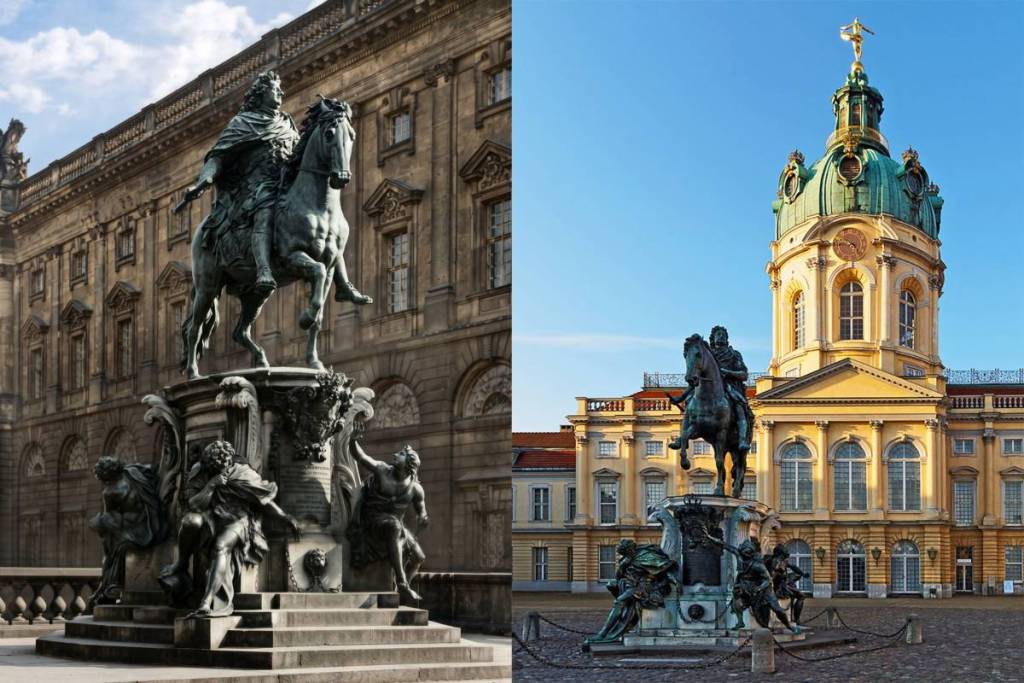
During World War II, the palace was severely damaged, but it was rebuilt. Today, the equestrian statue of the Great Elector, which once stood at the Berlin Palace (see pictures above) and was even submerged in Lake Tegel for a few years, stands once again in the Courtyard of Honor…
You can discover that today
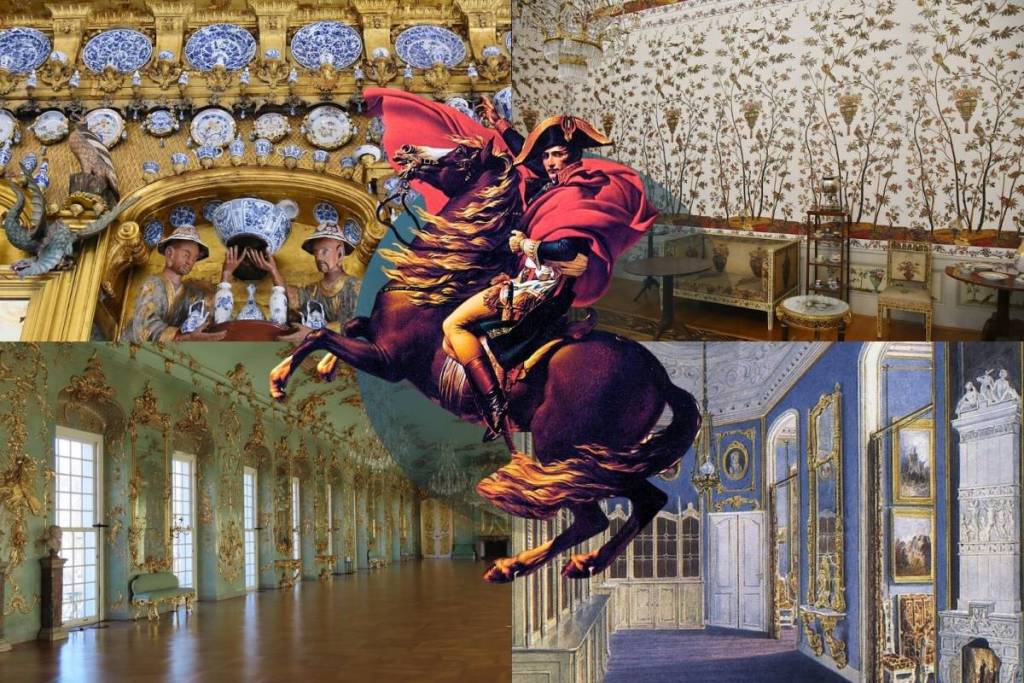
You can tour the Old Palace and the New Wing with their state rooms, including the Porcelain Cabinet, where Chinese and Japanese porcelain fills the walls all the way up to the ceiling. Here you’ll also find one of five versions of the painting “Bonaparte Crossing the Alps at the Great St. Bernard Pass” by Jacques-Louis David.
Afterward, it’s worth taking a stroll through the sprawling palace gardens, which transition from the Baroque parterre behind the palace into a landscape park. There you’ll find Schinkel’s New Pavilion, the Belvedere, and the mausoleum, where Queen Luise (and the heart of King Frederick William IV) are laid to rest, among others.
And when you stand in front of the facade, spare a thought for Sophie Charlotte: a queen who didn’t even live to be 40 left Berlin not just a palace, but the name of an entire neighborhood.
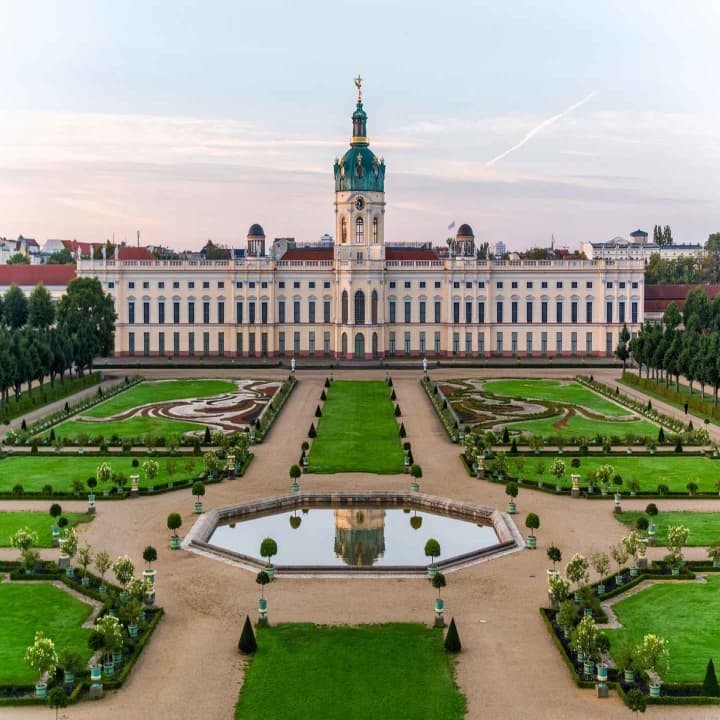
Berlin: Ticket for Charlottenburg Palace
28 October 2026 00:00 + more dates
Schloss Charlottenburg