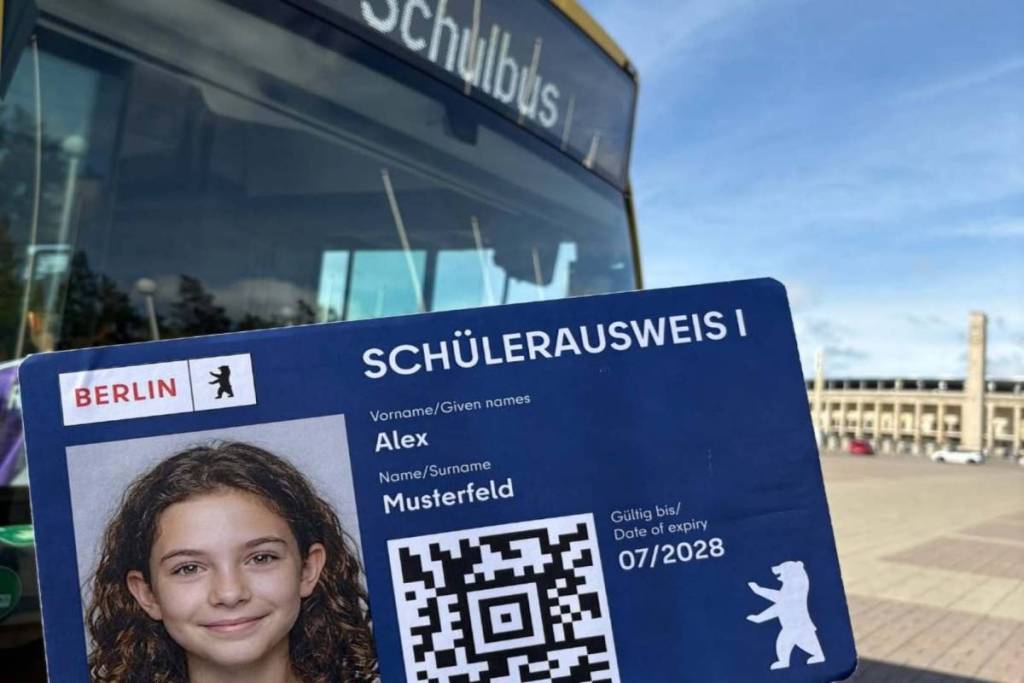

carry books, bring a lunchbox, remember their transit pass, and make sure not to forget their student ID : For kids, it can quickly add up to quite a lot of stuff that has to go into their backpacks every day. Of course, some things are essential, but for others, new solutions are being sought—and found. Because while our city is constantly coming up with new ideas—not just in the worlds of art and dining —everyday school life is also being optimized. The latest change is that the student ID and the previously separate FahrCard are now being combined into a single card.
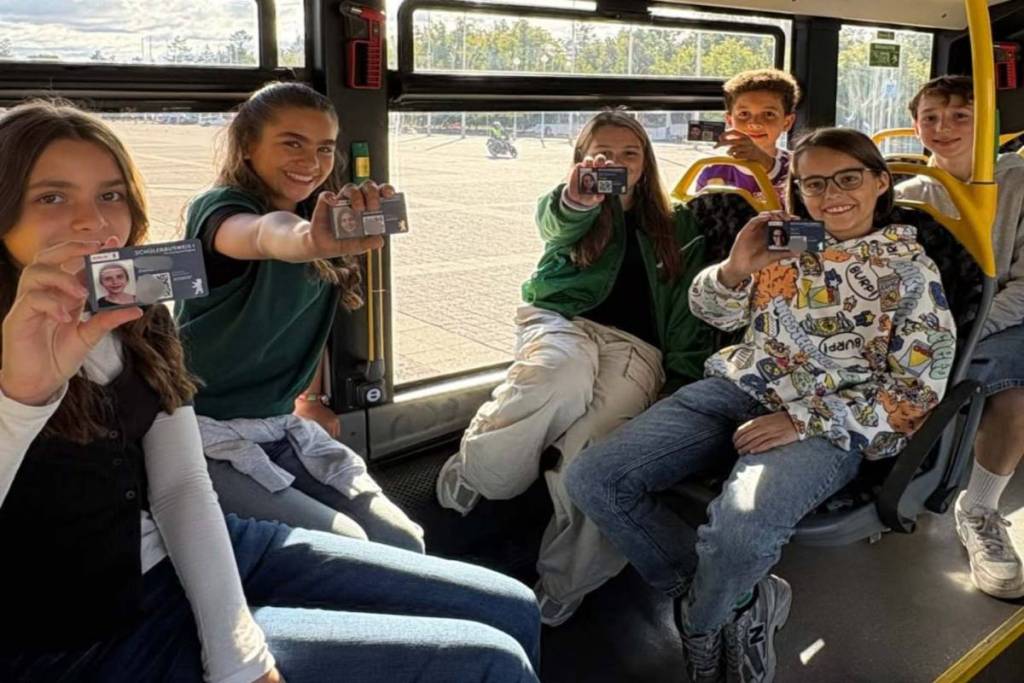
Student ID & FahrCard Combined
Until now, eligible Berlin students have needed two separate cards to use public transit for free: the Berlin student ID and the separate FahrCard with the free Berlin AB student ticket. That’s exactly what’s set to change now. In the future, the student ID will also serve as a public transit ticket. Students can use it to ride buses, trams, the U-Bahn, and the S-Bahn, and prove their student status with the same card. The integrated ticket will continue to be valid in the Berlin AB fare zone. Free public transit for students is therefore not new—what is new is that the additional FahrCard will be eliminated and merged with the student ID card into a single card.
The project was officially unveiled on September 9, 2026, and will initially run as a pilot program at ten Berlin schools with up to 7,000 students. The new ID card is then set to be rolled out across all of Berlin. The Senate Administration plans to introduce the card at all public schools during the second half of the 2026–27 school year, while the BVG anticipates a citywide rollout in 2027. Approximately 400,000 Berlin students are set to receive the new ID card starting in March.
Less bureaucracy
For students and parents, the change is primarily intended to mean less red tape . Until now, the free student pass had to be applied for separately through the BVG. This additional application process will be eliminated in the future. Instead, existing student data will be used, the passes will be produced centrally, and then delivered to the schools by the BVG. This should also ease the burden on schools, as the administrative offices will no longer have to issue or renew the student IDs themselves every year.
At the same time, the new system is expected to significantly reduce plastic use. Senator for Transportation Ute Bonde estimates that hundreds of thousands of plastic cards could be saved as a result. According to the *Tagesspiegel*, eliminating the separate public transit cards alone could reduce plastic card usage by around 400,000 per year. In addition, some of the new student IDs are intended to be valid for several years. For grades 1 through 4, 5 through 6, and 7 through 10, multi-year validity is planned, while the ID for upper secondary school students will continue to be valid for one year.
Digital student ID via app in the works
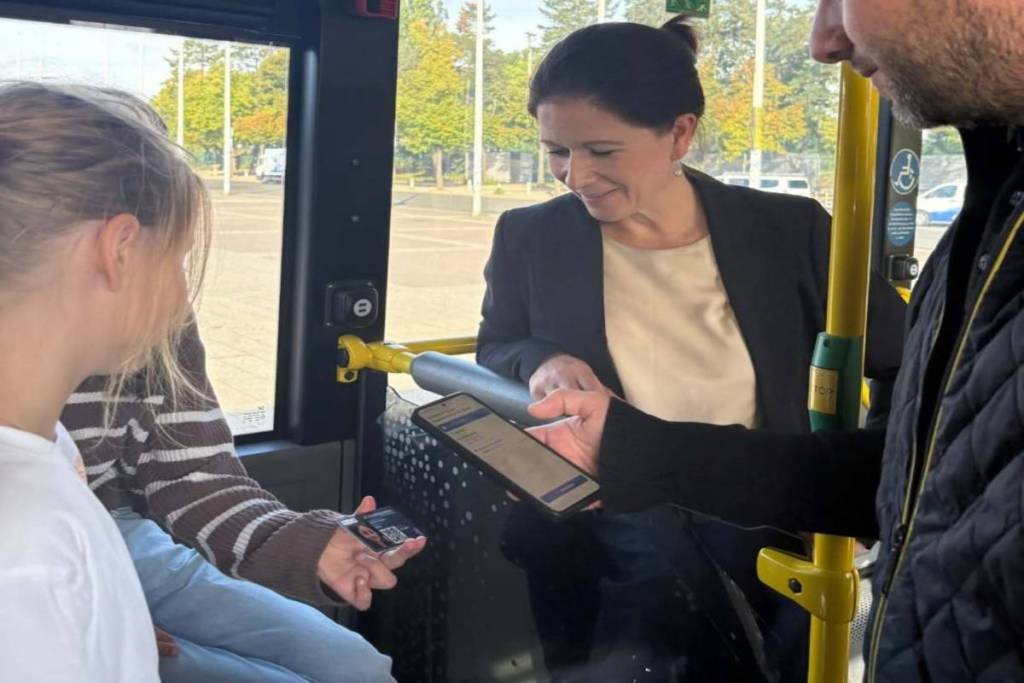
In addition to the physical card, a voluntary digital student ID via app is also planned . This is expected to become available as part of the citywide rollout during the second half of the 2026–27 school year. The traditional student ID card will therefore not be phased out, but rather supplemented by a digital version. In the future, additional functions could be integrated, including library access, cafeteria services, or benefits from the education and participation package. Technically, the foundation for integrating a “Deutschlandticket” is also said to have been laid. However, these are potential future enhancements and not features that have already been finalized.
The existing student ticket remains free of charge and is valid throughout the Berlin AB fare zone. Students can use it to ride buses, trams, the U-Bahn and S-Bahn, as well as relevant ferries . In addition, the ticket allows students to bring one bicycle, one dog, or one child under the age of six along for free. The cost of the student ticket continues to be covered by the State of Berlin.