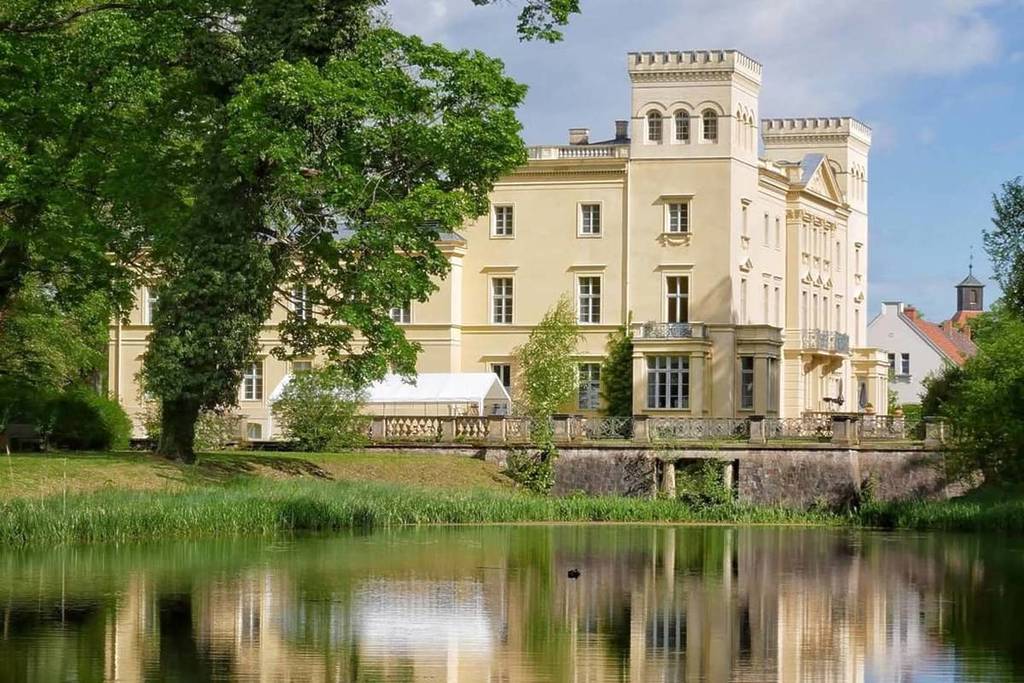

An idyllic castle here, a fairytale castle there—admittedly, Brandenburg is full of architectural gems. And every single one of them is special in its own way: they not only invite visitors to explore them but also serve as impressive backdrops for special events and film productions. From a Baroque castle where the world’s largest baking show was filmed to an estate that regularly hosts the Filmschlossfest. Another castle that must not be missing from the list of Brandenburg’s treasures is Steinhöfel Castle —it ranks among the most elegant and art-historically significant aristocratic residences in the region.
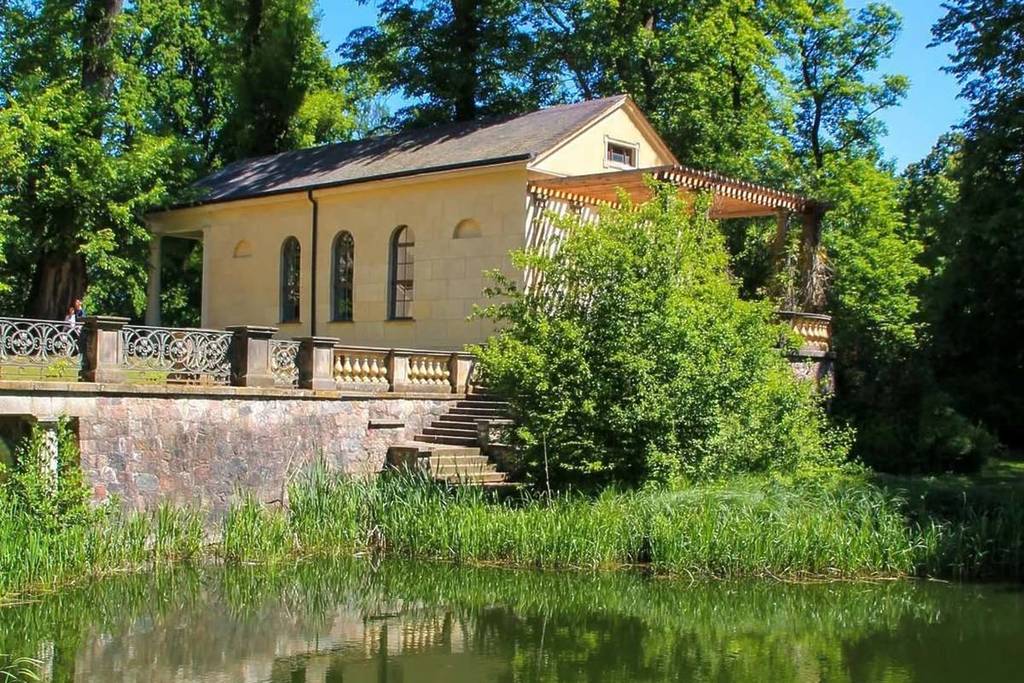
Steinhöfel Castle is located in the Oder-Spree district, about an hour from Berlin, in a quiet, rural setting near Fürstenwalde. The complex encompasses not only the castle itself but also a carefully designed ensemble of park, village green, and outbuildings, conceived as a harmonious whole. Unlike many other castles, Steinhöfel therefore does not appear isolated but is directly embedded in the surrounding landscape and the village structure.
Originally built around 1730 as a manor house, the building was completely rebuilt in the early Classicist style at the end of the 18th century under the architect David Gilly . The architecture is characterized by a clearly structured, minimalist façade, a two-story structure with side wings, and a deliberately restrained opulence, replaced by elegant proportions. Steinhöfel Castle is considered a key example of Prussian architecture around 1800 and influenced numerous later estates. In the 19th century, the building underwent several transformations, including in the Neo-Baroque style, resulting in an intriguing blend of Classicism and later additions that remains visible to this day.
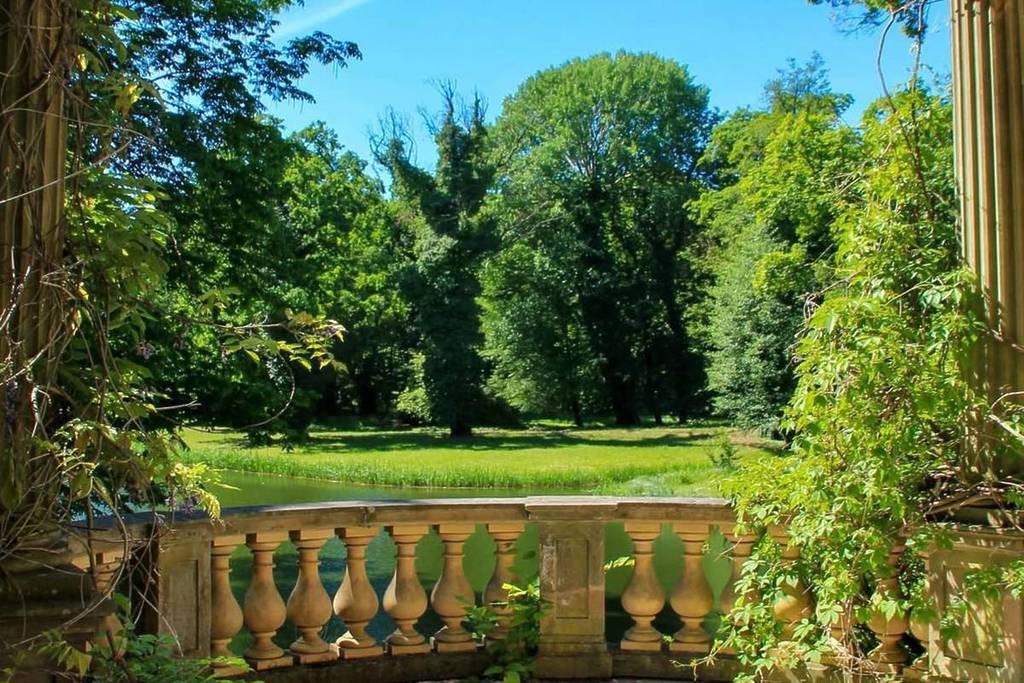
The palace park is considered one of the complex’s greatest highlights and is nearly as significant as the building itself. Covering an area of about 40 hectares, it is one of the earliest English landscape gardens in Brandenburg. The park features a long, narrow pond, a small bridge serving as a focal point, a temple that once functioned as a library, and staged elements such as a grotto and a waterfall. The design principle behind it is typical of English landscape gardens: nature appears random, yet is meticulously composed down to the last detail.