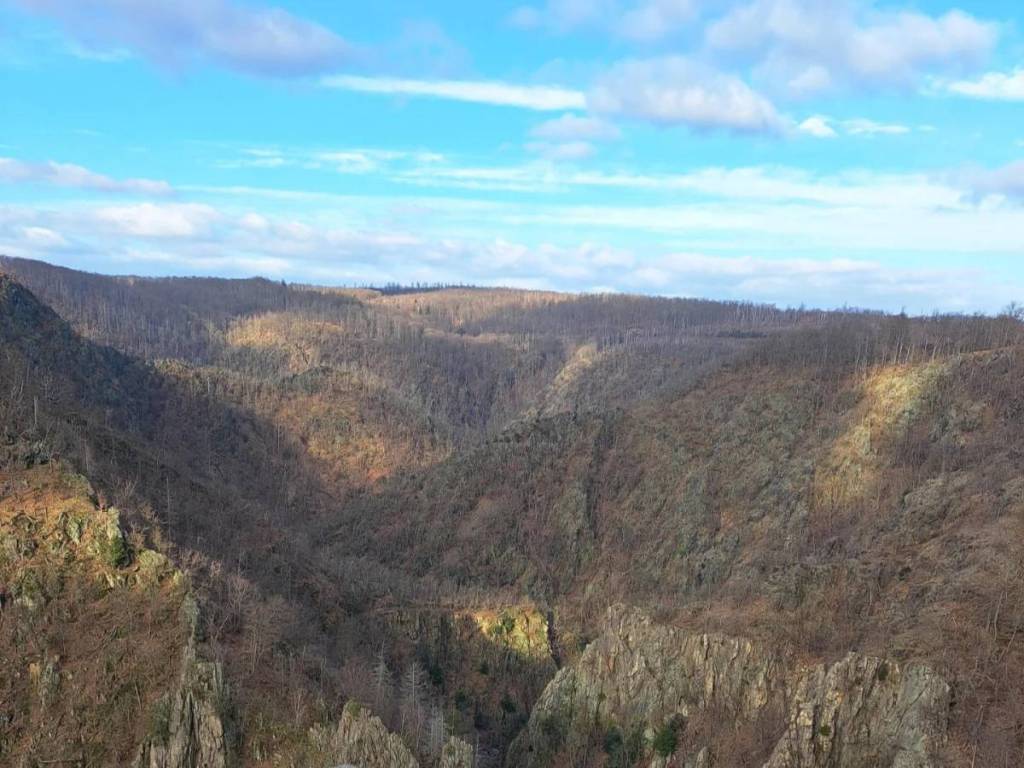

On a clear day like today, you can enjoy the most beautiful views. Fortunately, there are numerous lookout points in and around Berlin that offer impressive views of the capital’s landmarks. But if you want to earn that panoramic view and combine it with some exercise, a hike is just the thing. The Roßtrappe is perfect for this: It’s one of the Harz Mountains’ most famous natural landmarks and counts among the landmarks of the town of Thale. From this striking rock, a spectacular view opens up over the romantic Bode Valley and the Hexentanzplatz across the valley.
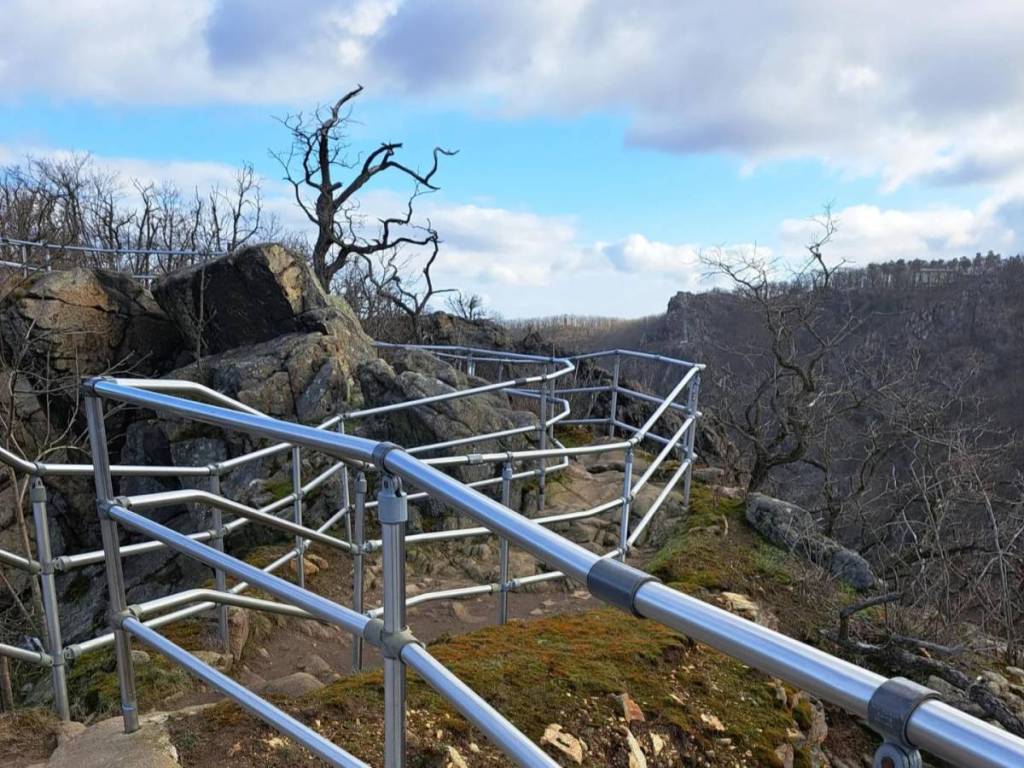
The striking granite rock rises spectacularly above the Bode Valley and offers one of the most beautiful views in the entire region. The Roßtrappe is known not only for its impressive view but also for the famous legend surrounding the giant hoofprint in the rock. The Roßtrappe is located in Thale, Saxony-Anhalt, directly above the Bode Valley and across from the Hexentanzplatz.
The granite rock is 403 meters high and, at its steepest point, dropsvertically about 250 metersinto the Bode Valley. It is considered one of the most impressive rock formations north of the Alps. Those who want to shorten the ascent can take the chairlift, which covers a distance of 559 meters and climbs a total of 250 meters in elevation. This is also the location of stamp station No. 71 for the Harz Hiking Pin.
Once there, you’ll find the famous hoofprint in the granite rock, which, according to legend , is said to have been left by the horse of Princess Brunhilde . From the observation deck, a spectacular view opens up over the Bode Valley, the Hexentanzplatz, the town of Thale, and—on a clear day—even as far as the Brocken. Right next to the Roßtrappe is also the historic Berghotel Roßtrappe with its observation terrace.
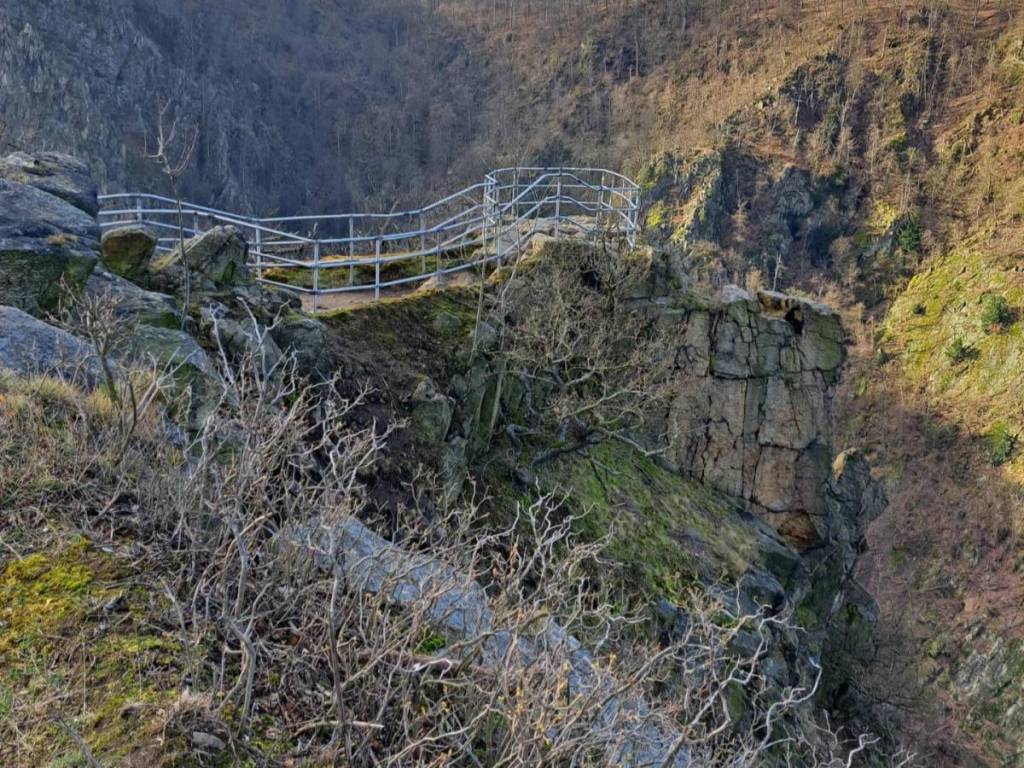
According to legend, the king’s daughter Brunhilde fled from the giant Bodo, who wanted to marry her against her will. Riding her white horse, she reached the gorge of the Bode Valley and leaped across to the rock on the opposite side with a mighty bound. It is said that her horse’s hoof left an imprint in the granite that is still visible today . The giant Bodo failed to make the leap, plunged into the depths, and is said to have given the Bode River its name.
The Roßtrappe is also a popular destination for hiking enthusiasts. Particularly popular are the short walk from the mountain station to the viewpoint, the steep Schurre Trail down into the Bode Valley, the approximately four-kilometer-long Präsidentenweg, and hikes between the Roßtrappe and the Hexentanzplatz.