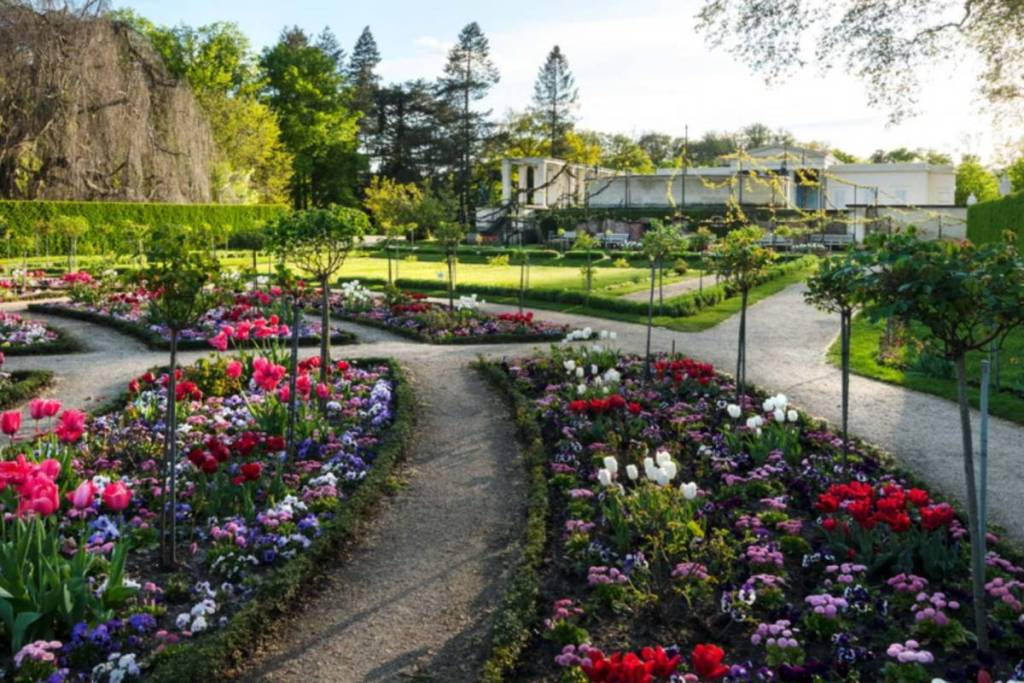

Pink, red, white, and rose are currently vying for attention—what could be more beautiful this season than the splendor of the roses? There are currently numerous places around Berlin where you can experience them in full bloom. From the oldest rose garden near the capital to the world’s largest rose collection —the selection is vast. But that’s not all: even in what is arguably the region’s most famous palace park, the roses are currently in full bloom, creating a particularly picturesque sight. The rose garden is located in Sanssouci Park in Potsdam, which is considered the centerpiece of the UNESCO World Heritage Site “Palaces and Parks of Potsdam and Berlin.” Nestled within one of Europe’s most significant historic garden landscapes, the grounds combine royal charm with over 200 years of garden artistry.
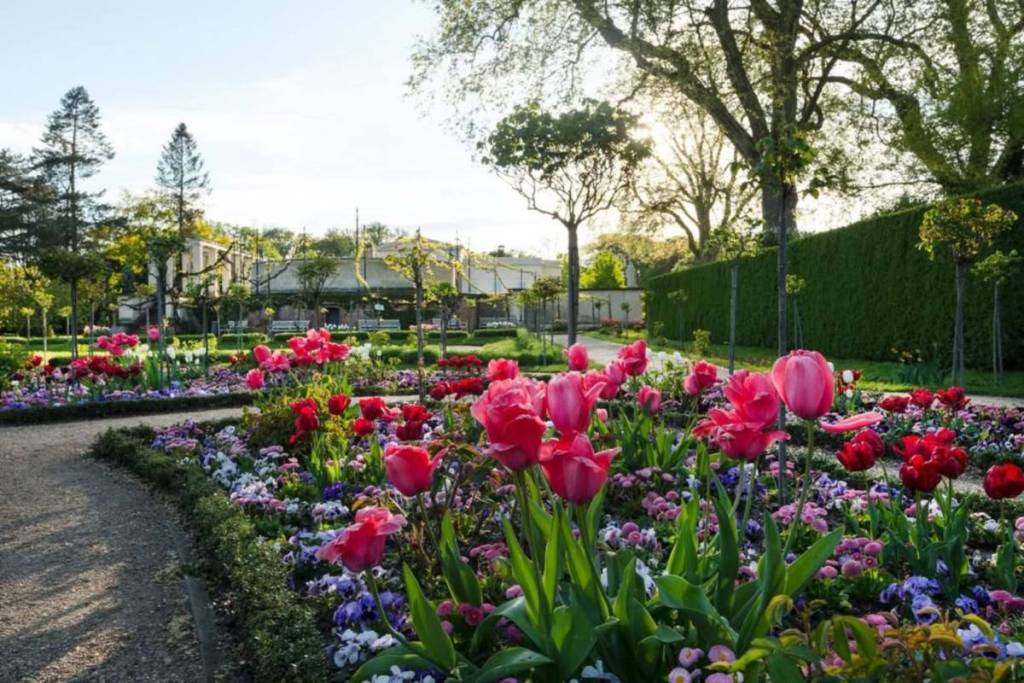
The Sanssouci Palace Rose Garden is part of a park landscape that was originally created under Frederick the Great in the 18th century . Unlike many classical palace gardens, Sanssouci combines various garden styles and eras. Here, Baroque garden design meets English landscape gardens and Romantic park elements from the 19th century. This extraordinary blend of architecture, nature, and history is one of the reasons why the complex is now a UNESCO World Heritage Site.
Particularly charming is the combination of historic rose gardens, artfully laid-out paths, fountains, and the characteristic sightlines to the Prussian palaces. During the blooming season in late spring and summer, the rose garden transforms into one of the most beautiful and photogenic areas of the entire park.
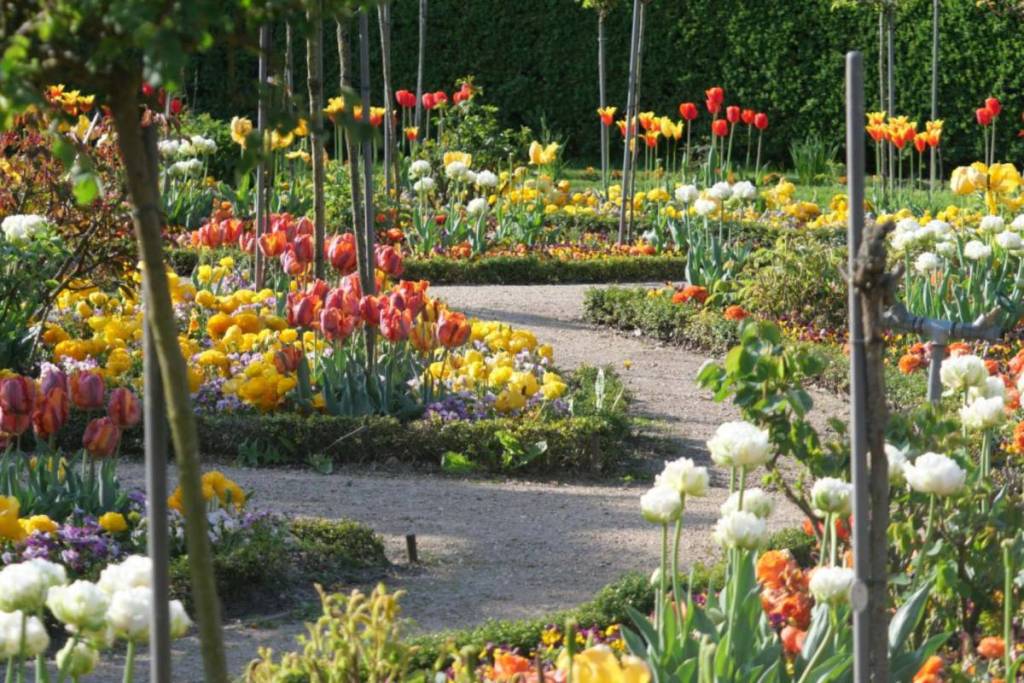
Sanssouci Park covers approximately 300 hectares and is one of Germany’s largest historic parks. The grounds feature some 26,000 trees, 96 historic buildings and structures, and 36 fountains. Around 60 gardeners are responsible for the care and preservation of this unique cultural heritage.
A visit to the Sanssouci Palace Rose Garden can be perfectly combined with other highlights of the park. These include Sanssouci Palace, the New Palace, the Chinese House, the Orangery Palace, the Church of Peace, and Charlottenhof Palace. Together, they form one of the most significant ensembles of Prussian architecture and garden art.