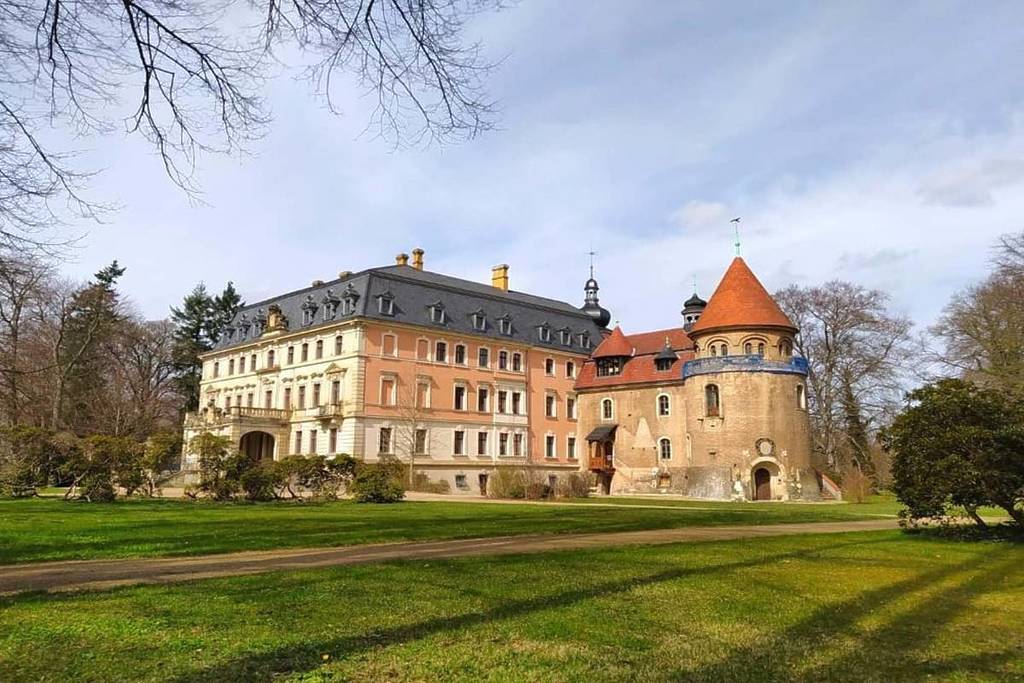

We often admire palaces for their architecture and impressive exterior appearance, especially the many Baroque palaces around Berlin. Some also fascinate on the inside, for example with large porcelain or tile collections. Yet attention is rarely directed toward the palace gardens, which are often somewhat hidden away and can therefore be true hidden gems. Take, for instance, the Sicilian Garden at Sanssouci Palace. Who would have thought that just a few meters behind the palace building, you would suddenly feel transported to southern Italy? And there are even more such special grounds—including one that combines not just one style, but three: right next to Altdöbern Palace and Park in Brandenburg lies a sprawling park that blends Baroque, Rococo, and the design of an English landscape garden.
About 1.5 hours from Berlin lies Altdöbern Palace and Park, one of Brandenburg’s most impressive and yet most underrated palace complexes. Spanning approximately 60 hectares in Lower Lusatia, the complex blends several eras and styles into an exceptionally multifaceted whole. Originally, a Renaissance building stood here in the 16th century, which had evolved from a medieval moated castle. In the 18th century, the complex was fundamentally redesigned and expanded into a Baroque palace, architecturally modeled after the Dresden court.
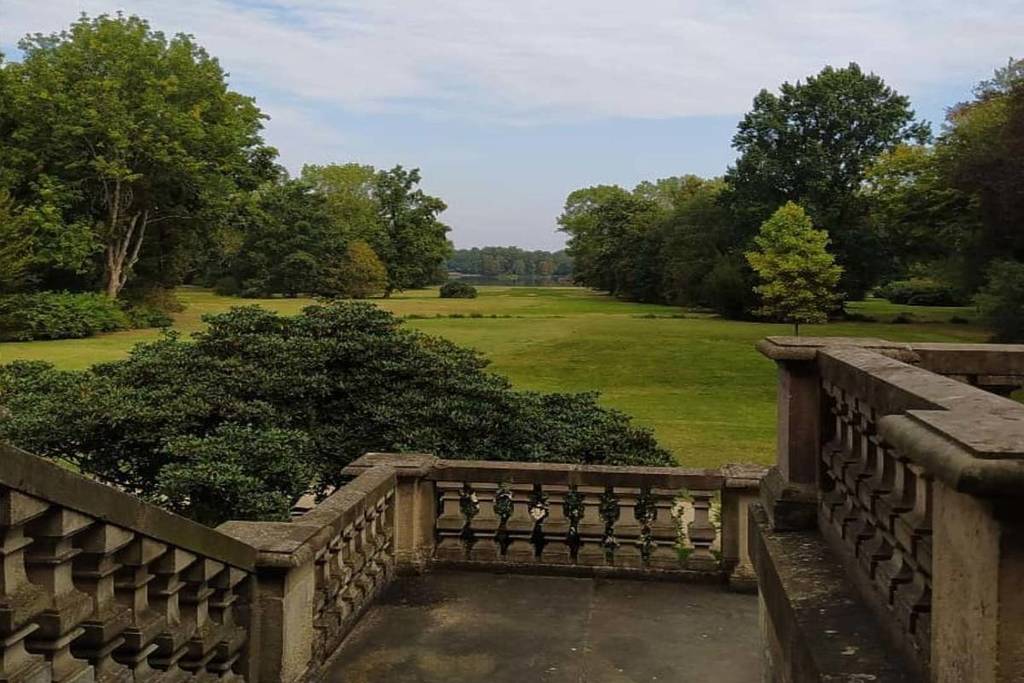
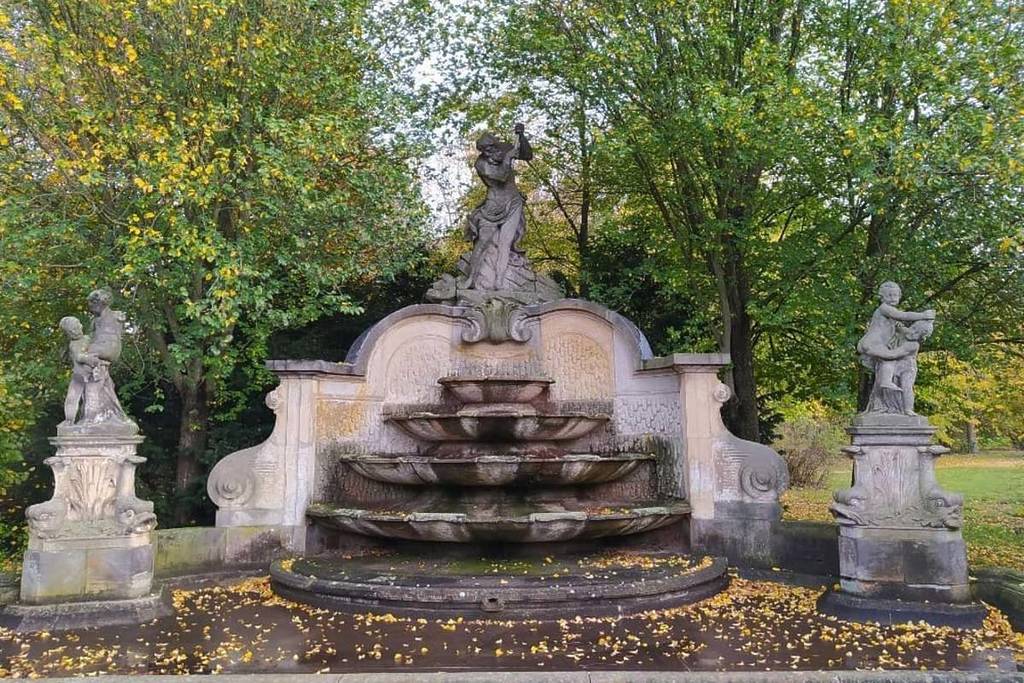
Particularly noteworthy, however, is the sprawling park, which is one of the few in Brandenburg where multiple garden styles can be experienced simultaneously. Directly adjacent to the palace lies a strictly laid-out Baroque garden with clear axes, symmetrical structures, and classical sightlines. This formal design flows seamlessly into a Rococo garden, which has a more playful feel and is complemented by decorative elements such as sculptures and a historic hedge theater.
Further on, the grounds open up into an English landscape park, which was laid out in the 19th century and deliberately creates a natural, almost untouched impression. Vast meadows, winding paths, and mature trees define the scene here and stand in contrast to the strict geometry of the Baroque areas.
A central element of the park is the so-called Salzteich, a large lake that visually ties the grounds together and creates particularly atmospheric sightlines. Reflections of the palace in the water, open landscape areas, and tranquil shorelines make this part of the park one of the most atmospheric spots in the entire complex.