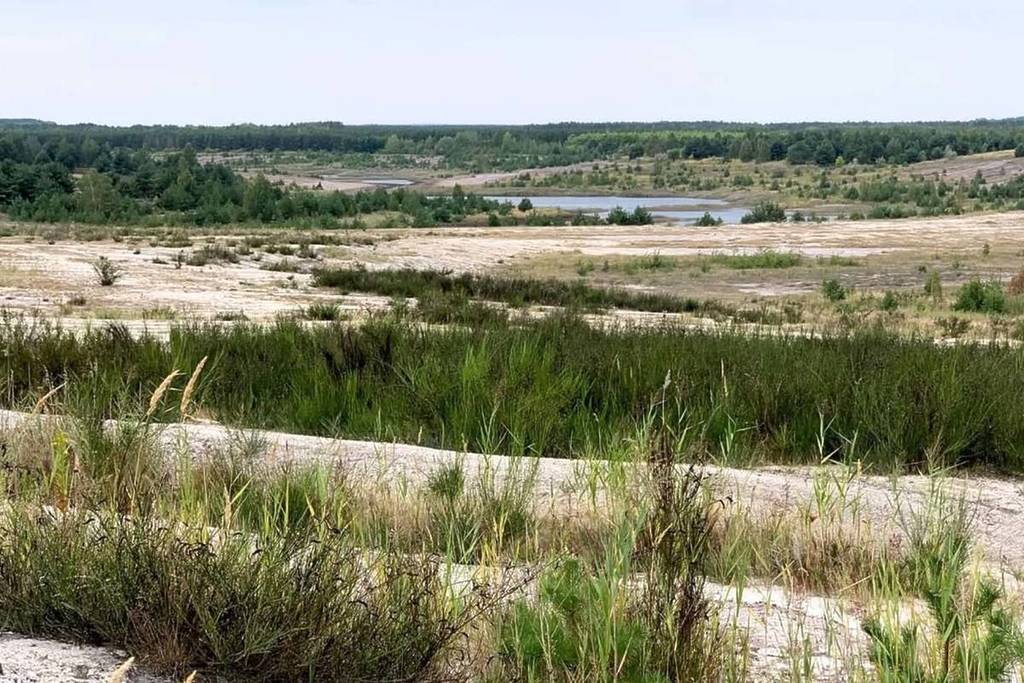

Most people know that Brandenburg has plenty of nature and culture to offer. From pristine forest landscapes to impressive Baroque castles —there are more than enough opportunities here for a break from the hustle and bustle of the big city. Yet few are aware of the hidden natural idylls, which, with their clear lakes and unusual landscapes, almost evoke distant lands and make you feel as though you’re no longer in Brandenburg at all. Today we have another one of these places for you: The Grünhaus nature paradise is located south of Finsterwalde in Lower Lusatia and is one of Brandenburg’s most extraordinary landscapes —precisely because it didn’t come about in the traditional way.
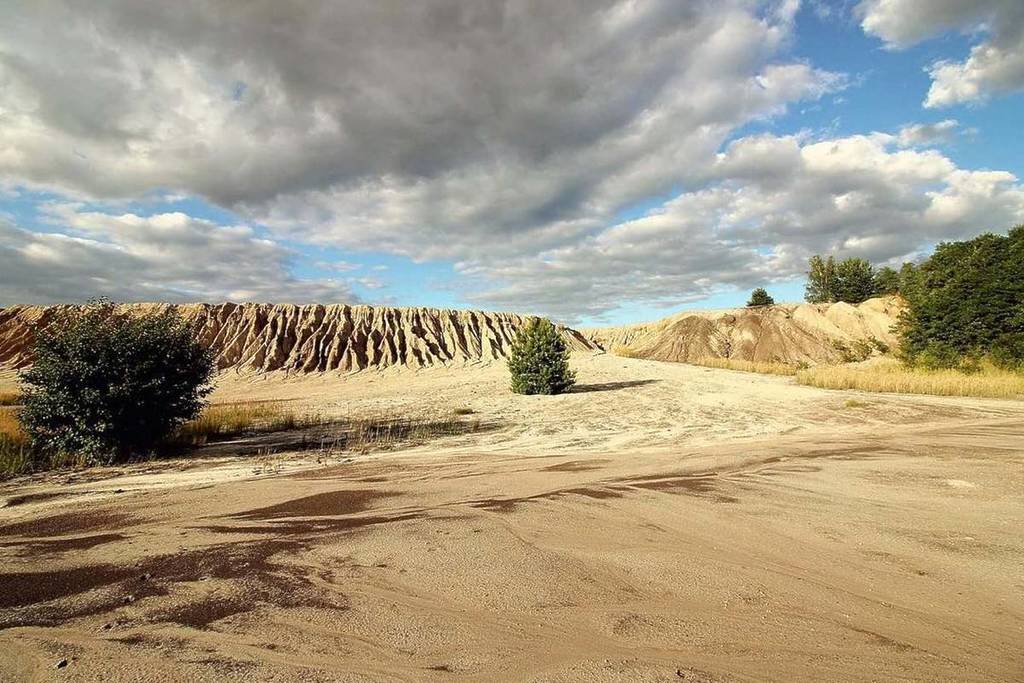
The approximately 2,200-hectare area is located in southern Brandenburg and was created on the site of former open-pit lignite mines that were shut down in 1991. From Berlin, you can reach the area in about 1.5 to 2 hours. In the past, the area was a barren mining landscape, completely dug up for lignite extraction. Today, traditional renaturation is deliberately avoided here. Instead, nature is left to its own devices—an approach known as process protection. The result is a landscape that evokes a desert, heathland, and lake district all at once. Waste rock piles, inland dunes, small lakes, and vast, open spaces define the landscape.
The almost surreal appearance is created by nutrient-poor soils, extreme terrain, and minimal human intervention. This gives rise to a diverse mosaic of varied habitats. The area is particularly impressive in late summer: that’s when the heather blooms and bathes the landscape in shades of purple—a backdrop more reminiscent of Scandinavia, while sandy areas appear almost desert-like in places.
The wildlife is also remarkable: over 3,000 species have found a habitat here , including the rare hoopoe, large flocks of cranes in the fall, and even white-tailed eagles. Even wolves have been spotted in the region. Many of these species are considered rare elsewhere or have long since disappeared from those areas.
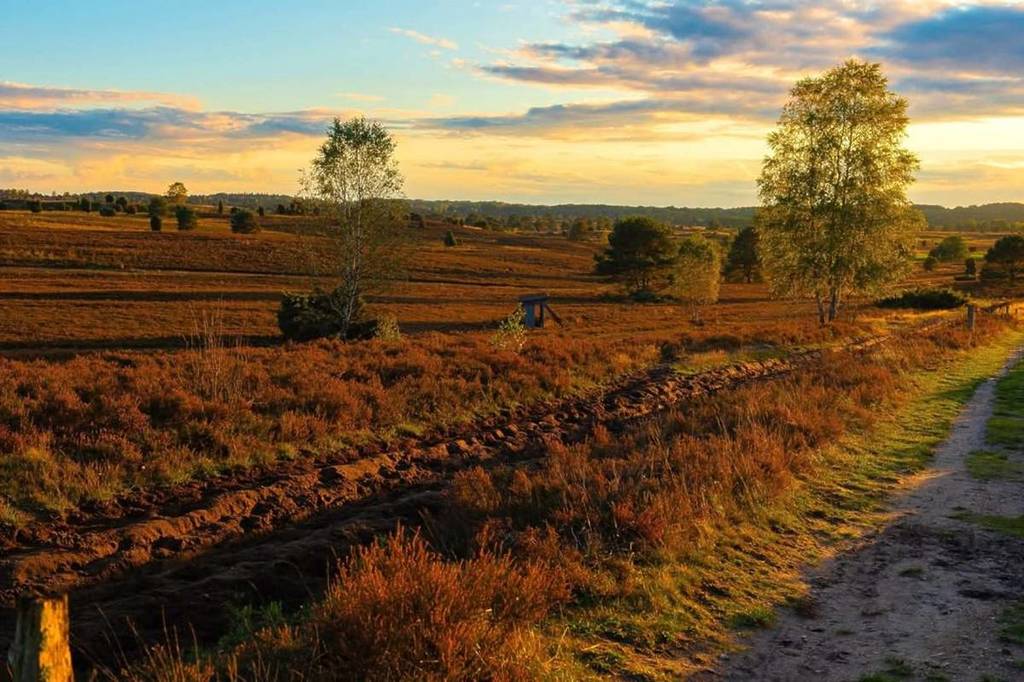
Among the scenic highlights are the so-called heath lakes, which formed from former open-pit mining pits, expansive heathlands, open sandy areas, and young pine and birch forests. Overall, the surroundings feel less like Brandenburg and more like a mix of Iceland, Scandinavia, or even a post-industrial lunar landscape.
For a long time, the area was completely closed off. However, selected scenic trails are now accessible, including routes starting near the L60 at Lichterfeld. Nevertheless, a large part of the area remains deliberately untouched and protected. The Grünhaus Nature Paradise is not a traditional natural landscape, but a landscape in transition—and at the same time one of Germany’s largest wilderness development areas.