
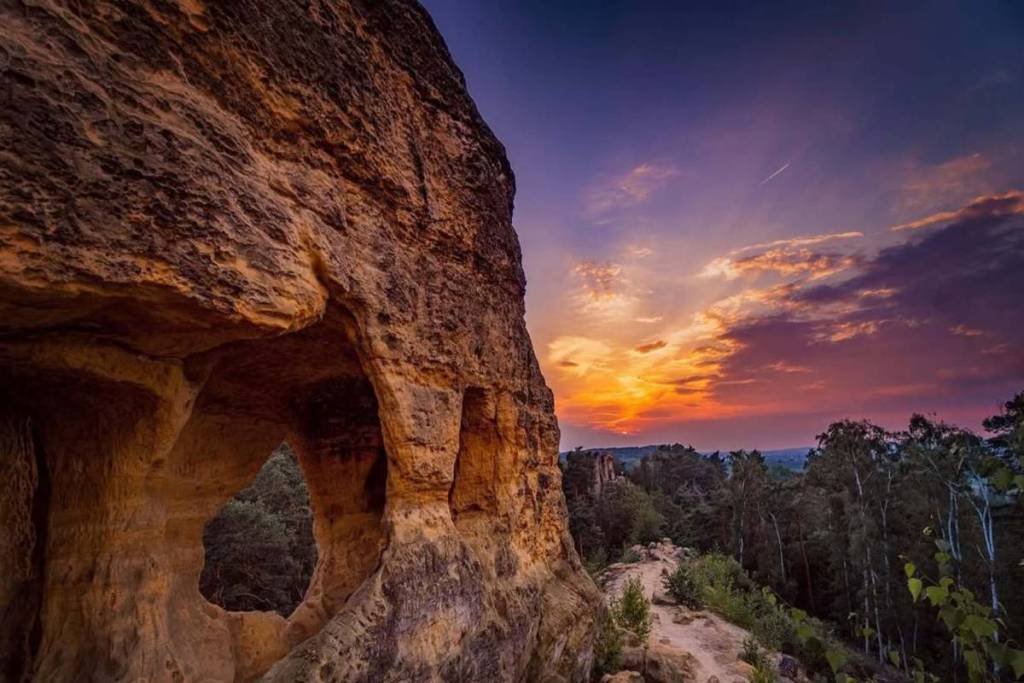

While some prefer to spend the summer at the nearest beach, others are drawn to exploring nature. Berlin and its surroundings offer the perfect conditions for both. Whether it’s Germany’s tallest chalk cliffs or a UNESCO natural wonder in the Harz Mountains —there are plenty of extraordinary destinations to explore. To make sure you never run out of ideas for your next adventure, we have another tip for you today: This extraordinary natural monument is located south of Halberstadt in the northern Harz foothills in Saxony-Anhalt and captivates visitors with its striking sandstone cliffs and mysterious caves.
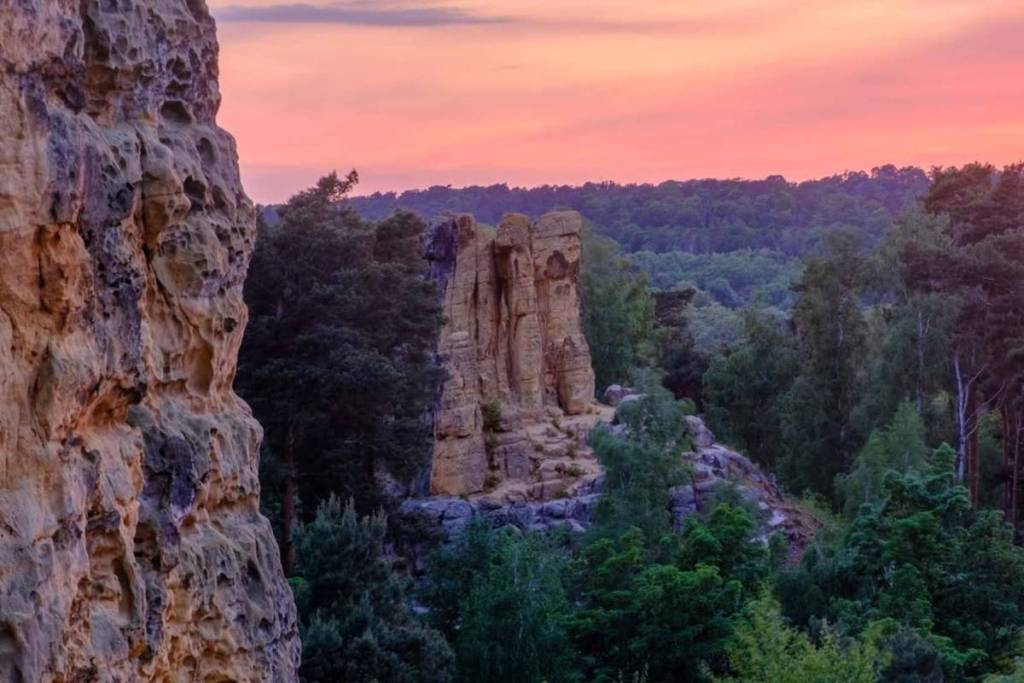
Geologically, the Klusfelsen are about 90 million years old. The sandstone was formed during the Lower Cretaceous at the bottom of a shallow sea. About 66 million years ago, tectonic movements caused the rock to be raised nearly vertically. As a result, the rock layers now run almost vertically —a rare geological feature that is particularly impressive at the Klusfelsen. Particularly impressive are the sandstone walls, which are up to 20 meters high and extend for about 50 meters. Added to this are numerous man-made caves and chambers, the unusually steep rock layers, and the site’s status as an official natural monument of the state of Saxony-Anhalt.
Recommended Articles
 10 great Christmas gifts that will make everyone happy!
 Splashing fountains, festivals, and pine trees right in the heart of Berlin: At the end of November, Kirill Petrenko and the Berlin Philharmonic will whisk you away to Rome for 105 minutes
A distinctive feature of the Klusfelsen are the mysterious caves carved into the soft sandstone. Many of them were expanded or entirely created by humans as far back as prehistoric times. Over the centuries, they served as shelters for hermits, shepherds, and stonemasons , among others, and were likely also used as places of worship. Due to their size and number, these man-made caves are considered extraordinary and are virtually unique in Germany.
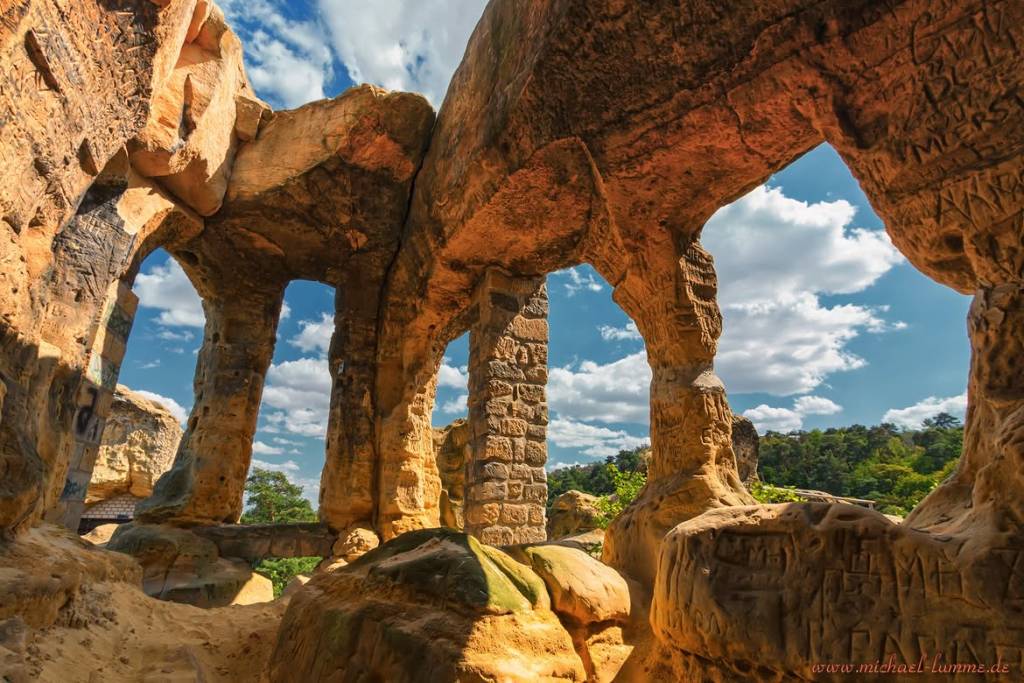
The name of the cliffs also has historical significance. The term “Klus” is derived from the Middle High German word “Klause,” which referred to a hermit’s retreat. In fact, hermits lived at the Klusfelsen for many centuries, which is why the name has survived to this day. The Klusfelsen were first mentioned in historical records as early as 1070.
In addition to the Klusfelsen themselves, the Fünffingerfelsen, the Teufelsstuhl, and the Teufelskanzel are also among the striking rock formations of the Klusberge. All of these sights are just a few minutes’ walk from one another and can easily be combined into a single hike.
