Fascinating palaces, churches, and castles can be found all over Germany—many of them right around Berlin. While palace gardens and parks are the main attractions for visitors in the summer, there are also structures that are worth visiting simply because of their extraordinary architecture. The Gustav-Adolf Stave Church in the Harz Mountains is a prime example. Built entirely of wood, the church is one of the region’s most extraordinary sights, and its Norwegian style is reminiscent of the famous stave churches of Scandinavia.
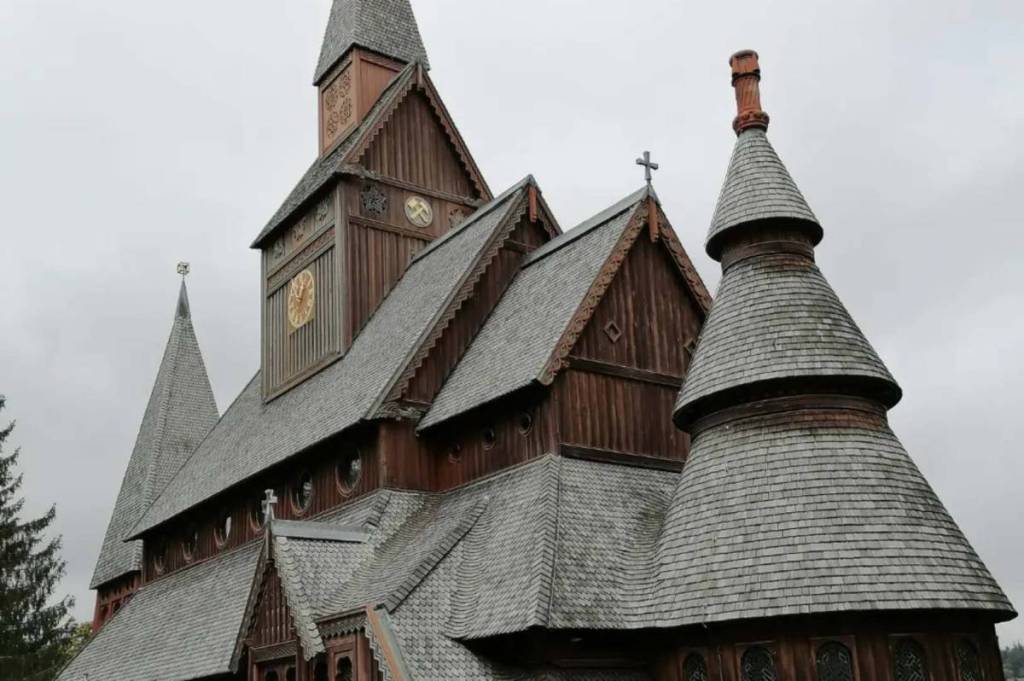
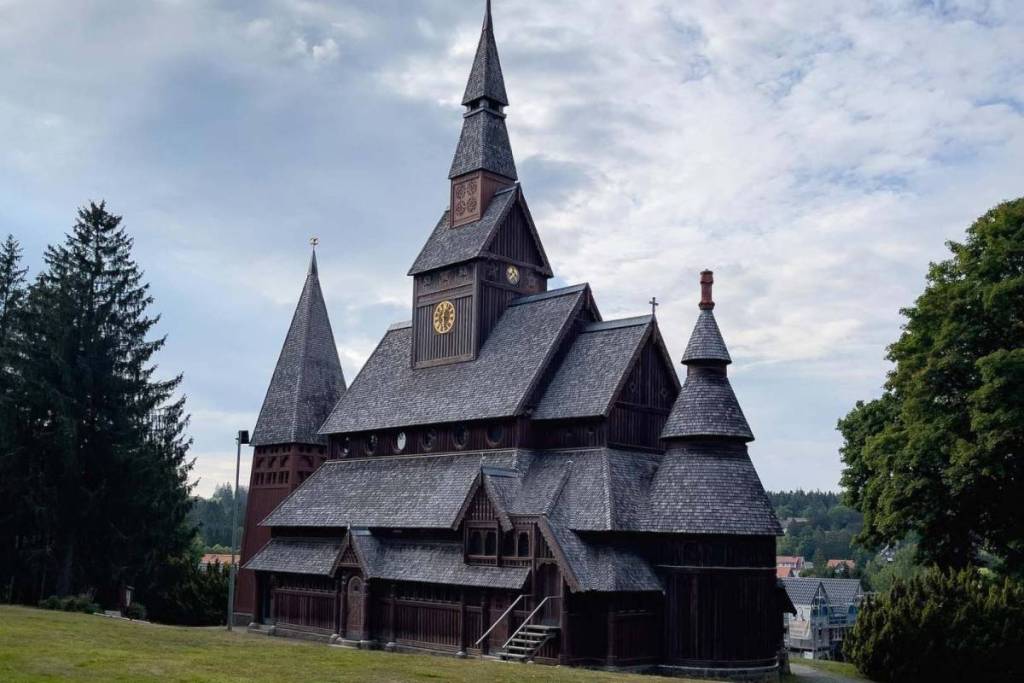
The Gustav Adolf Stave Church is one of the most extraordinary sights in the Harz Mountains. Built entirely of wood, the church resembles a Norwegian fairy-tale church at first glance and is considered one of the region’s most famous photo spots. With its unique architecture, ornate wood carvings, and idyllic location in Hahnenklee, it attracts numerous visitors every year.
The Gustav Adolf Stave Church was built between 1907 and 1908 in just ten months and was officially consecrated on June 28, 1908. It was designed by the Hanover-based architect Karl Mohrmann, who drew inspiration from medieval stave churches during a study trip through Norway. The famous Borgund Stave Church served as the primary architectural model, and its architectural style was replicated almost exactly.
The church is built entirely of spruce wood from the forests surrounding the Bocksberg. The traditional construction method is particularly impressive, as the load-bearing wooden structure was erected—as with the historic Norwegian stave churches—without nails. Many architectural details are reminiscent of Viking shipbuilding. These include the steeply pitched roofs, intricately carved wooden elements, and the characteristic dragon heads on the roof ridges. Inside, Nordic wooden architecture, Art Nouveau, and Byzantine-inspired design elements come together. Even the large chandelier echoes the maritime theme and is modeled after a ship’s steering wheel.
One of the church’s most distinctive features is the impressive carillon, a tower chime with 49 bells and a total weight of about 2.5 metric tons. It is one of the largest carillons in Europe and is played using a special console operated by hand and foot. The carillon rings every Saturday at 3 p.m., and regular demonstrations are held where visitors can learn more about this extraordinary instrument. Between May and October, concert evenings are also held on Thursdays.
The bright interior can accommodate around 240 visitors, making it significantly larger than many of the historic Norwegian stave churches. Large windows let in plenty of natural light and impressively highlight the ornate wood carvings. Numerous decorations feature Nordic symbols and motifs from the Viking Age, giving the church its unmistakable character.
The Gustav Adolf Stave Church is not only a tourist attraction but also an active Evangelical Lutheran church. A worship service is held here every Sunday at 11 a.m. In addition, classical concerts, organ recitals, choral concerts, readings, and wedding ceremonies are regularly held here. Thanks to its extraordinary architecture and romantic atmosphere, the church is also one of the most popular wedding venues in the Harz Mountains.