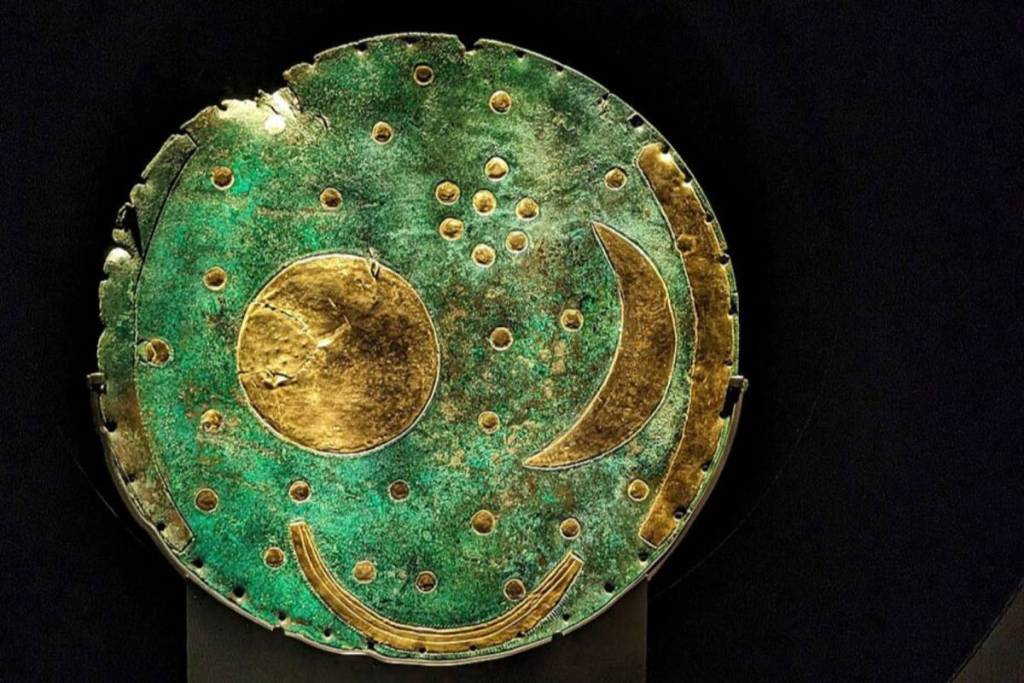

The Nebra Sky Disk is considered one of the world’s most significant cultural treasures. It is the world’s oldest depiction of the sky and astronomical phenomena —and its discovery was a real sensation. But contrary to what you might expect, the 32-centimeter-wide bronze disk was not discovered by archaeologists, but by looters using metal detectors. Instead of being reported as required by law, the find initially ended up on the black market. Sounds like a crime thriller, doesn’t it?
The Nebra Sky Disk: A True Archaeological Mystery
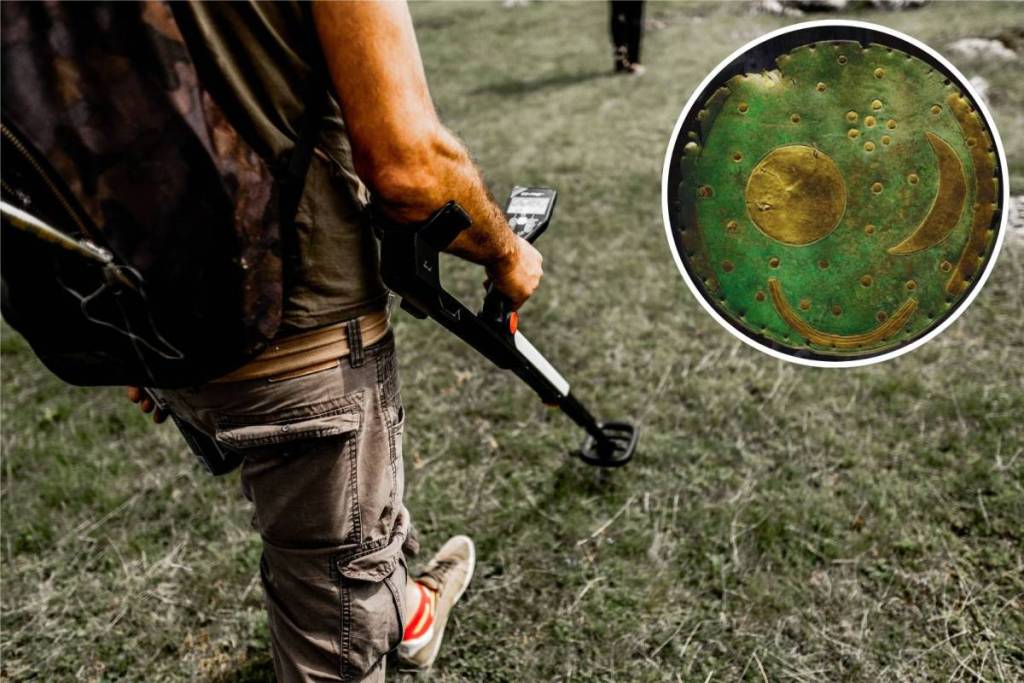
After its illegal excavation in 1999, the Nebra Sky Disk was sold by its discoverers on the black market. It ended up in the hands of a Cologne-based fence, who offered it to Berlin museum director Wilfried Menghin. Menghin immediately recognized its outstanding significance but refused to make the illegal purchase and alerted the state archaeologist in Halle at the time. This was because the entire collection of artifacts (including the disk, swords, axes, and arm rings) pointed to a discovery site in Saxony-Anhalt.
Meanwhile, the disk changed hands again and ended up with a couple from Kaarst. To secure it, state archaeologist Harald Meller developed a clever plan together with the police. Posing as a representative of a wealthy patron, he offered the dealers 700,000 euros for the Nebra Sky Disk.
During a staged handover in Basel in 2002 , the police finally struck . The Nebra Sky Disk was seized and thus finally came into the hands of scientists.
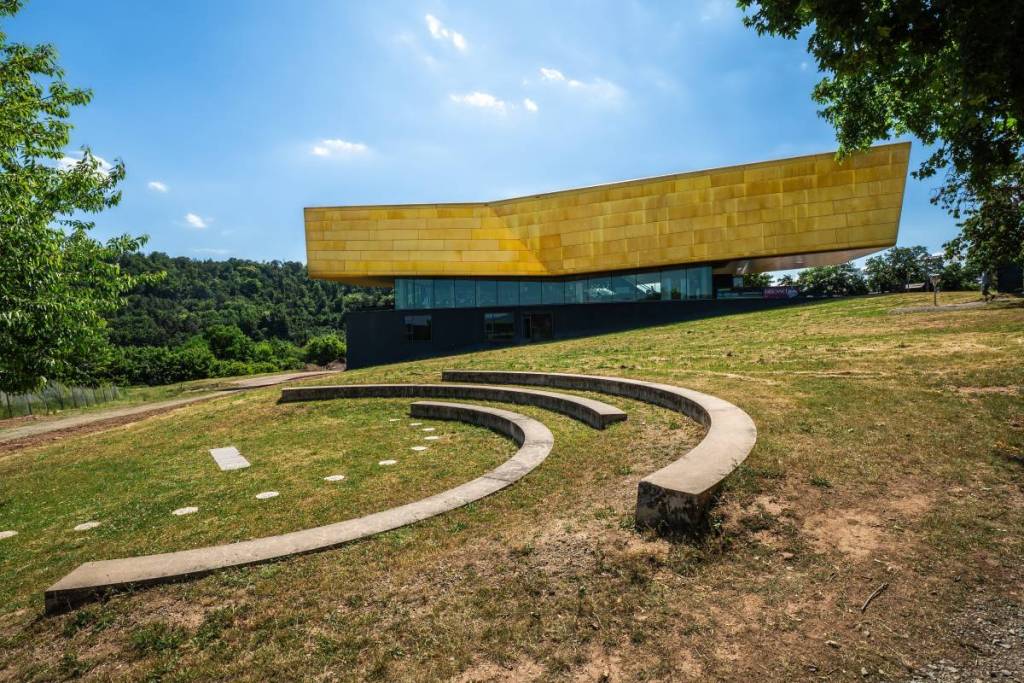
Today, the original is on display at the State Museum of Prehistory in Halle. A faithful replica is located about 3 km from where it was found, at the Arche Nebra Visitor Center, which opened in 2007 .
Incidentally,in 2013 , the Nebra Sky Diskwas inscribed on the UNESCO Memory of the World Register.
From the site of the discovery—or crime scene—to a tourist destination
The Nebra Ark not only houses a replica of the Nebra Sky Disk but also a state-of-the-art planetarium that unravels the disk’s astronomical mysteries. The spectacular mystery story of its discovery is also told there in a humorously staged puppet show.
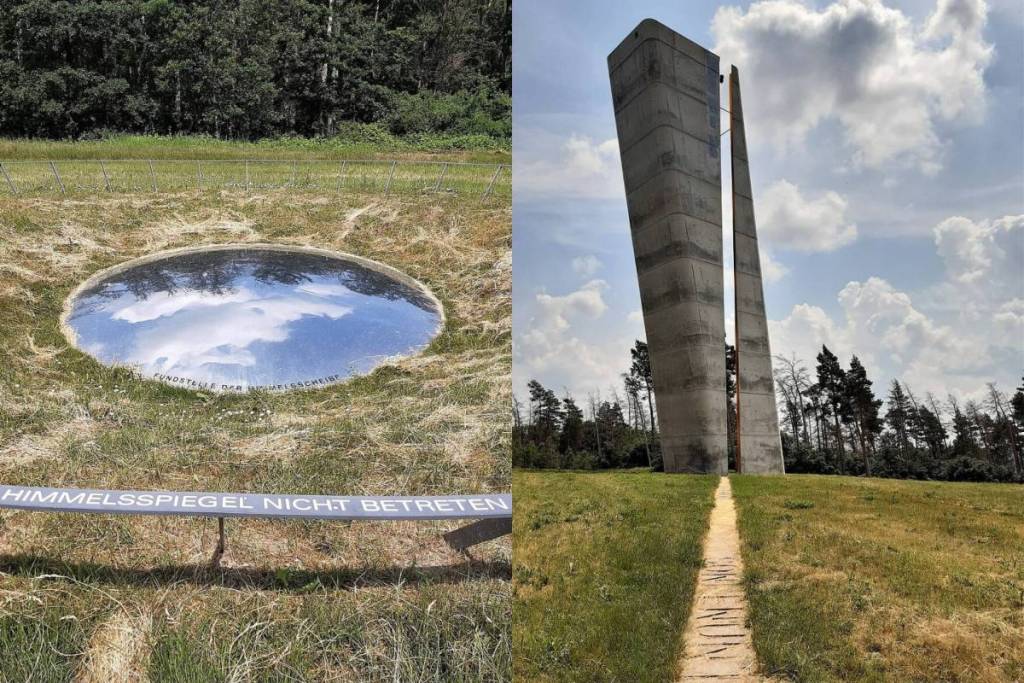
On the way up to the discovery site itself, on the Mittelberg, you’ll find much more than just a simple forest clearing. Since 2007, there have been various attractions here that bring the history and astronomy surrounding the Nebra Sky Disk to life: The Sky Mirror, also known as the “Eye of the Sky,” is a polished stainless-steel disk set into the ground. It marks the exact spot where the Bronze Age treasure was excavated and simultaneously reflects the sky.
Right next to it stands a 30-meter-high observation tower; on a clear day, you can even see as far as the Kyffhäuser Mountains from its top. Aligned like a giant sundial, a slit in the tower offers a view of the Brocken in the Harz Mountains —exactly where the sun sets on the summer solstice. Concrete strips embedded in the ground mark the path to additional sightlines, while marked discovery discs invite you to go on a little treasure hunt. Finally, reconstructed ring walls lend this historic site an almost mystical atmosphere.
From Berlin, you can easily reach the significant site of Nebra.
By car, take the A9 toward Leipzig/Munich, switch to the A38 toward Göttingen/Kassel at the Rippachtal interchange, and exit at Querfurt to follow the B180 toward Nebra/Wangen.
If you want to travel by train, it’s best to take the ICE/IC to Halle (Saale) Central Station. There, transfer to the Abellio regional train (RB 77) toward Naumburg/Wangener Unstruttal and walk the last stretch (about 10–15 minutes).